









If you’re a parent or a student of CBSE, this year’s back-to-school prep comes with a lot more homework. The Central Board of Secondary Education has rolled out its biggest set of changes in over a decade for the 2026-2027 academic session, and honestly, keeping track of it all can feel overwhelming. From a new three-language rule to two board exams for Class 10, these aren’t small tweaks but big changes that are going to shape how your child studies, revises, and even chooses subjects going forward.
At Podar Global School, and across most of the best CBSE schools in Bangalore, teachers and administrators have already started briefing parents on what’s changing and why. But if you haven’t caught up yet, don’t worry. This article will provide you with all the important updates that you need to know before the beginning of the next academic year.
Also Read: AI Is Now Part of Learning at Schools. Here's How Parents Can Support Their Child
CBSE Updates For the Next Academic Session
1. The Three-Language Rule
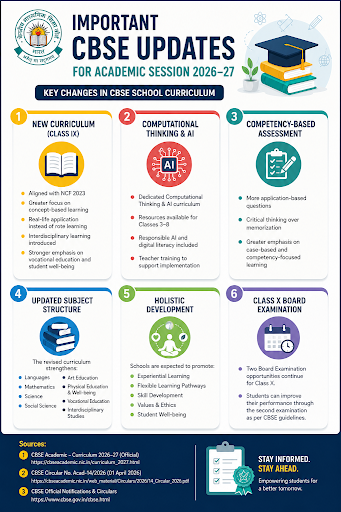
Starting this session, every CBSE student from Class 6 onwards has to study three languages called R1, R2, R3, with at least two being Indian languages. So this isn't just about adding French or German as an extra subject. For Class 9, the third language continues from whatever combination was studied in Class 8. Class 10 students this year (2026-27) are exempt and stay on the old two-language system.
The key part for parents: this third language won't be part of the Class 10 board exam for the current Class 9 batch — it'll only be assessed internally by schools. If a student doesn't clear it, they're still promoted to Class 10, but they must clear it there to get their final Pass Certificate.
2. A Fresh Curriculum Built Around NCF 2023
CBSE has released an updated curriculum for Classes 9 to 12 for the 2026-27 session, and it's built around a very different teaching philosophy — less memorising, more actual understanding and application.
Class 9 is where this shows up the most, since it marks the first real entry point for these reforms at the secondary level. The detailed curriculum and scheme of studies are available directly on CBSE's academic portal.
3. AI and Computational Thinking Are Now Compulsory
CBSE has officially rolled out a Curriculum Framework for Computational Thinking (CT) and Artificial Intelligence (AI) for Classes 3 to 8.
This isn't a pilot or optional add-on anymore but it's a formal part of the curriculum, and CBSE has already begun teacher training and capacity-building programmes around it across multiple cities.
4. Skill Education Made Mandatory for Classes 6-8
Vocational/skill education is now a compulsory part of the curriculum specifically for Classes 6 to 8. CBSE has been running dedicated teacher capacity-building programmes for this rollout, confirming it's an active, enforced change for this session and not just a recommendation.
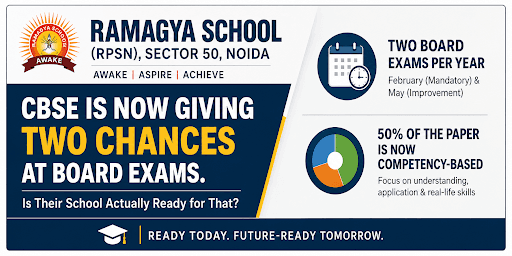
5. Two Board Exams for Class 10: Now in Its Second Year
This one's often mistaken for a brand-new 2026-27 change, but it actually began with the 2025-26 session. The first mandatory exam was held in February 2026, with an optional second attempt in May 2026 for improvement.
Whichever score is higher across the two counts toward the final marksheet. It's continuing as the standard practice into 2026-27, so if your child is appearing for Class 10 boards this year, this two-attempt structure is what they'll follow.
How to Keep Up with These Changes
- Bookmark cbseacademic.nic.in and check the "Circulars" section every few weeks — that's where CBSE posts updates first, before news sites pick them up.
- Don't skip school PTMs this year as most schools are using them specifically to walk parents through these new rules.
- Keep a copy of your child's Class 8 language combination handy, since it decides their three-language setup going forward.
- Ask your child's class teacher directly if anything feels unclear; school administrators usually have the latest clarifications before they're publicly reported.
- Avoid relying on WhatsApp forwards or unverified blogs for exam-related updates; always cross-check with the official CBSE site or your school before acting on any news.
Also Read: What Are Remedial Classes & How Do They Help Students?
Podar Global School: Keeping Up With CBSE Changes
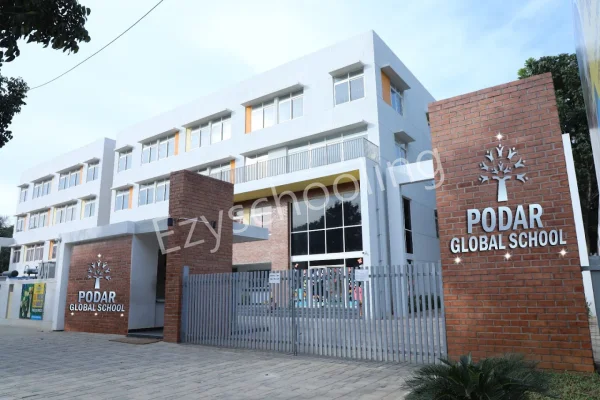
With CBSE rolling out one of its biggest curriculum overhauls in years for the 2026-27 session, schools in Yelahanka that stay ahead of these changes make all the difference for parents and students alike. Podar Global School, backed by over 97 years of educational experience, has been quick to align with these evolving CBSE guidelines, ensuring students aren't caught off guard by shifts like the new three-language policy or the compulsory AI curriculum.
In fact, Artificial Intelligence has already become a part of the Podar curriculum, well ahead of many schools still adjusting to CBSE's newly mandated Computational Thinking and AI framework for younger grades. This head start reflects Podar's broader philosophy: one rooted in brain-based learning and a genuine focus on holistic development, not just exam scores. The school has consistently invested in future-ready teaching methods, making the transition into CBSE's more skill-oriented, competency-based curriculum a natural extension of what Podar has already been building toward.
For parents, this means fewer surprises. As CBSE pushes schools to move quickly on curriculum updates, hold parent briefings, and adapt teaching structures, Podar's existing groundwork in areas like AI education and innovative pedagogy puts it in a strong position to implement these changes smoothly, without disrupting a child's learning experience.
As the 2026-27 session unfolds, staying informed matters, and choosing a school that's already adapting to where education is headed makes that a lot easier for families.
For more information regarding this and other schools in this area
 as a preferred source on