







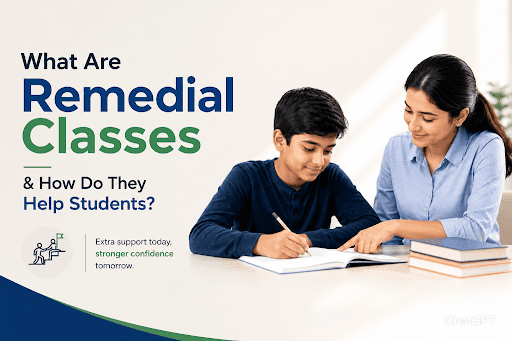

Soumya was good at a lot of things. She remembered song lyrics after hearing the song once, and could finish a puzzle faster than anyone in the house. But somewhere between class 5 & 6, Math started feeling like a different language.
She grew hesitant, asking questions, did not raise her hand, and quietly started believing that Math was simply not for her. Now what do you think? Who can help her? Teachers. But a classroom of 35 students moves at one pace, and Soumya needed a different one.
This is not just Soumya’s story alone! It plays out in some form in almost every classroom, every year. What Soumya needed was not more homework or weekend tuitions. She needed someone to sit with her and find exactly where Math stopped making sense, and explain it in her language. In short, she needed a remedial class.
CBSE Schools in Bangalore are increasingly recognising that every classroom has a Soumya, who needs personalised attention. Podar Global School, Bangalore, is one of those schools that does not wait for a child to fall completely before stepping in.
So what exactly are remedial classes, and how do they actually help? Let us break it down.
Also Read: How Holistic Education Shapes 21st Century Learners at Podar Global School
What Are Remedial Classes?
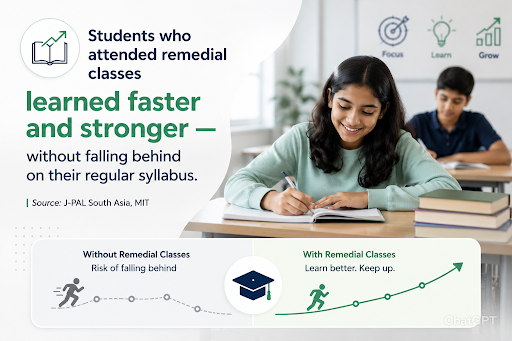
Remedial Classes are additional, focused learning sessions designed for students who need more time and attention on specific concepts that they did not fully grasp the first time around.
Here is a simple example. A teacher explains the concept of equilibrium in class. Some students get it immediately, a few half-get it, and a handful are completely lost but too hesitant to say so. Now the teacher faces a quiet dilemma: repeat the entire concept and slow down the students who already understood it, or move ahead and leave the ones who did not behind. Neither option is fair!
Instead of holding the whole class back or leaving struggling students to figure it out on their own, remedial classes pull those students into a smaller, separate session where the concept gets explained again, differently, slowly, and without the pressure of thirty other students waiting to move on.
Most parents think of them as a punishment when actually it's not. It’s a smarter way of making sure no child gets permanently left behind because of one particular concept.
How Are Remedial Classes Different from Tutorials?
If a child is struggling in any subjects, the first instinct is to find a good tutor. Someone who can sit with the child after school, go through the chapters, and make sure the homework gets done. It works for a lot of students, and there is nothing wrong with it.
But remedial classes do something a tutor simply cannot. And the difference is not about who is better but about what the child actually needs. Here’s the table of differences:
|
Basis |
Tuition Classes |
Remedial Classes |
|
Goal |
Cover syllabus and prepare for upcoming tests |
Find and fix the root of the confusion |
|
Who runs it |
External tutor, hired separately |
School teachers |
|
Approach |
Moves forward with syllabus |
Goes back to where understanding broke down |
|
Focus |
What is coming next |
What went wrong and why |
|
Setting |
Outside school |
Within the school system |
|
Communication |
Usually none with school |
Direct coordination with class teachers |
|
Best For |
Keeping up with the pace and upcoming exams |
Rebuilding concepts and closing learning gaps |
Benefits of Learning Support Sessions for Students
Bring Back the Confidence
When the concept understanding begins, confidence takes flight. A child might feel shy asking questions in front of a whole class that seems to completely understand the topic. But in a small group, the hesitation melts away.
No More Stress!
The anxiety around the difficult subject quietly subsides, and learning starts to feel possible again instead of exhausting. If a teacher takes a surprise Q&A the next day, they no longer feel that familiar knot in the stomach.
Fixes the Root, Not Just the Symptom
A bad test score is never really about the test. Remedial classes go back to where understanding actually broke down. The focus is on understanding the root cause of the child's problem and how to fix it.
Also Read: The Role of AI in Modern School Education
How Podar Global School, Bangalore, Makes Sure No Students Get Left Behind
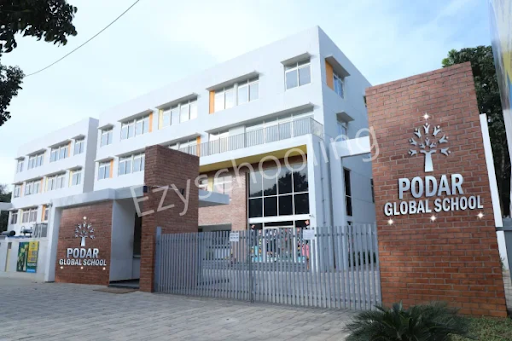
Schools in Yelahanka understand that every student has a different learning style and needs. Instead of letting them suffer alone, they are arranging the remedial classes for all the students.
If a child at Podar Global School, Bangalore, is not coping, the school does not wait for the parent to figure it out and arrange outside help. Additional focused sessions or extra classes are provided to the student who identifies a gap and acts on it quickly, and at no extra cost to the family.
The quality of this support does not depend on which teacher is available or which branch your child attends. Podar’s Central Curriculum and Research Development Centre ensures that teaching standards, including how struggling students are supported, remain consistent across every Podar School in India.
Final Thoughts
Every child has had a Soumya moment. A topic that stopped making sense, a question they were too scared to ask, a subject they quietly gave up on before anyone noticed. Most of the time, it passes. Sometimes, it does not.
Remedial classes exist for exactly that moment! If your child is struggling right now, the worst thing you can do is wait and hope it sorts itself out. The second worst thing is assuming a tutor on weekends is enough. What they actually need is a school that noticed before you did and already has something ready for that in a place. That’s what a good school does.
For more information on this and other similar schools in the area,










 as a preferred source on