









Academic confidence does not grow overnight. It builds slowly, through small moments of safety, encouragement, and understanding. When a child feels secure in their environment, they naturally open up to learning. Schools that recognise this truth create spaces where students truly thrive.
A supportive learning environment removes fear from the classroom. Students stop worrying about making mistakes and start focusing on growth. Teachers become guides rather than authorities, and learning becomes a shared experience. This shift makes a real difference in how children develop both academically and personally.
One of the best schools in Bangalore, New Oxford International School (NOIS), actively works to build this kind of environment for every student. In this article, we explore how safe and supportive learning spaces build academic confidence, and how NOIS puts this into practice through its dedicated Communication Lab.
Also Read | How Peer-Led Learning Builds Stronger Students: TMS, Greater Noida West
Why Safe Learning Environments Matter
A child's ability to learn depends heavily on how safe they feel. Fear and anxiety block thinking. Safety opens it.
Emotional Safety Builds Willingness to Learn
When students feel emotionally safe, they participate more freely. They ask questions without fear of judgment. They attempt difficult tasks because they trust their teacher and classmates. This willingness is the foundation of real academic growth.
Physical Safety Supports Focus
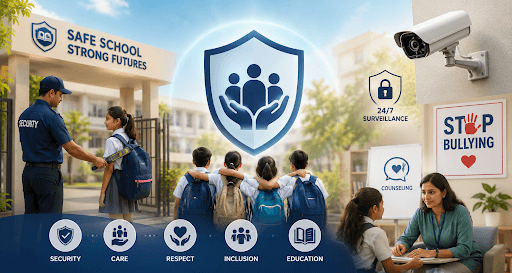
A secure physical space helps students concentrate better. When students do not worry about their surroundings, their minds stay focused on learning. Schools that maintain secure campuses, well-lit classrooms, and structured routines create ideal conditions for academic focus.
How Supportive Classrooms Build Confidence
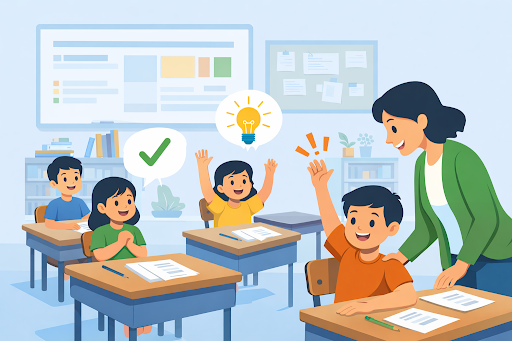
Confidence in students does not come from praise alone. It comes from experiencing progress and feeling supported through challenges.
Teachers Play a Central Role
A supportive teacher notices each student's pace and needs. They encourage participation, gently correct mistakes, and celebrate small wins. This approach builds a student's belief in their own ability. Students who feel seen by their teachers consistently perform better.
Small Class Interactions Encourage Participation
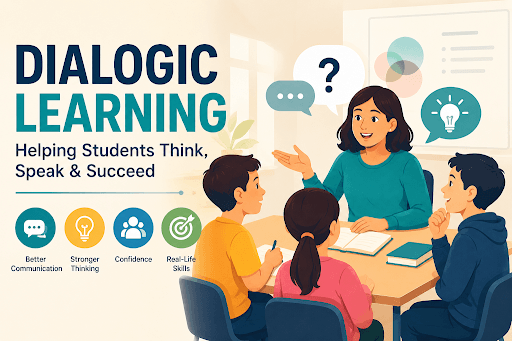
When classrooms encourage open discussion, students learn to voice their thoughts. They develop the habit of thinking out loud. Over time, this practice sharpens both their thinking and their communication skills.
Also Read | What a 2026 Classroom Looks Like
The Role of Communication in Academic Growth
Strong communication skills connect directly to academic performance. Students who can express ideas clearly also understand them better.
Speaking and Listening as Learning Tools
When students practise speaking and listening regularly, they engage more deeply with content. They retain information longer and apply it more effectively. These skills support learning across every subject, not just language classes.
Confidence in Communication Transfers to All Subjects
A student confident in expressing themselves participates more in class. They ask better questions and give clearer answers. This confidence does not stay limited to one subject. It spreads across all areas of learning.
How Schools Can Create Structured Communication Programs

Schools that take communication seriously design structured programs to develop these skills. They do not leave it to chance.
Dedicated Spaces for Practice
Specific labs or rooms designed for communication activities give students a focused environment. These spaces remove distractions and signal to students that communication is a great skill worth developing.
Regular, Varied Practice Activities
Programs that include phonetics, dialogue writing, drama, and vocabulary exercises build skills from multiple angles. Regular practice builds habit, and habit builds confidence over time.
Check Out | Using Language Labs to Empower Communication
Knowledge Through Labs: New Oxford International School, Haragadde, Bangalore

One of the best ICSE schools in Bangalore, New Oxford International School, was established in Haragadde in 2019. It is affiliated with the CISCE Board and currently serves more than 1000 students. The school offers education from Nursery to Grade 10 and follows a curriculum that blends academics, co-curricular activities, and sports. With smart classrooms, science labs, a library, and a playground, NOIS provides students with a complete learning environment.
NOIS runs a dedicated Communication Lab designed to help students become confident speakers and listeners. The lab uses audiovisual tools to make language learning active and engaging. Students practise phonetics, vocabulary building, semantics, dialogue writing, drama, and paragraph writing within the lab. These activities give students repeated opportunities to build their communication skills in a structured and supportive setting.
The Communication Lab at NOIS directly addresses one of the biggest barriers to academic confidence, which is the fear of expressing oneself. By creating a safe space for regular practice, the school helps students overcome hesitation. Students grow more comfortable voicing their thoughts in class, which naturally improves their academic participation and performance across all subjects.
Conclusion
Academic confidence grows when students feel safe, supported, and heard. Schools that invest in structured programs, caring teachers, and secure environments give students the foundation they need to succeed. NOIS, through initiatives like its Communication Lab, demonstrates how thoughtful school design turns everyday learning into a confidence-building experience for every child.
For more information on this and other such schools in the area, check out this list of the best schools in Bangalore.











 as a preferred source on