







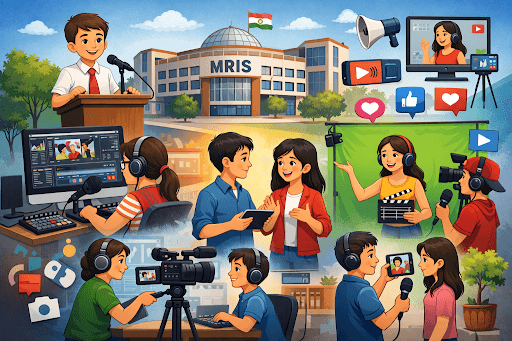

Have you noticed how kids today talk and share ideas in so many different ways? It’s not just about speaking in class anymore. Students now use presentations, videos, and even social media to express themselves. Because of this, they need more than just book knowledge. They need to speak clearly, share ideas confidently, and communicate in the right way.
But many students still feel shy or nervous when it comes to speaking in front of others. This usually happens because they don’t get enough chances to practise. When schools include media education, students get more ways to express themselves. They slowly become more confident and comfortable.
In this article, we will look at how media education helps students improve their communication skills and how Manav Rachna International School, Sector 21C, Faridabad, one of the best CBSE schools in Faridabad, uses media-based learning to help students become confident and responsible communicators.
Also Read | How Toddlers Learn Through Play | Toddlers Curriculum at MRIS Sector 21C Faridabad
Why Communication Skills Matter Today
Communication is one of the most important life skills which a student can develop. It is not only useful in classrooms but also in higher education and future careers. Students who can express their ideas clearly often stand out, whether it is during presentations, interviews, or group discussions. For example, a student who explains a project confidently is more likely to leave a strong impression than someone who stays silent, even if both understand the topic equally well.
Strong communication skills also help students in organizing their thoughts better. When they prepare to speak or present, they learn how to arrange their ideas step by step. This improves both speaking and writing. Research shows that students who practise speaking regularly often perform better in written exams as well, because their thinking becomes more structured.
Confidence is another major benefit. Many students feel nervous when they have to speak in front of others. But with regular practice, this fear is reduced. For instance, a student who starts by speaking in small groups can gradually move to stage presentations. Over time, they become more comfortable and start sharing their opinions and asking questions in class.
Communication also improves teamwork. In group projects, students must listen to others, share ideas, and work together to solve problems. These skills are important in school as well as in real life. Studies have shown that strong communication and teamwork are the top skills students need in almost every career.
What is Media Education and Why It Matters
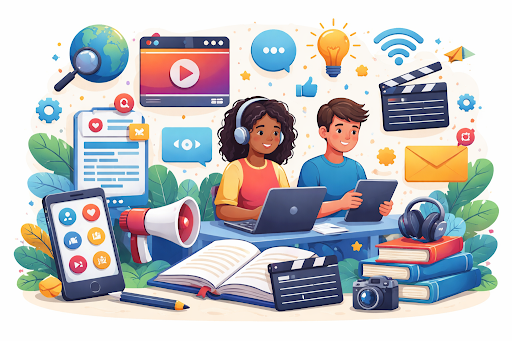
Media education focuses on using different forms of media to communicate ideas. It includes activities like public speaking, presentations, content creation, and digital storytelling. These activities give students practical experience in expressing themselves.
Unlike traditional methods, media education encourages active participation. Students do not just listen; they create, present, and interact. This makes learning more engaging and meaningful.
Media education also helps students understand how information is shared. They learn to analyse content, identify reliable sources, and communicate responsibly. This awareness is important in a digital world where information spreads quickly.
Key Elements of Media Education
- Public speaking and presentations: Students practise speaking in front of an audience. They learn how to organise ideas, use proper tone, and maintain confidence.
- Content creation: Students create videos, scripts, and digital content. This improves creativity and clarity of expression.
- Digital storytelling: Students use media tools to tell stories or explain ideas. This makes communication more engaging and effective.
- Media awareness: Students learn to evaluate information and use media responsibly.
Media education transforms students from passive learners into active communicators.
How Media-Based Activities Build Confidence
Confidence does not develop overnight. It grows through regular practice and exposure. Media-based activities provide a safe space where students can experiment and improve.
When students participate in presentations or discussions, they gradually overcome stage fear. They learn that making mistakes is part of the process. This reduces hesitation and builds self-belief.
Media activities also improve clarity. Students learn to express ideas in a structured and understandable way. They focus on how to communicate rather than what to memorise.
Skills Developed Through Media Learning
- Clear expression of ideas
Students learn to present thoughts in a simple and organised manner. This improves both speaking and writing. - Critical thinking
Students analyse information before sharing it. They learn to question and evaluate content. - Creativity
Content creation and storytelling encourage students to think in new ways and present ideas differently. - Responsible communication
Students understand the impact of their words. They learn to communicate respectfully and ethically.
These skills help students become confident communicators in both academic and real-life situations.
The Role of Interactive Platforms in Learning
Interactive platforms make communication practice more effective. Instead of one-way teaching, students actively participate in discussions, presentations, and media-based projects.
Group activities allow students to share ideas and learn from each other. They listen to different viewpoints and respond thoughtfully. This builds both confidence and respect.
Digital tools also support learning. Students use presentations, videos, and online platforms to express ideas creatively. This prepares them for modern communication methods.
Regular exposure to such platforms ensures that communication becomes a habit, not a one-time activity.
Check Out | Nurturing Individual Potential
MRIS Sector 21C, Faridabad: Building Strong Communicators Through Media Education
Manav Rachna International School, Sector 21C, ranked among the best schools in Faridabad, integrates media education into its learning approach to help students develop strong communication skills from an early stage.
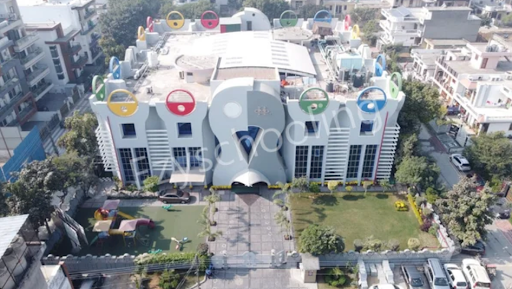
As a parent, you may have seen your child hesitate before speaking in front of others. You know they have ideas, but they may not always feel confident enough to express them. At Manav Rachna International School, Sector 21C, Faridabad, the focus is on helping every child overcome this hesitation and find their voice.
The school creates regular opportunities where students can speak, present, and share their thoughts in a comfortable environment. Instead of putting pressure on students, teachers guide them step by step. A child who starts by speaking in small groups slowly gains the confidence to present in front of a class. This gradual exposure makes a real difference.
Students also take part in media-based activities like presentations, video projects, and digital storytelling. These activities help them express ideas in different ways, not just through speaking. They learn how to organise their thoughts, present clearly, and communicate with purpose.
At the same time, the school teaches students how to communicate responsibly. They learn to listen, respect different opinions, and express themselves without fear. This builds not only confidence but also emotional maturity.
At MRIS Sector 21C, communication is not treated as an extra skill. It is developed every day. With the right guidance and continuous practice, students grow into confident individuals who can express themselves clearly, whether in school or beyond.
Conclusion
Media education plays a vital role in shaping confident communicators. Through activities like public speaking, content creation, and digital storytelling, students learn to express ideas clearly and responsibly. These experiences build confidence, creativity, and critical thinking.
At MRIS Sector 21C, Faridabad, media-based learning creates a strong foundation for communication. Students gain regular opportunities to practise, reflect, and improve. This approach prepares them not only for academic success but also for real-world interactions. Parents looking for a school that develops confident and responsible communicators can explore MRIS Sector 21C as a place where every student learns to express their voice with clarity and confidence.
For more information on this and other similar schools in the area, check out this list of the best schools in Faridabad.
 as a preferred source on