







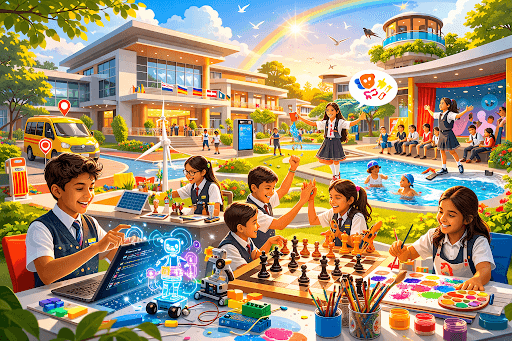

Your child comes home, drops their bag at the door, and heads straight to the snack drawer. Between bites, they tell you about the debate they won in class, the science experiment that went slightly wrong, and the new friend they made during lunch. No mention of homework.
That small, ordinary moment? That is exactly what good schooling looks like. Not just assignments and assessments, but a full, breathing life inside a school's walls.
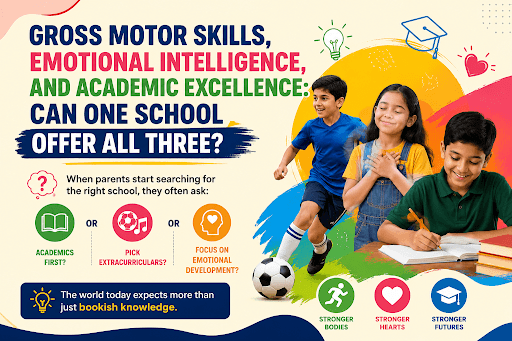
Every parent wants their child to do well academically, of course. But somewhere deeper, what we really want is to send them to a place that sees them, not just their scores. A place that teaches them how to think, how to feel, how to bounce back, and how to belong.
In this article, we explore what separates a school that simply teaches from one that truly shapes the pillars of holistic education, the role of safety and environment, why co-curricular learning matters more than ever, and how New Oxford International School (NOIS), one of the best Schools in Bangalore, brings these ideals to life every day.
Also Read | Building Academic Confidence Through Safe and Supportive Learning at NOIS, Haragadde, Bangalore
Beyond Grades: Why Holistic Education Is No Longer Optional
For decades, academic performance was the primary and often the only measure of a school's quality. A child who scored well was considered to be in good hands. But research, and honestly, life itself, tells us that grades tell only a fraction of the story.
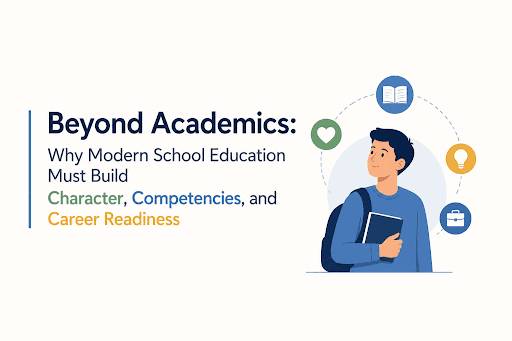
The skills most in demand today are not factual recall but creativity, critical thinking, and emotional intelligence. These are not things a test paper can build. They are forged through experience, failure, and meaningful interaction.
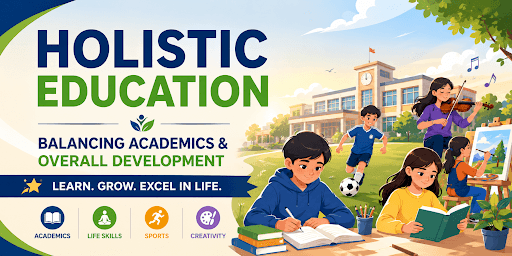
A school that understands this builds its day around far more than a syllabus. It creates spaces, literal and emotional, where children learn to lead, to listen, to lose gracefully, and to try again. This is what educationists call holistic development, and it is fast becoming non-negotiable for parents exploring the best schools in Bangalore.
The Classroom Is Just the Starting Point
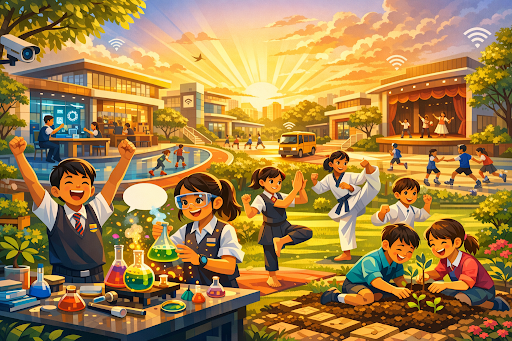
Walk into any school worth its salt, and you will quickly notice that the most memorable learning rarely happens in textbooks alone. It happens when a student argues their point in a debate and realises, mid-sentence, that they were wrong. It happens when a child plants a seed in the school garden and watches it grow over weeks.
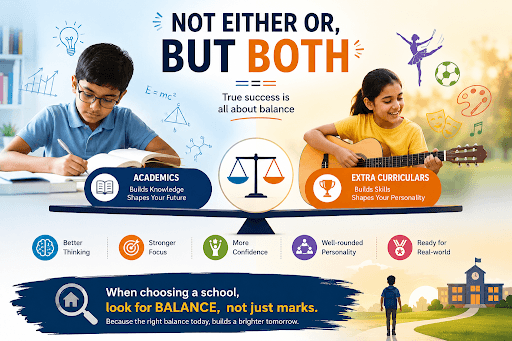
Co-curricular activities, often dismissed as "extras", are where children discover who they are. Drama builds confidence. Music teaches discipline. Art develops emotional expression. Sports instil resilience in ways no classroom lecture can replicate.
The question parents should ask is not "Does the school have activities?" but "Are those activities thoughtfully woven into the child's growth?" There is a meaningful difference between a school that ticks boxes and one that genuinely believes these pursuits shape better human beings.
Safety, Environment, and the Often-Overlooked Basics
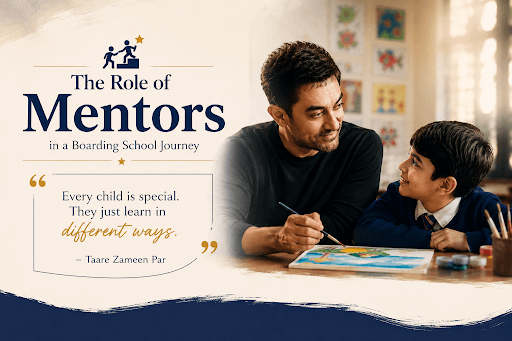
No child can learn in a space where they do not feel safe, physically or emotionally. A school's environment, from its infrastructure to the attitude of its staff, directly impacts how openly a child engages, how comfortably they ask questions, and how willing they are to take creative risks.
Parents today are right to ask hard questions: Are classrooms equipped for modern learning? Is transportation safe and trackable? Is there a medical room on campus? Are teachers trained not just in their subjects, but in understanding children as people?
Disability-inclusive infrastructure, ramps, accessible washrooms, and elevators also speak volumes about a school's values. These are not footnotes; they are a statement about who belongs and who matters within those walls.
Check Out | The Importance of Implementing Co-Curricular Activities for Growing Children
From Two Classrooms to a Community - The NOIS Story
Situated in Haragadde, Jigani Hobli, Anekal, New Oxford International School (NOIS) is the international branch of the New Oxford Group of Institutions, which began in Sarjapura with a handful of classrooms and has since grown to over 5,000 students across multiple campuses. The Haragadde branch, established in 2019, currently serves more than 1,000 students from Pre-Nursery to Class 10 under the ICSE board.
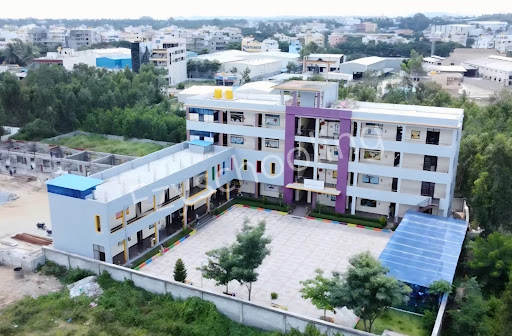
It is a co-educational English-medium day school that blends traditional classroom instruction with technology-based digital learning, smart classrooms, Wi-Fi, and dedicated computer, science, language, and robotics labs. The curriculum integrates academics, co-curricular activities, and sports, reflecting a genuine belief in well-rounded development.
The School speaks of guiding students to unlock their intellectual, social, and emotional potential and building an educational foundation that prepares children not just for tomorrow's exams, but for tomorrow's world. Their philosophy stated plainly: "Vision with Action."
What Families Can Expect at NOIS?
Here is a snapshot of what the school offers across key areas:
-
Co-Curricular Activities
Drama, dance, music, art and craft, debate, and school excursions, giving every child a stage beyond the classroom.
-
Sports and Fitness
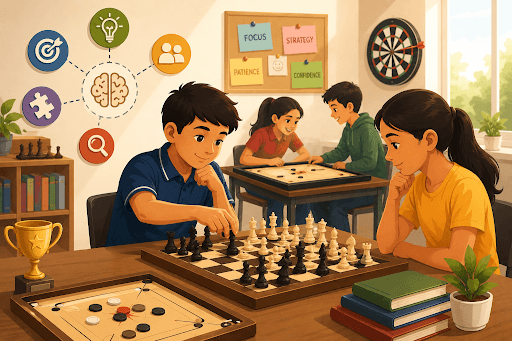
Skating, yoga, taekwondo, karate, and both outdoor and indoor sports, building discipline, fitness, and team spirit.
-
Infrastructure
Library, playground, auditorium, elevators, accessible washrooms, and ramps, built with all learners in mind.
-
Safety
CCTV surveillance, GPS bus tracking, a student tracking app, and an on-campus medical room.
-
Student-Teacher Ratio
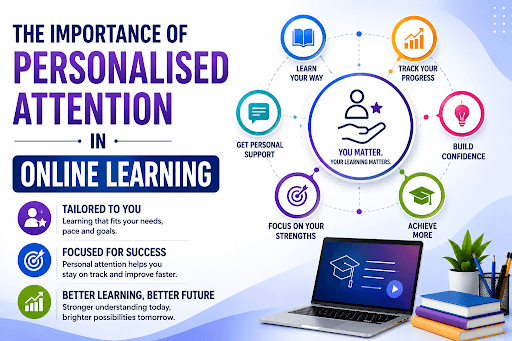
25:1, allowing for meaningful attention and personalised engagement.
The real question is not how much homework a school gives, but how deeply it shapes a child’s everyday experience. As this article highlights, meaningful education lives in the balance, where academics meet co-curricular exploration, safety supports confidence, and teachers engage with children as individuals, not just learners. These elements quietly influence how children think, interact, and respond to challenges over time.
A well-rounded school environment ensures that learning is not limited to textbooks but extends to problem-solving, collaboration, creativity, and emotional understanding. It is in these everyday moments, inside and outside the classroom, that children build the mindset and skills they carry forward.
For more information on similar schools in the area, see this list of the best schools in Bangalore






 as a preferred source on