







Let me ask you something, honestly. When parents visit a school campus for the first time, what do they notice? The classrooms. The labs. The sports grounds. The library. The lighting. The cleanliness. The overall feeling of space.
And while many people say, “Facilities don’t matter as much as teaching,” the truth is a little more layered than that. Infrastructure may not directly teach algebra or grammar, but it deeply influences how students absorb, process, and engage with learning. It sets the tone for academic performance long before the first lesson begins.
According to a study published by the National Center for Education Statistics, students in schools with modern infrastructure and upgraded facilities demonstrated up to 11% higher academic performance compared to those in poorly maintained environments. That is not a small margin. It suggests that physical learning spaces are not cosmetic additions; they are strategic investments in student success.
When we talk about modern school infrastructure, we are not just referring to impressive buildings. We are talking about functional classrooms, well-equipped laboratories, advanced technology integration, adequate ventilation, safety measures, sports facilities, and collaborative learning spaces.
We know every parent would like to send their kids to such an environment, and yes, there are multiple options when it comes to finding the best boarding schools in India for your kids. Hopefully, reading this article till the end will solve your dilemma.
Also Read | Strong Academics with Real-World Relevance: ICSE and ISC Curriculum at Redbridge International Academy
Modern School Infrastructure Impacts Academic Performance
1. The Science Behind Learning Spaces
There is actual science behind this. Environmental psychology explains how physical surroundings influence mood, attention span, and cognitive functioning. For instance, natural lighting has been shown to improve concentration and reduce eye strain. A report by the World Green Building Council indicated that improved indoor air quality can enhance cognitive performance by up to 61% in controlled environments.
Now imagine a student spending six to eight hours daily in a classroom. If the space is poorly ventilated, overcrowded, or lacking proper lighting, focus declines naturally. Discomfort distracts the mind. On the other hand, a well-designed classroom subtly encourages attentiveness and calmness.
It is interesting how something as simple as comfortable seating or soundproof classrooms can reduce cognitive fatigue. These are small design decisions, but they accumulate into measurable academic outcomes.
2. Technology-Enabled Learning Environments

We are living in an era where digital literacy is no longer optional. Modern infrastructure includes smart boards, digital labs, STEM facilities, and high-speed connectivity. Schools that integrate technology effectively prepare students not only for exams but for future workplaces.
A 2023 global education technology report revealed that schools incorporating structured digital tools into daily teaching saw a 20–25% increase in student engagement levels. Engagement directly correlates with retention, and retention influences performance.
However, technology must be meaningful, not decorative. A smart classroom is effective only when teachers are trained to utilize it strategically. Infrastructure supports pedagogy; it does not replace it.
3. Libraries, Laboratories, and Learning Depth
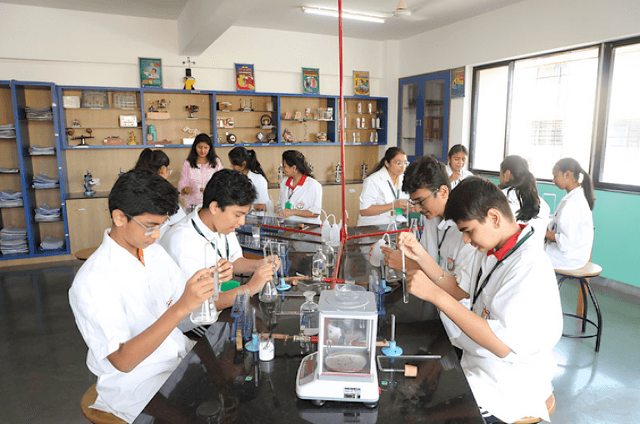
Let’s talk about laboratories and libraries for a moment. These spaces often determine whether learning remains theoretical or becomes experiential. A fully equipped science lab transforms abstract chemical equations into real experiments. A well-stocked library encourages independent research and critical thinking.
According to UNESCO, experiential learning environments significantly improve long-term knowledge retention compared to passive learning models. When students see, test, and explore concepts, their academic confidence grows naturally.
And confidence, as we both know, impacts performance dramatically. Students who feel capable are more willing to attempt challenging tasks.
4. Infrastructure and Emotional Wellbeing

Academic performance is not purely intellectual; it is emotional, too. Students perform better when they feel safe, secure, and comfortable. Infrastructure plays a key role in this sense of safety.
Modern campuses with proper surveillance systems, secure entry points, hygienic washrooms, and open recreational spaces reduce anxiety levels among students. According to child development research, students who feel psychologically safe in school environments show up to 30% higher classroom participation.
Sometimes we underestimate how deeply the environment influences behaviour. Students may not consciously think about ventilation systems or ergonomic furniture, but their bodies and minds respond to these details daily.
Sometimes children don't even realise how much their surroundings are shaping their focus and motivation. They may think they are simply attending school like usual, but the comfort of the classrooms, the availability of resources, and the space to explore quietly build their confidence in ways they can't exactly describe. And slowly, their academic performance begins to reflect that invisible support system around them.
Check Out | State-of-the-Art Infrastructure That Inspires Learning at Goldenbee Global School, BTM Layout
Where Redbridge International Academy Demonstrates This Philosophy

Now, let us connect this broader discussion to a practical example. Redbridge International Academy, one of the best boarding schools in Bangalore, reflects how modern infrastructure can align with academic objectives effectively. The academy integrates thoughtfully designed classrooms, advanced laboratories, technology-supported teaching tools, and well-maintained sports facilities to create a comprehensive learning ecosystem.
The emphasis is not merely on aesthetics but on functionality. Spacious classrooms allow collaborative learning. Science and computer labs provide hands-on exposure. Libraries encourage independent exploration. Sports and activity zones contribute to physical well-being, which indirectly supports academic concentration.
What stands out is the balance between infrastructure and pedagogy. Facilities are structured to enhance teaching methods rather than overshadow them. This alignment ensures that infrastructure remains a tool for performance enhancement rather than a superficial showcase.
By integrating global standards of infrastructure within a nurturing academic framework, Redbridge International Academy demonstrates how physical environment and academic excellence can move together rather than separately.
The Final Thought
If I had to explain it to you simply, I would say this modern school infrastructure is like a silent partner in education. It does not stand in front of the class, but it influences everything happening inside it. Teachers deliver knowledge. Students apply effort. But infrastructure supports both. It enhances focus, reduces distractions, encourages exploration, and nurtures well-being.
When schools invest thoughtfully in facilities that align with academic vision, they are not just constructing buildings. They are building environments where potential can unfold naturally.
And perhaps that is the real takeaway. Academic performance is not shaped by textbooks alone. It is shaped by ecosystems. By design. By intention. By environment. When these elements align, success becomes not just possible, but sustainable.
If you want to know more about this and other boarding schools, then check out the list of the top boarding schools in India.












 as a preferred source on