









Introduction

In today's schools, classrooms that make students curious often lead to new ideas and inventions. Students don't just sit there and take in material anymore. They ask questions, try things out, and come up with answers to problems in the real world. Schools all around India are changing how they see themselves. They are not just places to learn; they are also places where young people may turn their ideas into reality.
One of the best schools in Gurgaon, KIIT World School (KWS) in Gurgaon, Sohna Road, follows this principle with its Big Idea Factory, a creative space that encourages students to come up with new ideas. This article looks at why idea factories are important in modern education, how they work, and how schools like KWS are leading the way with this new way of teaching.
Also Read | Cultivating a Passion for Learning
The Evolution of Learning Spaces in Modern Education
Over the past ten years, the method we teach kids has changed a lot. The days of learning by memorising facts from books and then repeating them on tests are over.
From Lectures to Laboratories
In traditional classrooms, knowledge was only passed on in one direction. Teachers talked, pupils listened, and standardised tests took the place of creativity. This model got kids ready for a world that doesn't exist anymore.
The Rise of Experiential Learning
Today's schools put more value on hands-on learning than on passive learning. Students work with ideas by doing experiments, projects, and working together to solve problems. They learn by doing things, not just listening.
Policy Support for Innovation
The National Education Policy 2020 says that creativity, critical thinking, and learning by doing are the most important parts of education. This change in policy shows that future success hinges on being able to come up with new ideas, not merely on getting good grades.
What is the Big Idea Factory Concept?

An idea factory takes vague ideas and turns them into real things. It is for more than just physical space; it stands for a way of thinking that values students' curiosity and creative expression.
Defining the Creative Ecosystem
An idea factory is like a playground for your head. Students can freely brainstorm, test their ideas, construct prototypes, and improve their ideas without worrying about failing. The environment values both questions and responses.
Essential Components
- Physical Infrastructure: Special areas with equipment, technology, and materials for testing things out
- Mentorship: teachers who don't tell students what to do, but instead let them figure things out on their own
- Freedom to Fail: A society that sees failures as chances to learn instead of problems
- Resource Accessibility: Students can use materials, software, and equipment for their projects.
The Psychology Behind Ideation
Young minds inherently have an endless amount of creativity. An idea factory helps kids use their creativity in a useful way by showing them that their ideas are important and can make a difference. This gives them confidence that goes beyond school.
What Students Create
Some projects are about new ideas in science and technology, while others are about art and social causes. Some kids make apps, some create robots, and many work on community service projects that help solve problems in their own neighbourhoods.
Why Schools Need Innovation Hubs Today
The world our kids will live in needs talents that traditional schools don't always teach. Innovation clusters do a great job of closing this gap.
Preparing for an Uncertain Future
There aren't any jobs for tomorrow yet. Students need to be able to adapt, solve problems, and work well with others more than they need to know a lot about a certain subject. Innovation hubs help people learn these skills naturally.
Beyond Textbook Learning
There is rarely only one right response to real-world challenges. When students face real problems, they learn how to deal with uncertainty, look at things from several points of view, and come up with useful answers.
Measurable Benefits
Research consistently demonstrates that experiential innovation enhances student engagement, improves retention, and fosters entrepreneurial mindsets. Kids who make their own projects are more likely to take charge of their learning and be more motivated to do well in school.
Key Elements That Make an Idea Factory Successful

You need more than good intentions to make an innovation hub work. To successfully encourage student creativity, several important things must come together.
Flexible Learning Spaces
Rigid classroom layouts stifle creativity. Innovation zones need furniture that can be moved, walls that can be moved, and spaces that can be used for both solo work and group work. Students should be able to move things around as needed for projects.
Cross-Disciplinary Integration
When different subjects come together, the best new ideas come up. Physics, math, and programming all come together in a robot's project. An environmental project combines science, social studies, and communication skills. Breaking down subject silos helps people think in a more complete way.
Student Agency and Voice
Adults shouldn't tell students what to make. Young learners require autonomy to explore their interests, make choices, and assume responsibility for results. This agency helps people become leaders and take responsibility.
Access to Resources and Technology
Imagination doesn't mean anything if you don't have the tools to make it happen. Schools need to have computers, creative supplies, science tools, and experts to help students. The availability of resources decides if ideas stay dreams or come true.
From Idea to Implementation: The Creative Journey
Knowing how new ideas come about helps you understand the learning that happens along the way.
Stage One: Brainstorming
Students figure out whether problems are worth tackling or ideas are worth looking into. They look into things, talk about their options, and draw rough ideas. In this phase, divergent thinking is important. This means coming up with a lot of options before focusing on one.
Stage Two: Prototyping and Testing
The first try almost seldom works flawlessly. Students make basic prototypes, test them, find problems, and then make them better. This cycle teaches you how to be strong and how to keep going even when things are hard.
Stage Three: Presentation and Application
People, teachers, or the community at large can see completed projects. Students explain how they got to their decisions, defend them, and get feedback. Many projects have real-world uses, which shows that student work is worth something.
Check Out | From Ideas To Impact
KIIT World School (KWS), Gurgaon: Nurturing Tomorrow's Innovators Through the Big Idea Factory
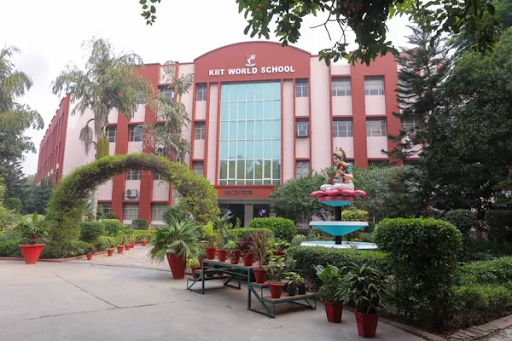
At KIIT World School, innovation isn't simply encouraged; it's part of the school's DNA. KWS is located on Sohna Road in Gurgaon and follows the National Education Policy 2020. This means that every kid has access to life-changing learning opportunities. The Big Idea Factory at KWS is a place where students may be creative and their dreams can grow. With the right support, tools, and motivation, abstract ideas become real things here.
Digital fluency is necessary for modern learning. KWS uses technology in all of its classes to make sure that students learn how to use the tools they will need in the real world. The focus is on how to use the tools creatively rather than just how to use them. One of the best schools in Sohna Road, Gurgaon, KWS focuses on life skills and global perspectives through clubs, activities, sports, and projects, in addition to academics. International connections give students the chance to work with people from different cultures and see things from different points of view.
The way the school does things works really well. Students win tournaments at both the district and national levels. The campus has held high-profile events like the Subroto Cup, which brought in teams from around the world. This shows that the facilities and reputation are world-class. The Big Idea Factory idea changes education, and KIIT World School is a great example of this. KWS gets kids ready for life, not just tests, by creating environments that are well thought out, providing supportive mentorship, and really caring about giving students control over their own lives.
Find out how your child may do well at a place where every thought counts and coming up with new ideas is second nature. Apply now to KIIT World School in Gurgaon and see how ideas become real things.
For more information on this and other such schools in the area, check out this list of the best schools in Gurgaon.








 as a preferred source on