







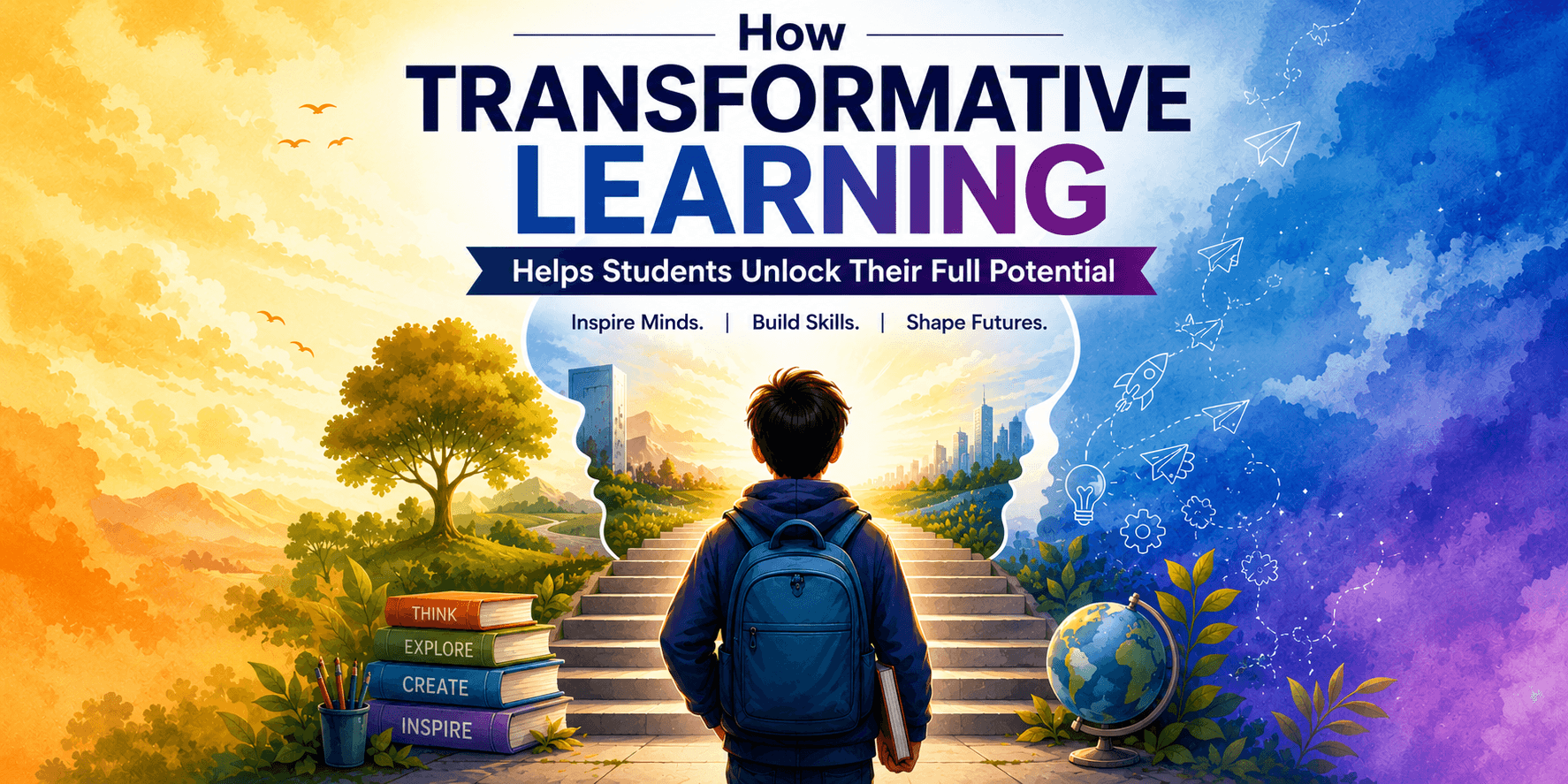

Education in the twenty-first century extends beyond a transmission of knowledge from textbooks and into classrooms. Students require education that will enable them to mature intellectually, socially, emotionally, and creatively in a world that is changing ever so rapidly. To do this, it has been recognized that transformative learning is vital in enabling students to engage, to reflect, to learn to probe the criticalities, and to utilize knowledge that is relevant to them; in this, they can experience education not as something that is done to them but as something that is enabling growth, allowing them to develop self-confidence and utilize their abilities. Queen Elizabeth's School, one of the schools in Gurgaon, recognizes the vital role such learning plays in developing its students.
Also read: From Followers to Leaders: Nurturing Leadership
Moving Beyond Traditional Learning Methods
The education of today cannot and should not be a lecture and memory course that is test-oriented. Students will best learn by participating rather than just memorizing information. Transformed learning is a way of changing the classroom from a place of receiving information to a place of inquiry, discovery, and learning-by-doing.
This transformation enables students to see the connection between what they are learning and the world around them. Rather than only seeing what is relevant to testing, they can start to understand the role of education in their personal development and future careers.
Developing a Solution-Oriented Mindset
Problem-solving is the ultimate requirement in this modern age. Through transformational learning, students come to cultivate a mindset of how to solve problems instead of being challenged by them. While tackling case studies, practical tasks, and analytical problems, students develop a method of dividing and assessing problem-solving techniques and become more resilient in unfamiliar situations. This leads students to attack and face issues with reason, creativity, and confidence.
Strengthening Emotional Intelligence and Human Connection
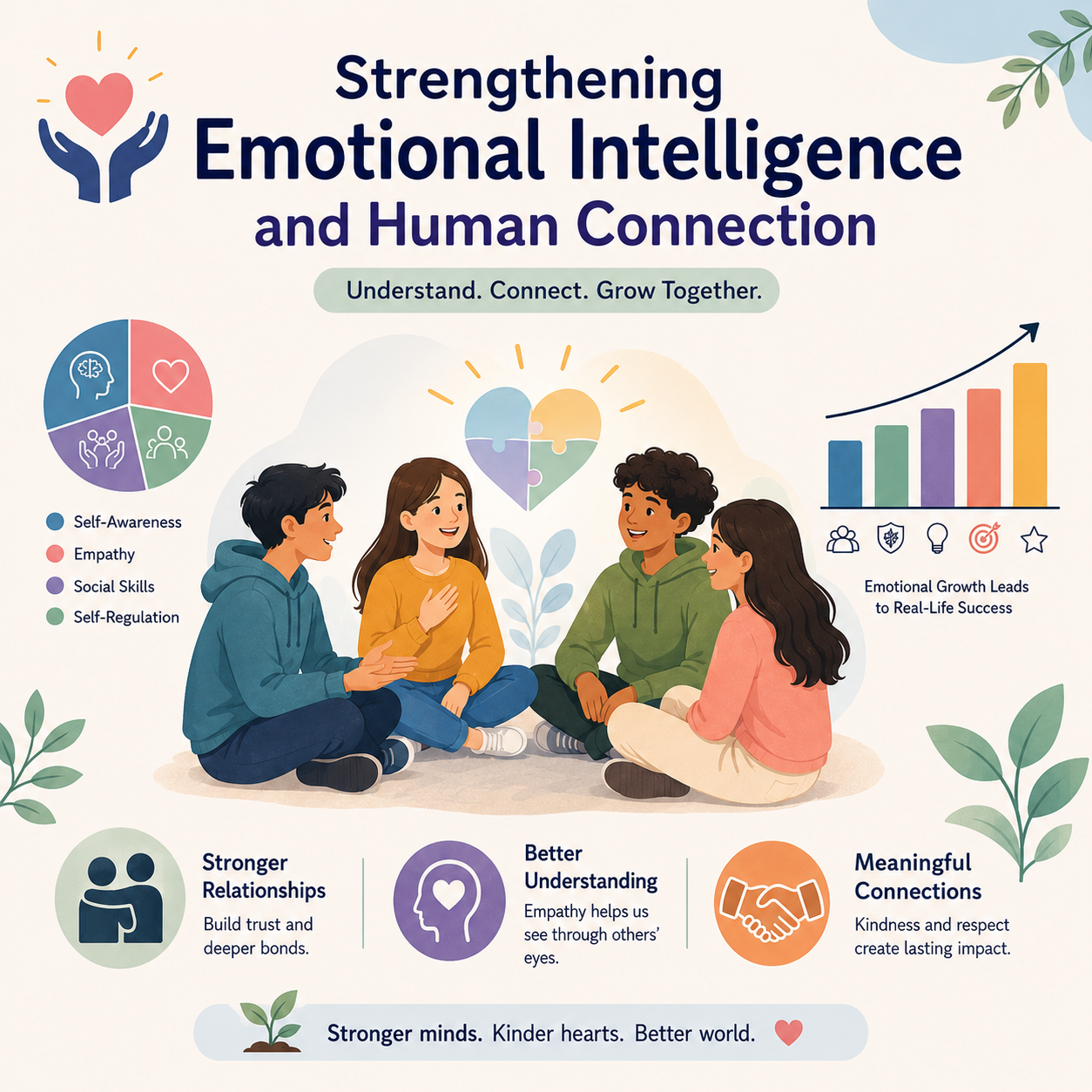
Emotional development is as crucial as academic achievement in ensuring a student's future success. A student's understanding of emotions, their ability to express emotions, and form healthy connections is also equally important for achieving long-term success. Transformed learning through cooperative and group work helps students develop understanding towards others' emotions and acquire respect for differences. Patience and empathy are the building blocks of transformed learning. A student with higher emotional intelligence will cope better with the changes they face and establish stronger bonds.
Developing a Solution-Oriented Mindset
Today, it is largely about how well you can problem-solve. The transformative learning approach fosters an attitude within students to approach issues with a problem-solving approach as opposed to the feeling of being overwhelmed.
By undertaking case studies, practical tasks, and analytical tasks, students are encouraged to examine problems and determine appropriate solutions and learn to develop resiliency and adaptability to unpredictable circumstances. This approach encourages logic, innovation, and self-belief in the face of problems.
Also read: Your Child's First School Could Shape Their Last Career
About the School
Queen Elizabeth's School, one of the schools in Gurgaon, is committed to an educational experience where learners are inspired to learn, explore, and achieve with confidence. Focusing on development through academic strength, character building, imagination, practical applications, and much more, the student-centered school provides learners with every opportunity to develop academically, socially, emotionally, and ethically.

Queen Elizabeth's School aims to provide experiences that stimulate inquisitive learning, foster self-reliance, and instill a sense of self-confidence within each child. The school helps students develop vital life skills while they excel in the fields of academics, co-curricular pursuits, and experimental learning. With a deep-rooted focus on modern education and overall development, Queen Elizabeth's School continues to empower learners to discover their talents and help them to an optimum level for enduring success.
Conclusion
Learning becomes transformative and can help every student reach their full potential because the learning experience becomes relevant, interesting, and developmental. Education that develops a student's critical thinking ability, self-confidence, creativity, emotional intelligence, and problem-solving skills enables students to become competent and adaptive persons. Transformative learning allows students not only to acquire knowledge but also a "way of thinking and performing" that allows them to reach the ultimate level of learning.
To know more about Queen Elizabeth’s School, Gurgaon, and other schools in nearby areas, visit our page







 as a preferred source on