







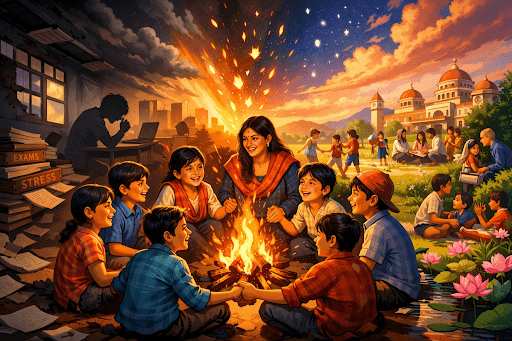

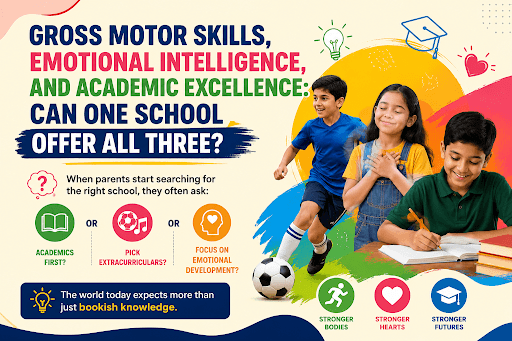
Your kid just got a 98% in Math. The party starts, sweets are given out, relatives congratulate you, and your heart is filled with pride. A report card can indeed tell you how well a child memorises. It hardly ever tells you how well they handle rejection, make friends, or stand up for themselves in a difficult class. All over India, students are becoming toppers in exams, but at the same time, they are struggling with issues like empathy, teamwork, and resilience, an invisible crisis going on behind those perfect percentages.
Parents applaud ranks, but secretly fear when their kid can't communicate, handle failure, or work with others without getting stressed. The real tragedy is not lack of intelligence; it is social intelligence that is missing in a system that is so obsessed with marks. And, this change is vital for your child’s growth, which is now being followed by one of the best schools in India, like Jain International Residential School.
In this article, we will question whether academic success alone can guarantee a bright future or not.
Also Read: Find True Partnership for your Child
The Silent Epidemic: Brilliant Minds, Broken Conversations
Check any corporate office in India today, and you get to know how employees with great qualifications can handle a spreadsheet like a master, but also struggle to network. It isn’t a matter of coincidence here.
If you look at the research from the year of 2023 by the National Institute of Mental Health and Neurosciences (NIMHANS), it has revealed that 42% of young adults residing in metro cities in India experience social anxiety in both work & personal life. The biggest reason behind all these conditions is that the ability to perform well in exams has been considered as the measure of a human being’s worth.
Unknowingly, parents are thus contributing to the problem when they prioritise tuition over playdates, and tests over conversations. The message to the child is quite obvious: your ranking and not your relationships determine your value.
What Gets Lost When Scores Become Everything?
For decades, marks have been treated as destiny in Indian households. A child scoring 95% is seen as “promising,” while one scoring 75% is quietly labelled average.
- Social Intelligence: The ability to understand, manage, and navigate social dynamics- is an essential skill, not an option.
- Empathy: How can a child who spends 12 hours a day with textbooks learn the ability to identify the pain in someone's eyes?
- Emotional Intelligence: Rooted in exposure to different human experiences, a school hardly ever provides that.
- Conflict Resolution: Negotiation can be learnt through arguments with siblings. Compromise can be understood by disagreements with friends.
But if competitive academics are taking up all of the time, how can a person accommodate learning these life skills?
- Communication Skills: The art of expressing oneself, the skill of listening and being able to decipher the meaning behind the other person's body language can't be acquired through rote learning.
- Resilience and Adaptability: Nobody can predict what will happen in life. Love may not last; projects may be failures; expectations may be brutally beaten.
A child who has only seen the exam's strict framework will be at a loss when confronting the chaotic, irregular face of grown-ups. The saddest part is that parents only realise the lack of skills when it's too late, when their 22-year-old child has difficulties in making friends.
Digital Childhoods, Social Isolation
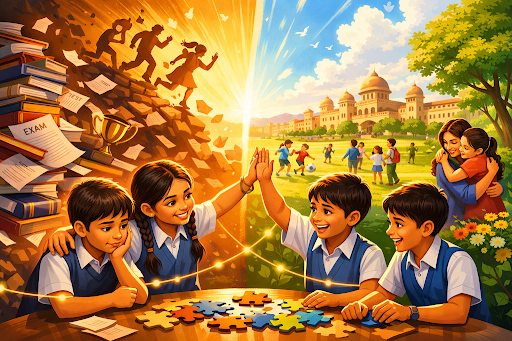
Today's kids are super-connected online, and yet, emotionally disconnected when they meet face to face.
Smartphones give them instant gratification, but no real human interaction, thus limiting their chances to practise social behaviour in the real world.
- Decrease in Face-to-face Talks: Communicating through digital channels takes away one's voice tone, facial expressions, and the empathy signals needed to understand others.
- Impulses for Instant Satisfaction Deteriorate Patience: The feeling of being motivated for a long-term goal seems more difficult when you live in a world with quick rewards.
- Loneliness Behind the Busy Screens: It may be that some children have followers on social media, but they lack meaningful relationships.
Check Out: How to Develop Life-winning Emotional Skills
The Real World Doesn't Grade on a Curve
Here's a hard truth you never know: the world will not care about your child's board exam results once they have left the academic environment.
The Harvard Business Review published an article revealing that 85% of a successful career is comprised of soft skills, i.e. capabilities related to communication, empathy, and teamwork, while only 15% is indicative of technical expertise. Nevertheless, Indian schools keep allocating 90% of their resources to delivering content rather than imparting wisdom.
Let us ask you one thing: Would you want your child to be a CEO who has excellent people skills or a genius, yet a loner, who never manages to inspire the team? Would you want your child to grow to be a humane leader or a gifted eccentric? The answer seems crystal clear. However, our behaviour as parents frequently contradicts our real intentions.
The Role of Jain International Residential School in Bridging the Gap
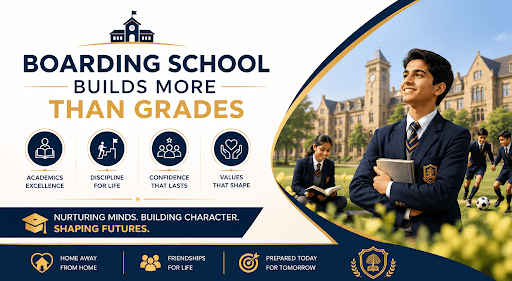
When people live together, they don't just share a campus but create a community through their daily interactions, which help to empathise with each other, conflict resolution becomes something they practise and shared responsibilities make them independent, all of these take place beyond the confines of textbooks.
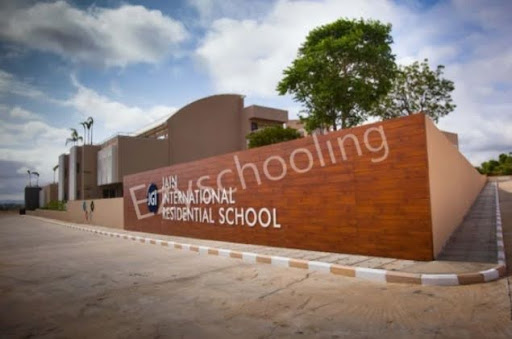
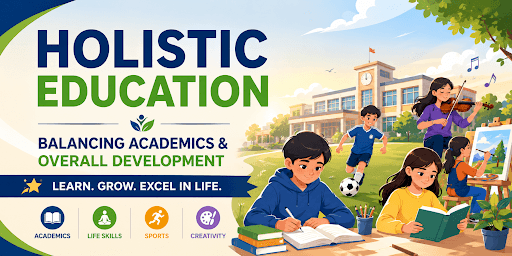
Jain International Residential School, one of the best boarding schools in Bangalore, brings an environment that can naturally cultivate social maturity because learning extends beyond classrooms into daily life. The school uses an international curriculum and puts a strong focus on the students' holistic development apart from their academic achievements.
View Profile
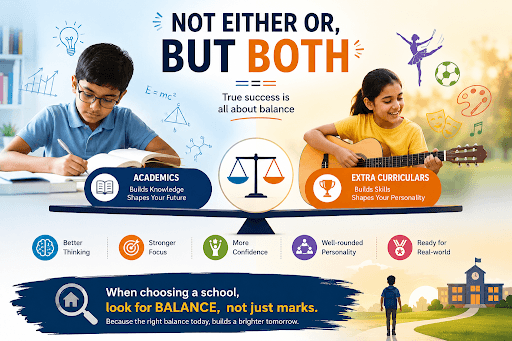
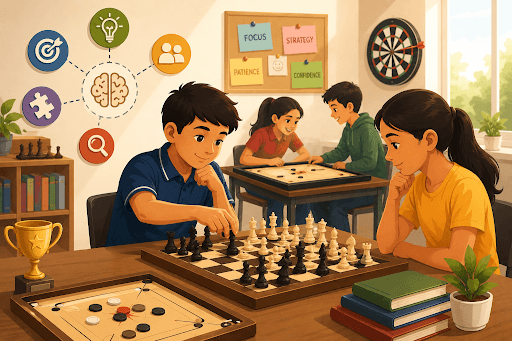
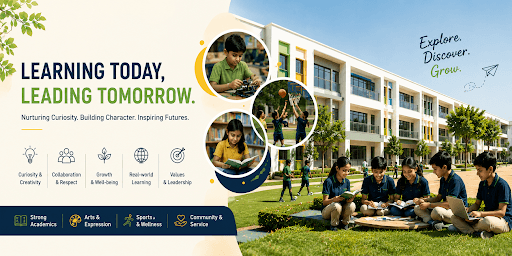
Character and confidence are further reinforced through structured co-curricular activities that go beyond the academics located in the curriculum. Through sports, students learn how to work in a team and become resilient, and how to rejoice with humility when they win and handle their defeat with grace when they lose. Music, drama, and visual art, among other forms of art, provide the students with emotional outlets that, in turn, help their mental well-being.
Leadership opportunities made available through the house system or student councils in general empower students with accountability and leadership skills. In unison, these experiences facilitate the growth of socially conscious individuals who are not only academically prepared but also capable of handling the complexities of interpersonal relationships in life.
To know more information about similar schools in the area, check out this list of the best boarding schools in India.
 as a preferred source on