






Your child tells you about classes, hostel roommates and the cricket match they played after school. Everything seems normal until they quietly say, “I have people around me, but nobody I can really talk to.”
For parents exploring Top Boarding schools in india, including Delhi Public School(DPS), Yamuna Nagar, this can be worrying. How can children feel lonely when they spend their entire day with classmates?
The answer lies in the difference between having company and feeling emotionally connected. Understanding that difference can help parents support their children without forcing friendships.
Why Doesn't Being Around Classmates Prevent Loneliness?
Imagine a student sitting with six classmates during lunch. Everyone discusses their weekend plans, but the student feels unable to join in.
They are not physically alone, yet they feel excluded.
The US Centers for Disease Control and Prevention (CDC) distinguishes loneliness from social isolation. Loneliness describes feeling disconnected, even when other people are nearby.
Boarding students share classrooms, meals, activities and sometimes bedrooms. But these experiences do not automatically create trust.
A child might enjoy football with classmates while having nobody to confide in about family worries. Another may know many students but feel uncomfortable being themselves.
Meaningful friendships involve acceptance, understanding and the freedom to express feelings without fearing judgement.
What Makes Some Boarding School Children Feel Left Out?
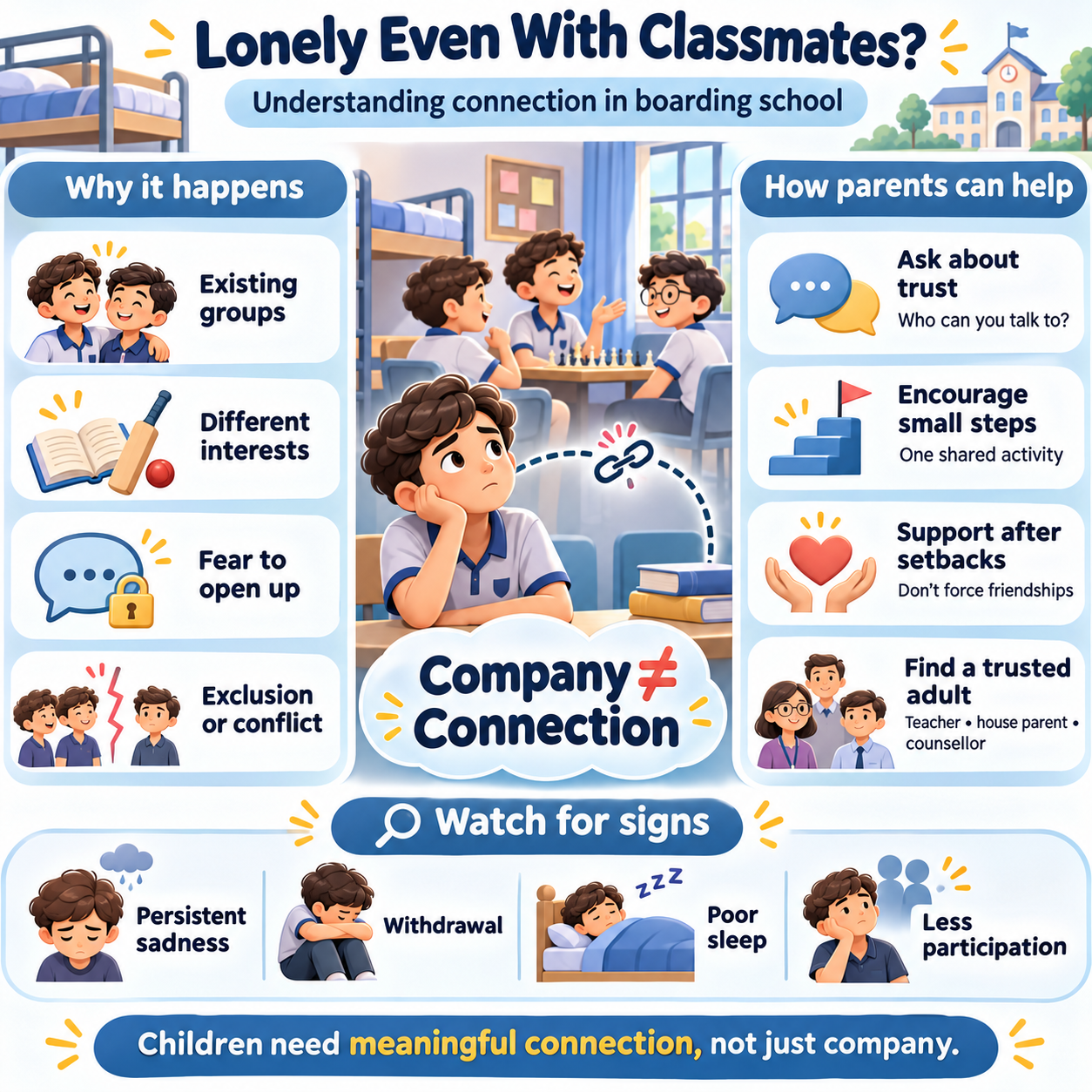
Existing friendship groups: A newcomer may join a hostel where roommates already share jokes, memories and routines. Finding a place in these groups can take time.
Different interests: A child who loves reading may struggle to connect with roommates who mainly discuss cricket. Differences in language or hobbies can make early conversations awkward, although they need not prevent friendship.
Fear of opening up: Some children worry that admitting homesickness or academic difficulties will make them look weak. They join activities but keep their personal concerns private.
Conflicts or exclusion: Repeated teasing, being left out of plans or arguments with roommates can undermine belonging. These experiences deserve attention rather than dismissal.
A 2026 study of 5,377 adolescents in England found that stronger school belonging and classmates' support were associated with lower reported loneliness. The study did not establish cause and effect, and its findings cannot automatically be applied to Indian boarding schools.
Also, remember that quiet children are not necessarily lonely. Some simply enjoy spending time alone.
How Can Parents Help Children Build Meaningful Connections?
1. Ask about trust rather than popularity.
Instead of “How many friends have you made?”, try “Who do you feel comfortable talking to when something bothers you?”
Listen without immediately offering solutions. Children may be more willing to talk when they do not expect criticism or pressure to become more outgoing.
2. Encourage small interactions.
Suggest inviting a classmate to study together, joining a shared hobby or discussing a favourite book. Familiar, repeated conversations can provide opportunities for friendship.
Avoid telling children they must join every group. One supportive friendship can be more meaningful than a large social circle.
3. Help them handle setbacks.
A roommate might choose another friend for an activity. Classmates may disagree or change groups. Explain that one disappointment does not define a child's worth.
But distinguish occasional disagreements from repeated exclusion or bullying, which requires adult intervention.
4. Identify a trusted adult.
Ask whom your child would approach if they felt upset: a teacher, house parent or counsellor. If they cannot name anyone, raise this with the school.
CDC guidance describes school connectedness as feeling valued and supported by peers and adults. Such connections are associated with better well-being.
Parents can also speak privately with residential staff when concerns continue, while respecting their child's growing independence.
When Does Loneliness Need More Attention?
Occasional loneliness does not necessarily indicate a serious problem. Look for patterns: persistent sadness, withdrawal, poor sleep, declining participation or fear of particular classmates.
Ask open questions and contact appropriate school staff to understand what is happening. If distress continues or affects daily functioning, consult a qualified mental-health professional.
Reports of bullying, threats or feeling unsafe require prompt action, not advice to simply adjust.
Understanding Friendship and Belonging at Delhi Public School, Yamuna Nagar
When comparing the Best boarding schools in india, parents should examine emotional support alongside academics and activities. Delhi Public School(DPS), Yamuna Nagar describes residential hostels, sporting and creative opportunities, and support from house parents and mentors in a school-published 2026 article about boarding adjustment. These are the school's stated provisions, not proof that every child develops close friendships. Parents can ask how staff recognise isolation and help students access support.

Conclusion
A child can spend all day with classmates and still feel lonely. What matters is whether they feel accepted, understood and comfortable seeking help.
Parents can listen without judgement, encourage genuine friendships and communicate with school staff. Children do not need dozens of friends. They need meaningful connections and someone who will listen when they feel alone.
For more information on this and similar schools, check out this list of the best boarding schools in India.






 as a preferred source on