




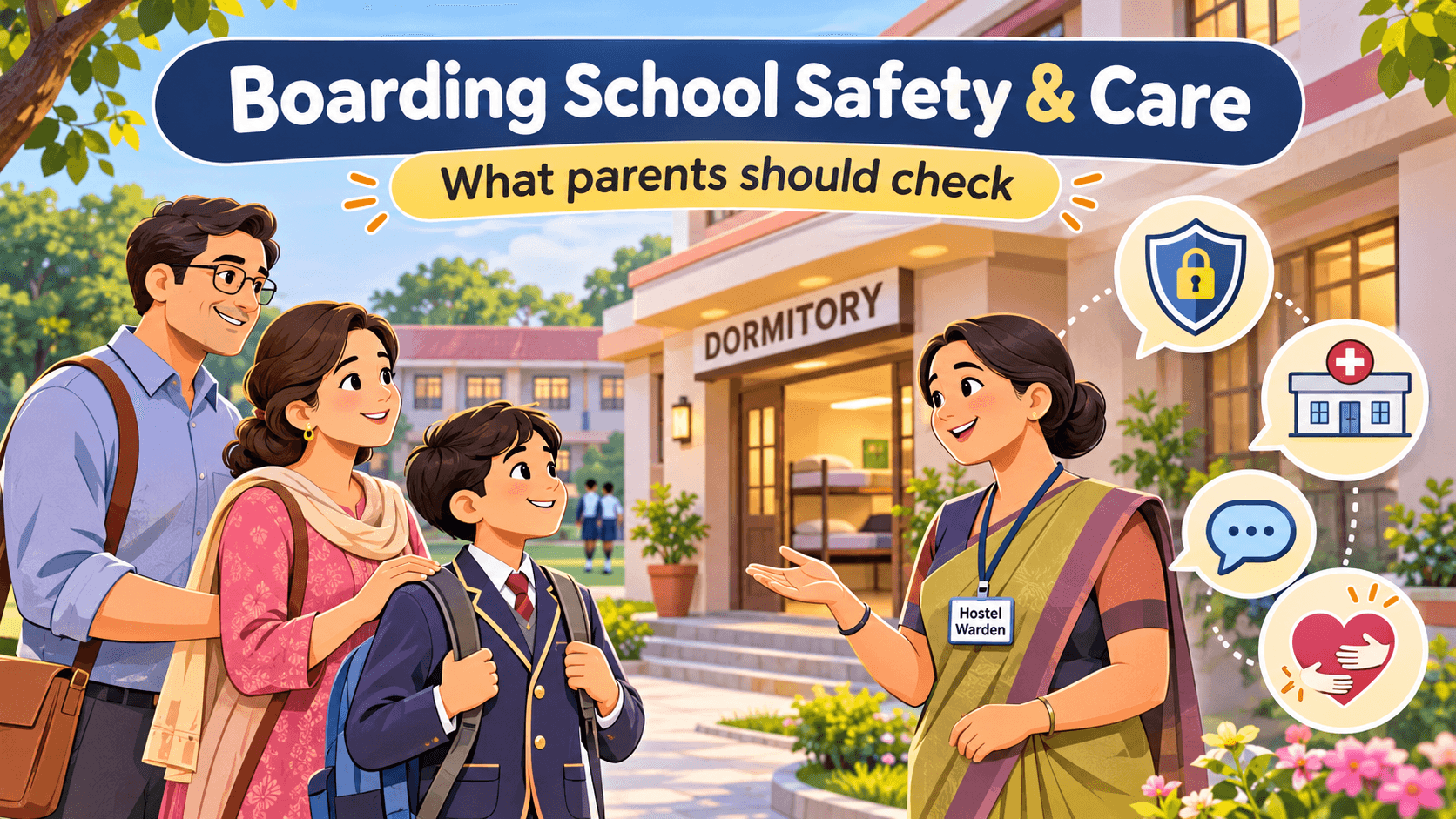

You are visiting a boarding school with your child. The classrooms look impressive, the dormitories are clean, and the playground is spacious. But one question stays in your mind: Who will take care of my child when I am not around?
For parents exploring a top boarding school in India, safety should involve more than security guards and CCTV cameras. It also means knowing who will help your child when they fall sick, feel frightened, or face difficulties with other students.
Before making an admission decision, here are four important areas every parent should examine.
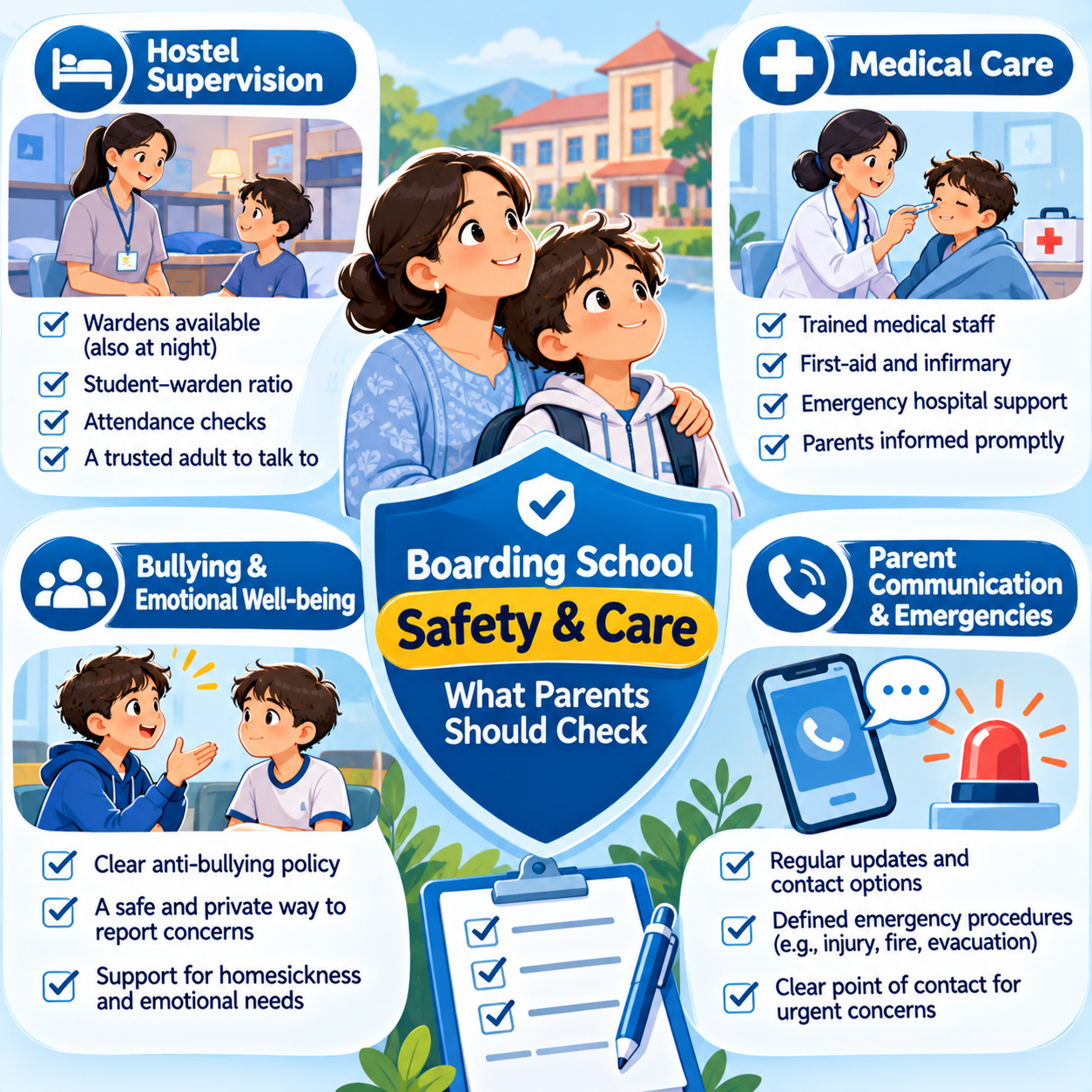
1. Who Looks After Children When Classes End?
Teachers supervise students during lessons, but boarding children also need responsible adults after school hours, during meals, and throughout the night.
Imagine your child waking up at midnight with a stomach ache. Would they know whom to approach? Would an adult be available to help immediately?
These situations make hostel supervision an important consideration.
The National Commission for Protection of Child Rights (NCPCR), through its regulatory guidelines for children's hostels, discusses responsibilities such as attendance checks, dormitory inspections, and reporting illness or safety concerns.
During a campus visit, parents should ask:
- Are hostel wardens available during the night?
- How many children does each warden supervise?
- How is attendance monitored in the hostel?
- Can children approach a trusted adult privately?
Also, observe how staff interact with students. Children should feel comfortable asking questions, reporting problems, and requesting help without fear.
A well-maintained dormitory is reassuring, but knowing who is responsible for children after bedtime matters just as much.
2. What Medical Care Is Available During an Emergency?
A child living away from home may experience fever, injuries, allergies, or unexpected illness. Parents should understand how the school handles both minor health concerns and serious emergencies.
Consider a student developing a high fever after dinner. Who checks their condition? Is a trained medical professional available? What happens if the child needs hospital treatment?
Before admission, find out whether the school has:
- Trained medical personnel and accessible first-aid supplies.
- Clear arrangements for emergency hospital visits.
- Procedures for storing and administering prescribed medicines.
- Updated medical records and emergency contact details.
Parents should also inform the school about existing health conditions, allergies, and prescribed medication.
The NCPCR's hostel guidelines address first-aid arrangements and the responsibility to report student illness or injury.
However, having an infirmary does not automatically mean a school can manage every medical emergency. Ask which nearby hospital receives students and who accompanies them.
Most importantly, understand when and how parents will be contacted if their child needs medical attention.
3. How Does the School Protect Children From Bullying and Emotional Distress?
Physical safety is important, but children also need to feel emotionally secure.
Boarding students share bedrooms, dining spaces, and recreational areas. While these experiences can encourage friendships, disagreements and bullying may sometimes occur.
Imagine your child being repeatedly teased by older students but feeling afraid to complain. Would they know whom to tell? Would the school take their concern seriously?
India's Ministry of Education guidelines on school safety and security recognise the importance of protecting students and establishing accountability for their welfare.
Parents should ask how the school responds to bullying, inappropriate behaviour, and emotional difficulties.
Check whether students can report concerns privately and whether trained staff are available to listen.
Homesickness also deserves attention. Missing home during the first few weeks does not necessarily mean boarding is unsuitable. However, persistent sadness, withdrawal, or fear should prompt closer attention.
A useful question to ask is: What happens after a student reports that they feel unsafe or unhappy?
The response can reveal more about the school's approach than general assurances about student happiness.
4. How Are Parents Informed and Emergencies Managed?
Even when children live on campus, parents remain an important part of their support system.
Before admission, understand how communication works. Can children contact their parents regularly? Who should parents call if they cannot reach their child? How are urgent concerns handled?
Consider a student getting injured during a weekend sports activity. Parents should know who provides immediate assistance, who informs the family, and how further treatment is arranged.
Schools should also have clear procedures for situations such as fires, evacuations, and unauthorised visitors.
During your visit, ask to see relevant safety procedures, emergency contact arrangements, and information about evacuation drills.
You can also discuss how students are allowed to raise concerns if they cannot contact their parents directly.
The Ministry of Education's school safety guidance places importance on preparedness, reporting, and accountability.
Rather than accepting verbal assurances alone, parents should ask for written policies where available.
Residential Care at Aadya Academy - The Residential School, Bangalore
For parents exploring the best boarding schools in India, understanding how children are cared for beyond classroom hours is equally important. At Aadya Academy – The Residential School, Bangalore, located in Budigere, the school's published residential facilities include separate accommodation for boys and girls and supervised hostel arrangements.

The school also mentions a resident nurse available 24 hours a day, a ten-bed infirmary, and arrangements for hospital transfers during medical emergencies. These facilities are relevant when considering how a school responds to illness or unexpected situations. However, parents should also ask about night-time supervision, bullying prevention, emergency communication, and how children can approach staff when they need support.
Conclusion
Choosing a boarding school involves trusting others with your child's everyday care. Before deciding, look beyond attractive facilities and ask practical questions about supervision, healthcare, bullying prevention, and emergency communication.
Speak with hostel staff, request relevant policies, and involve your child in the conversation.
A safe residential environment should help children feel protected, heard, and comfortable seeking assistance whenever they need it.
For more information on this and similar schools, check out this list of the best boarding schools in India.







 as a preferred source on