






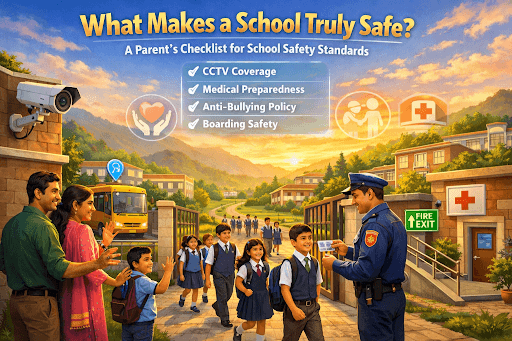

The day you drop your child off at school for the first time, you hold your breath just a little. You wave goodbye, manage a smile, and then spend the drive home wondering: Is this place really safe for them?
That question never truly goes away. It just evolves. From scraped knees in kindergarten to peer pressure in high school, safety means something different at every stage and yet most parents don't have a clear framework for evaluating it when choosing a school.
School safety is not just about CCTV cameras or tall boundary walls. It encompasses physical infrastructure, emotional support, health preparedness, anti-bullying culture, and the kind of environment where a child feels seen and protected, not just watched.
In this article, we break down the key pillars of school safety every parent should assess, what questions to ask during a school visit, how to evaluate boarding school safety specifically, and how institutions like The TonsBridge School in Dehradun, one of the best boarding schools in India, are raising the bar on what it truly means to keep children safe.
Also Read | How Radio Khushi 90.4 FM Shapes Student Life
Why School Safety Is More Than Just Security Guards?
When most parents think about school safety, their minds go immediately to visible security guards at the gate, cameras in corridors. These are necessary, but they are far from sufficient.
True school safety is layered. It means a child is protected physically, emotionally, and psychologically throughout their school day. A school can have biometric entry and still lack the protocols to handle a mental health crisis in a 14-year-old.
There are a significant number of incidents involving children in institutional settings, making it critical for parents to look beyond surface-level security when evaluating a school. What you need is a structured lens, not just a gut feeling.
Safety Begins at the Gate: Physical Security Standards
Before curriculum and co-curricular excellence, the first non-negotiable factor is controlled access and infrastructure readiness.
Secure Campus Entry and Monitoring
A safe school ensures that entry and exit points are monitored and logged. Visitor verification systems, ID-based access, and CCTV surveillance in common areas reduce unauthorised access risks.
Surveillance should be systematic, not symbolic. Cameras must be functional, strategically placed, and monitored by trained staff.
Infrastructure Built for Emergencies
Buildings must comply with fire safety norms and local municipal guidelines. Fire extinguishers, smoke alarms, and clearly marked evacuation routes should be visible and accessible.
Schools are expected to follow fire safety regulations laid down by authorities such as the National Disaster Management Authority (NDMA) guidelines in India. Regular evacuation drills are not optional; they are essential.
The Parents' School Safety Checklist
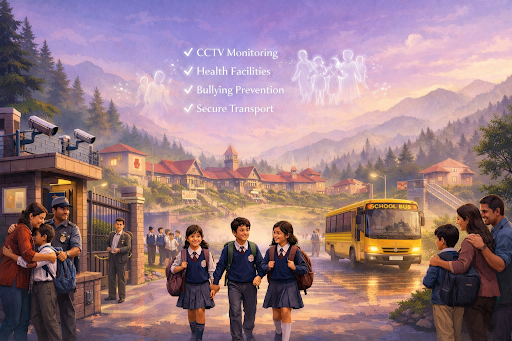
Every school visit should be a fact-finding mission, not a guided tour. Here is what to evaluate across key dimensions.
1. Physical Infrastructure & Surveillance
This is the foundation that the school's environment should minimise risk and maximise visibility at all times.
- CCTV Coverage: Ask whether cameras cover all academic zones, corridors, dormitories, and entry/exit points, not just the main gate.
- Gated Campus: Is access restricted to authorised individuals? Are visitor protocols enforced with proper ID verification?
- Disability-Friendly Design: Ramps, elevators, and accessible washrooms signal a commitment to inclusive safety for every student.
- Structural Safety: Has the building passed a fire safety audit? Are emergency exits clearly marked and unobstructed?
2. Health & Medical Preparedness
The difference between a prepared school and an underprepared one often becomes apparent in the first critical minutes of an emergency.
- On-Campus Medical Room: A functional medical room with trained staff on duty is non-negotiable, especially for boarding schools.
- Hospital Tie-Ups: Does the school have a formal agreement with a nearby hospital for emergencies beyond basic first aid?
- Medical Records Policy: Are children's health histories, allergies, and vaccination records maintained and accessible to staff?
Check Out: Finding a Safe, Supportive, and Inspiring Place for Your Child to Grow
3. Emotional Safety & Anti-Bullying Policies
Bruises heal but wounds to a child's self-worth can last decades. Emotional safety is the most overlooked dimension and the most consequential.
- Counsellor Availability: Is there a dedicated school counsellor students can approach without stigma or mandatory parental notification?
- Anti-Bullying Policy: Ask to see it in writing. How are incidents reported, investigated, and resolved and within what timeframe?
- Student-Teacher Ratio: A lower ratio means teachers can notice when a child is struggling. Individual attention is itself a form of safety.
4. Transportation Safety
For day scholars, the journey to and from school is an extension of the school's responsibility.
- GPS Tracking: Are school buses equipped with GPS that parents can monitor in real time?
- Driver Background Checks: Has the school conducted police verification on all transport staff, including attendants?
- Emergency Protocol: What is the communication plan if a bus is delayed or involved in an incident en route?
5. Boarding Safety Standards
For residential schools, the checklist extends significantly. Your child will sleep, eat, and grow within those walls.
- Separate Hostel Blocks: Gender-segregated dormitories with round-the-clock supervision are the baseline, not a bonus.
- Night Staff Presence: Is a trained adult present at all times? What is the check-in protocol for evenings and weekends?
- Supervised Study Hours: Structured prep time within the hostel indicates academic responsibility is embedded into residential life.
A Real-World Example: TonsBridge School, Dehradun
Dehradun is home to some of the finest boarding schools in Uttarakhand, and among them, The TonsBridge School (TBS) stands out for how safety is deliberately woven into its institutional design.
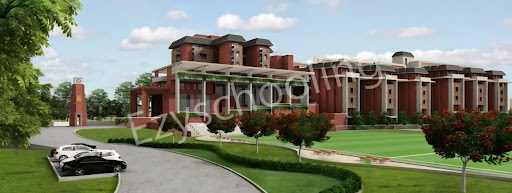
Established in 2013 on a 25-acre campus at the confluence of the Tons and Nemi rivers, TBS is a co-educational CBSE Day-cum-Boarding school. Its campus is intentionally removed from urban distractions, with 24/7 security personnel and comprehensive CCTV surveillance across all academic and residential blocks.
Health & Emergency Preparedness
TBS maintains a formal tie-up with Graphic Era Institute of Medical Sciences for round-the-clock medical support, meaning emergencies are backed by institutional healthcare, not just a first-aid kit. An on-campus medical room handles immediate response, while serious cases are escalated without delay.
Boarding & Residential Safety
Separate, secure hostel blocks for boys and girls are supervised throughout the day and night. Structured academic prep hours are built into the boarding schedule, and the school's in-house organic vegetarian food programme ensures that what students eat every day meets a consistent quality standard.
Ramps, elevators, and accessible washrooms reflect TBS's commitment to safety for every student, not only the majority. When a school invests in inclusive design, it signals a broader culture of duty of care.
Explore more options among the best boarding schools in India to find a place where your child’s spark can grow into a guiding light.
 as a preferred source on