




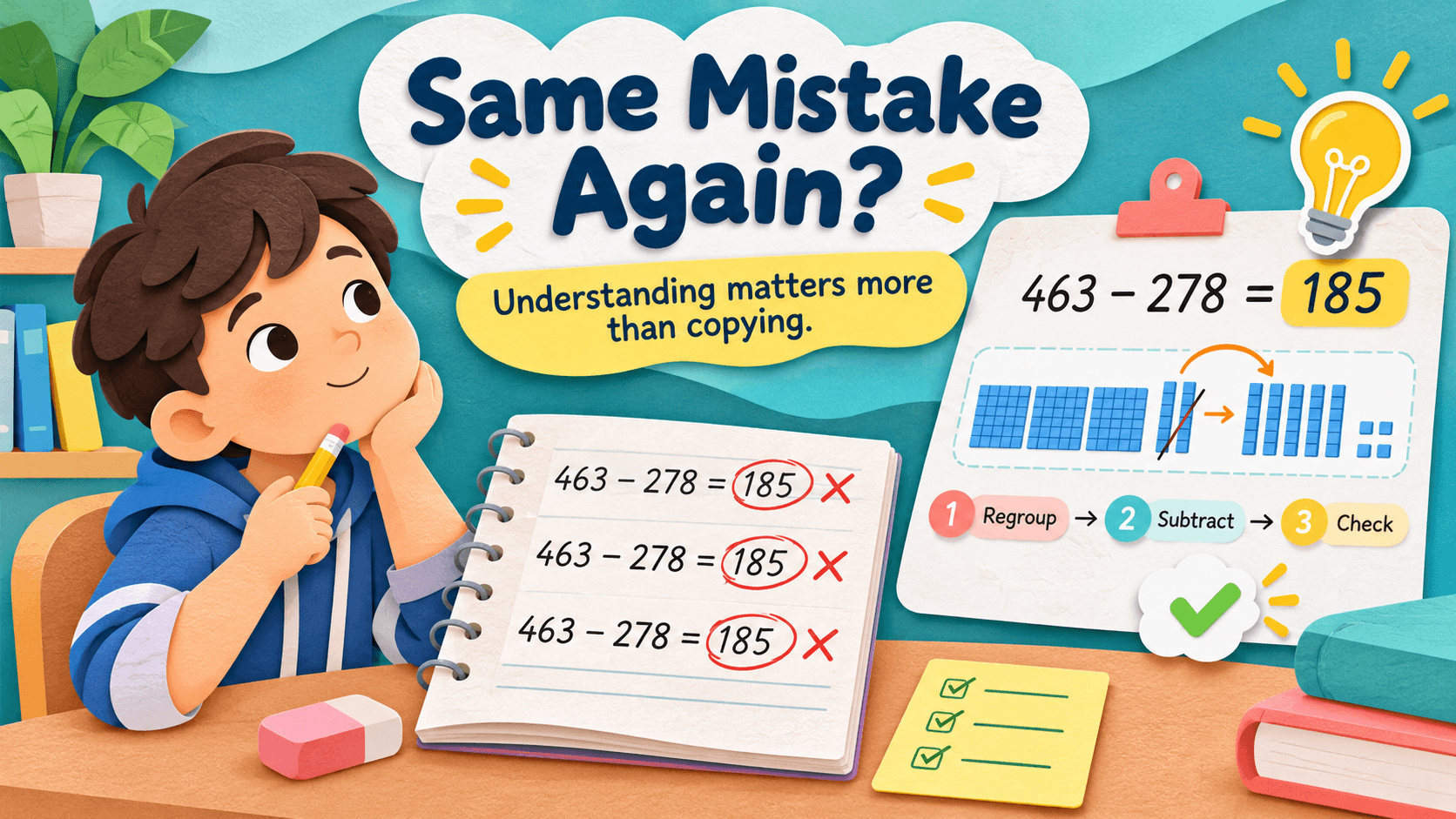

Your child's teacher has corrected the same subtraction mistake three times. Each time, your child copies the correct answer into their notebook. Yet, during the next test, they make the same error again.
You start wondering, "Are they not paying attention, or are they simply being careless?"
For parents exploring Top Schools in Greater Noida, including GD Goenka Public School, Sector Tau, Greater Noida, understanding how children learn from feedback is worth considering.
The problem is that seeing the right answer does not always mean a child understands their mistake.
So, why do these errors keep returning?
Why Doesn't Seeing the Correct Answer Mean a Child Has Understood Their Mistake?
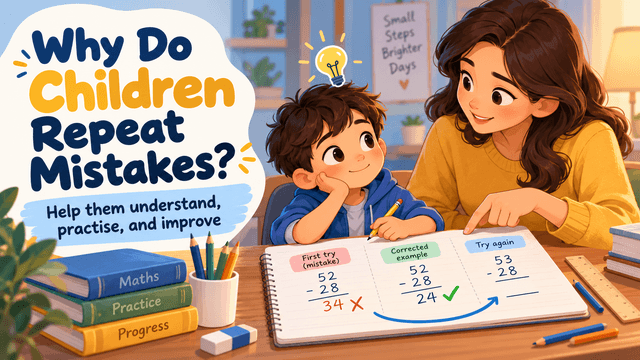
Imagine a Class 5 student solving 52 − 28. They write 36 instead of 24.
Their teacher corrects the answer, and the child neatly rewrites it. However, nobody checks whether they understand how regrouping works.
A week later, they make a similar mistake.
This happens because copying a correction and understanding the reasoning behind it are different things.
Some children remember the correct answer without understanding the steps. Others understand the explanation while listening but struggle to apply it independently.
The Education Endowment Foundation (EEF) explains that effective feedback should help students address misunderstandings and move forward in their learning.
Simply marking something wrong is not enough if the child does not know what to change.
Parents can ask, "Can you show me where your answer started going wrong?"
This small question shifts attention from the final answer to the child's thinking.
How Can Children Learn to Recognise Their Own Mistakes?
Children often depend on teachers or parents to identify every error. But learning improves when they gradually develop the ability to check their own work.
This skill is called metacognition, which simply means thinking about how we learn.
The EEF's 2025 guidance on metacognition recommends teaching students to plan, monitor and evaluate their learning.
Consider a child who writes, "Plants get their food from the soil."
Instead of immediately replacing the answer, a parent could ask, "What role do sunlight and leaves play in making food?"
The child may then realise they have confused the nutrients plants absorb from soil with the food plants produce through photosynthesis.
Parents can encourage this process through three simple questions:
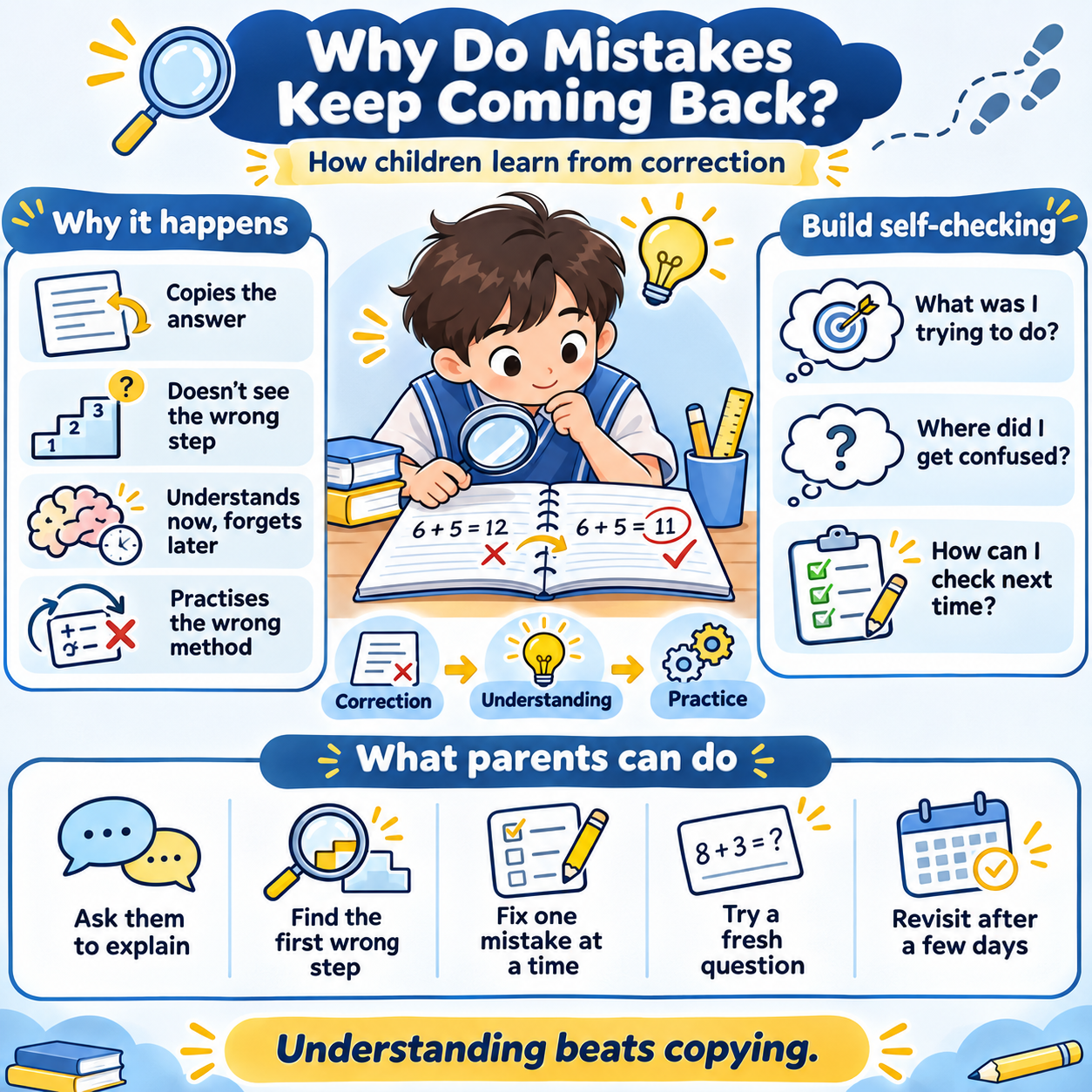
- What was I trying to do?
- At which step did I become confused?
- How can I check my answer next time?
Initially, children may need help answering these questions. Over time, they can begin using them independently.
The goal is not to make children find every mistake alone. It is to help them understand their reasoning rather than depend entirely on corrections from adults.
Why Does Practising the Correct Answer Once Often Fail to Prevent the Mistake?
Sometimes, children genuinely understand a correction but forget how to apply it after several days.
This does not necessarily mean the explanation failed.
Learning something during one homework session and remembering it during an examination are different challenges.
Research by Dunlosky and colleagues identifies practice testing and distributed practice as useful strategies for strengthening learning.
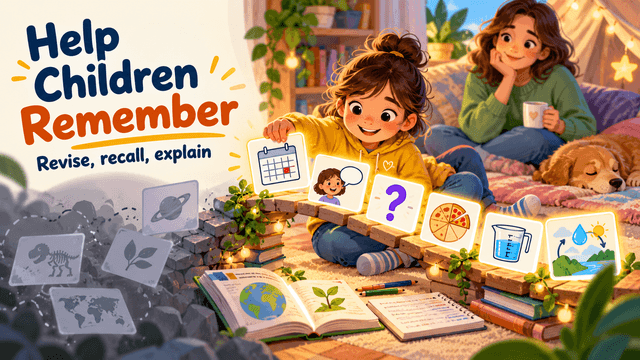
In simple terms, children benefit from recalling information without looking at the solution and revisiting it across different days.
Suppose your child makes a mistake while adding fractions with different denominators.
After explaining the correction, ask them to solve another similar problem independently.
Two days later, give them a different fractions question. Later that week, revisit the concept briefly.
This helps reveal whether they understand the method or merely remember the earlier solution.
However, more practice is not always better.
If a child repeatedly uses the wrong method, completing twenty additional questions may simply reinforce their confusion.
First correct the misunderstanding. Then practise the skill in manageable amounts.
What Can Parents Do When Their Child Keeps Repeating the Same Mistakes?
The next time you notice a repeated error, avoid immediately saying, "You never pay attention."
Instead, try these steps:
- Ask for an explanation: Let your child describe how they reached the answer.
- Find the first wrong step: Focus on where the reasoning changed, not just the final result.
- Correct one problem at a time: Avoid overwhelming them with several explanations.
- Try a fresh question: Check whether they can apply the correction independently.
- Revisit the concept: Return to it after a few days rather than repeating everything immediately.
- Speak with the teacher: If the difficulty continues, discuss what support might help.
Also, notice patterns. Errors caused by rushing need a different response from those caused by misunderstanding.
If difficulties remain persistent across subjects or interfere with everyday learning, seek guidance from the teacher and an appropriate educational professional.
Understanding Feedback at GD Goenka Public School, Greater Noida
GD Goenka Public School, Sector Tau, Greater Noida, describes homework, classwork and formative assessments as ways to provide ongoing feedback in its published middle-school curriculum. It also lists tests, presentations, projects and peer evaluations as assessment methods. Parents comparing Best schools in Greater Noida can examine such information and ask how teachers help students understand and correct recurring errors. Published assessment methods provide useful context, but their effectiveness for individual learners should be discussed directly with the school.

Conclusion
Repeated mistakes do not always indicate carelessness or a lack of effort. Sometimes, children simply have not understood what went wrong or have not practised the correction independently.
Parents can help by asking thoughtful questions, encouraging self-checking and providing opportunities to apply what children have learned.
The next time your child repeats an error, focus less on how many times it has been corrected and more on whether they understand why it happened.
To know more about other schools in Greater Noida, click on the link below




 as a preferred source on