




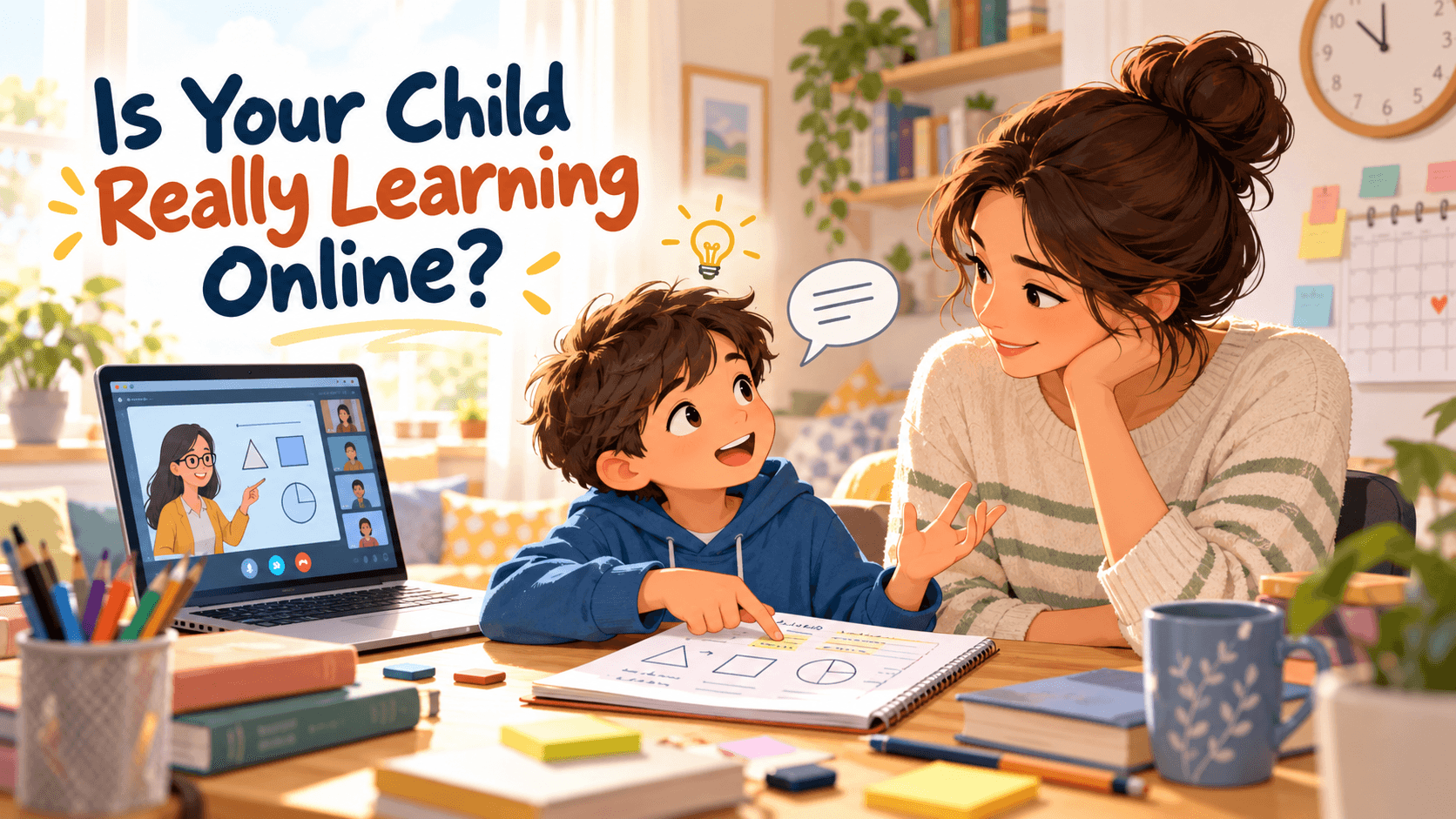

Your child attends online classes regularly, completes homework on time, and seems comfortable with daily lessons. However, when you ask them to explain something they studied, they struggle to find the right words. This can leave you wondering whether they are genuinely learning or simply following instructions.
For parents considering the Top online school in india, understanding how to recognise meaningful learning is an important part of choosing the right educational environment. Schools such as The Class Of One(TCO1), Online School are part of the growing online education landscape, where parents must look beyond attendance and completed assignments to understand their child's academic progress.
Attending Classes Is Not the Same as Understanding Lessons
A child can attend every lesson without fully understanding what is being taught. They might copy answers, memorise definitions, or follow examples without knowing how to apply the information independently.
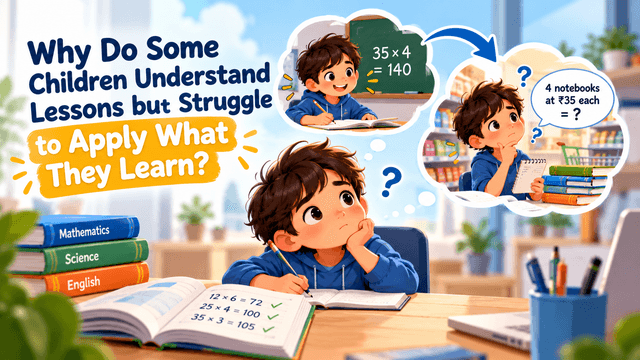
Consider a child who solves multiplication problems correctly after watching the teacher demonstrate them. When given a slightly different question, however, the child becomes confused.
This suggests that the child may remember the steps but has not completely understood the concept.
Meaningful learning involves more than completing tasks. Children should gradually develop the ability to explain ideas in their own words, remember important information, and use their knowledge in unfamiliar situations.
Parents should also remember that understanding develops over time. A child might need several explanations or practice sessions before becoming comfortable with a difficult concept.
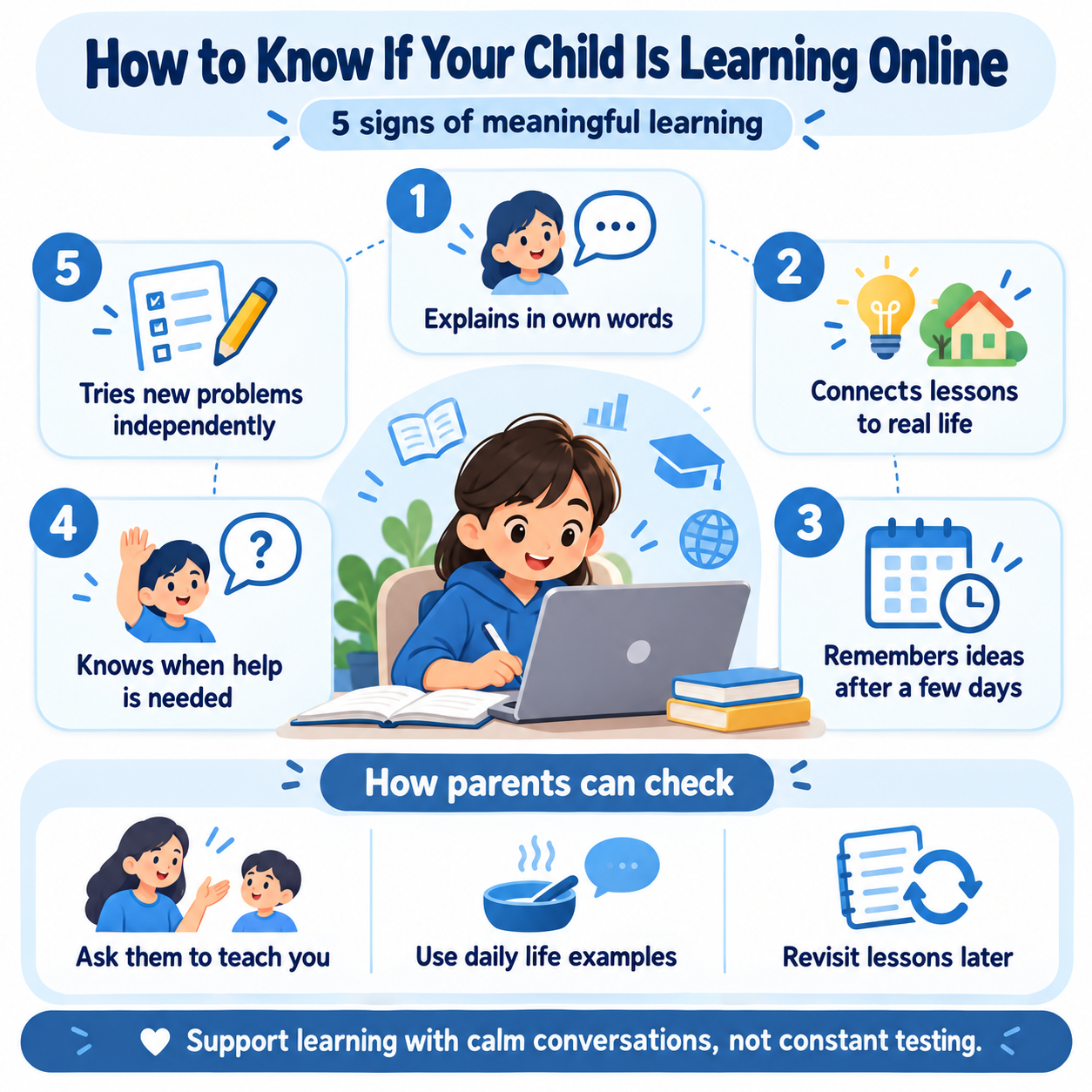
Five Signs Your Child Is Actually Learning
Parents do not need advanced teaching knowledge to recognise meaningful academic progress. Simple observations can reveal how well children understand their lessons.
1. They can explain concepts in their own words
Ask your child what they learned rather than requesting a memorised definition. A child who understands a concept can usually explain its main idea using familiar language.
2. They connect lessons with everyday experiences
After learning about evaporation, for example, your child might explain why wet clothes dry faster on a warm, windy day. Such connections suggest that they are applying classroom knowledge.
3. They remember important ideas after several days
Children naturally forget some information. However, recalling and using important concepts after a few days can indicate that learning is becoming more secure.
4. They recognise when they need help
A child who says, "I understand the first part, but the second part is confusing," is demonstrating awareness of their learning needs.
5. They attempt new problems independently
Children who understand a topic can often use familiar concepts to approach questions they have not encountered before.
These signs should be observed over time. One incorrect answer does not mean a child has failed to understand an entire lesson.
How Parents Can Check Understanding Without Constantly Testing Their Child
Parents can support learning through short, relaxed conversations instead of turning every evening into another examination.
Ask your child to teach you something
After an online lesson, invite your child to explain one interesting thing they learned. You might say, "Can you teach me how that works?"
Explaining a concept encourages children to organise their thoughts and identify anything they still find confusing.
Connect lessons with daily activities
Everyday experiences create opportunities to apply knowledge.
For instance, after a fractions lesson, ask how a pizza could be divided equally among four people. This makes learning practical without introducing additional worksheets.
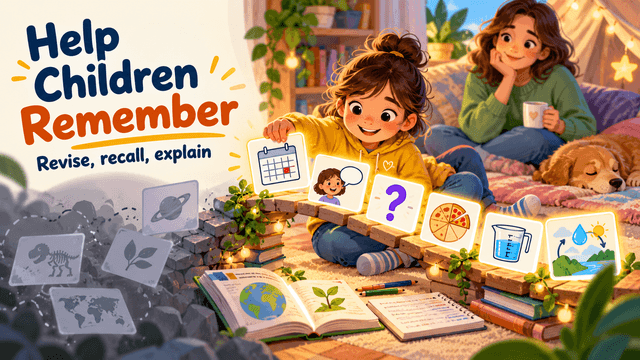
Revisit lessons after a few days
Instead of checking understanding immediately after every class, occasionally return to an earlier topic.
A simple question can help you notice whether your child remembers the main idea or needs more practice.
Encourage children to explain their answers
When your child solves a problem, ask how they reached the answer.
This helps you understand their reasoning rather than focusing only on whether the final answer is correct.
Review teacher feedback together
Look beyond marks and identify specific areas where your child is improving or struggling.
If a teacher repeatedly mentions difficulty with reading comprehension, for example, you can discuss suitable practice activities rather than asking your child to study everything again.
Most importantly, keep these conversations encouraging. Children should feel comfortable admitting confusion without worrying about criticism.
What Should Parents Do When Their Child Is Falling Behind?
If your child repeatedly struggles with the same concepts, begin by identifying the exact difficulty rather than assuming they are not paying attention.
For example, a child struggling with multiplication might need additional practice with repeated addition before attempting more complicated problems.
Speak with the teacher to understand whether similar difficulties appear during lessons and what support might help.
Break challenging topics into smaller steps, allow time for practice, and acknowledge gradual improvement.
Avoid comparing your child's progress with classmates. Every child learns at a different pace, and temporary difficulties do not necessarily indicate a serious learning problem.
Supporting Meaningful Learning at The Class Of One(TCO1), Online School
When exploring the Best online school in india, parents can consider how an online learning environment supports understanding, participation, and academic development. The Class Of One(TCO1), Online School provides a relevant context for discussing the importance of meaningful learning in virtual education.
Beyond attending classes, children benefit from opportunities to ask questions, practise concepts, receive feedback, and develop independent thinking. Parents can also support their child's progress through regular conversations, reviewing academic work, and maintaining communication with teachers. Together, these practices can help make online education more purposeful.
Conclusion
Online learning is not simply about attending classes or finishing assignments. Genuine progress becomes clearer when children can explain concepts, apply knowledge, recognise difficulties, and improve over time.
By observing these everyday signs and maintaining supportive communication with teachers, parents can better understand their child's learning journey without creating unnecessary academic pressure.
To know more about other Online Schools, click on the link below







 as a preferred source on