




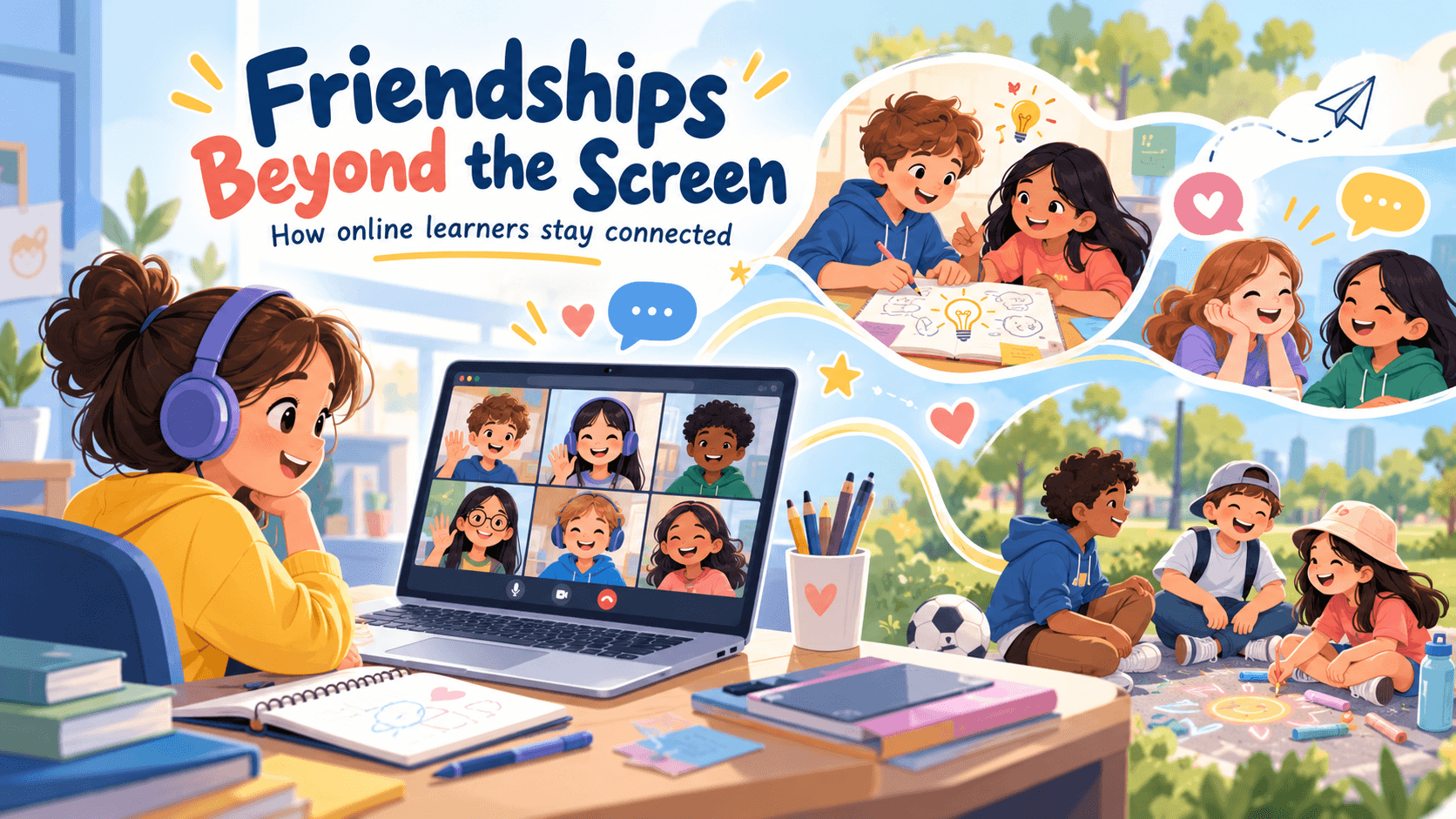

Your child attends online classes regularly, completes homework, and performs well in examinations. But once the laptop closes, you notice something missing. They rarely talk about classmates, school friends, or spending time with children their age. You begin wondering whether studying from home is affecting their social life.
This is a common concern among parents exploring Online schools in India, including Sunbeam World School (SWS), Online School. While online education offers a different learning environment, children still need opportunities to communicate, collaborate, and develop meaningful friendships.
Why Friendships Matter Beyond Classroom Learning
Friendships are an important part of childhood because they provide opportunities for children to understand themselves and others.
When children interact with friends, they learn to share ideas, listen to different opinions, solve disagreements, and support one another.
Friendships also help children feel connected to a community.
According to the US Centers for Disease Control and Prevention (CDC), students who feel supported and respected by their peers tend to demonstrate greater engagement in school.
However, having many classmates or online contacts does not necessarily mean having meaningful friendships.
For example, a quiet child who regularly exchanges ideas with two classmates may feel more connected than someone participating in several large group chats.
Parents should remember that children have different social preferences. Some enjoy large groups, while others feel more comfortable developing a few close relationships.
The important question is whether children feel included, respected, and comfortable interacting with their peers.
How Online Classrooms Can Create Opportunities for Friendship
Online schooling does not necessarily mean children study in isolation.
When students participate in meaningful group activities, they can discover shared interests and gradually become familiar with their classmates.
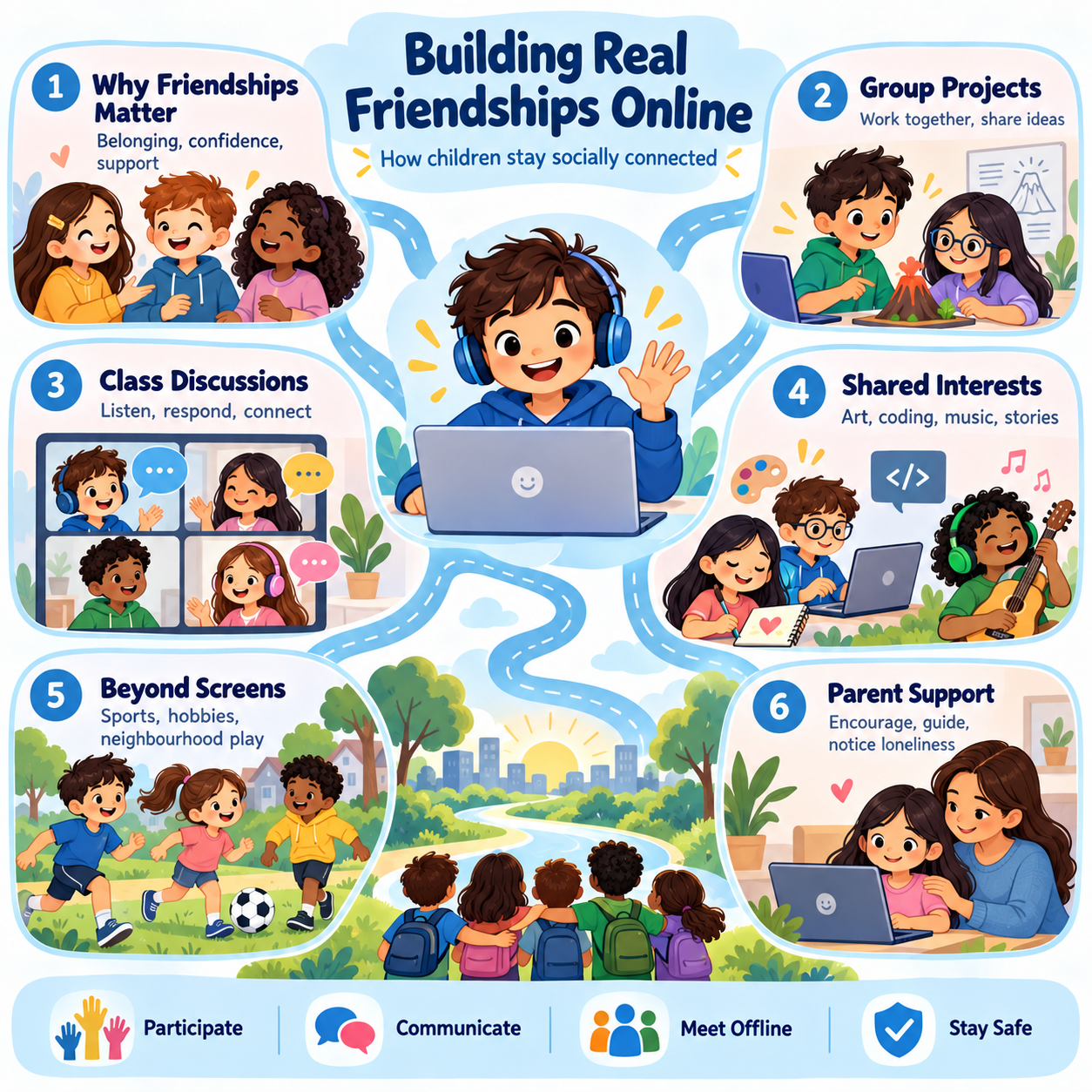
1. Working Together on Group Projects
Collaborative assignments encourage students to communicate, divide responsibilities, and work towards a common goal.
For example, two children preparing an online science presentation might discover that they both enjoy learning about astronomy.
What begins as a school assignment may create opportunities for further conversation.
2. Participating in Classroom Discussions
Interactive lessons allow children to hear different opinions, ask questions, and respond to classmates.
These exchanges help children understand how others think and communicate.
3. Joining Interest-Based Activities
Children often find it easier to connect when they share an interest.
Online activities involving music, coding, art, storytelling, or public speaking can provide natural conversation topics.
4. Maintaining Regular Communication
Friendships usually develop through repeated interaction rather than a single conversation.
Regular discussions, shared projects, and age-appropriate communication can help children build familiarity and trust.
The CDC recommends collaborative learning and informal peer discussions as approaches that may strengthen student connections.
However, participating in online activities does not automatically guarantee friendships. Children may still need encouragement and support.
Why Children Still Need Friendships Beyond Their Screens
Online friendships can be meaningful, but children also benefit from opportunities to interact face-to-face.
Physical activities introduce social experiences that may be less common during virtual lessons.
Playing football, attending dance classes, or participating in neighbourhood games allows children to communicate through gestures, facial expressions, and shared physical experiences.
For example, a child attending online school might collaborate with classmates during virtual lessons and play badminton with neighbourhood friends on weekends.
Both relationships can contribute to their social experiences.
Parents can encourage participation in local hobby classes, sports groups, library activities, or community events.
These opportunities do not need to involve expensive programmes or packed schedules.
A regular evening game with neighbourhood children can also create opportunities for friendship.
The goal is to provide children with different ways to interact while protecting time for studies, relaxation, and family life.
For younger children, parents should ensure that online interactions and in-person activities involve appropriate supervision and safety precautions.
How Parents Can Help Online-School Students Build Friendships
Parents can play an active role in supporting friendships without forcing children to become more outgoing than they naturally are.
Encourage participation in group activities: Motivate children to contribute during discussions and collaborative assignments rather than remaining silent throughout every session.
Arrange supervised peer interactions: Younger children may need help organising appropriate online conversations or activities with classmates.
Support offline interests: Encourage activities such as swimming, football, painting, or music classes where children can meet peers.
Teach digital communication skills: Discuss respectful messaging, privacy, online boundaries, and the importance of reporting uncomfortable interactions.
Avoid comparing social circles: A child with two supportive friends is not necessarily less socially developed than one with many acquaintances.
Notice signs of loneliness: If your child repeatedly expresses sadness about having no friends or avoids social interaction, discuss their concerns and consider seeking support from a teacher or qualified professional.
Parents can also change how they discuss school.
Instead of asking only, "What did you learn today?" try asking, "Who did you work with?" or "Did you enjoy talking to anyone during class?"
Such conversations help parents understand their child's social experiences.
Supporting Peer Interaction at Sunbeam World School
Sunbeam World School (SWS), Online School describes interactive live classes, collaborative projects, group discussions, and co-curricular activities as part of its online learning environment. These activities can provide opportunities for students to interact beyond individual academic tasks. Parents comparing Online schools in India or searching for the Best online schools in India should consider how schools encourage peer communication, participation, and social connections alongside academic learning.

Conclusion
Meaningful friendships depend on shared experiences, regular communication, and emotional connection, not simply being present in the same physical classroom.
Online learning can provide opportunities for children to interact with classmates, while offline activities offer additional social experiences.
Parents can support both by encouraging participation, respecting individual personalities, and creating regular opportunities for children to connect with others.
To know more about other Online Schools, click on the link below

 as a preferred source on