




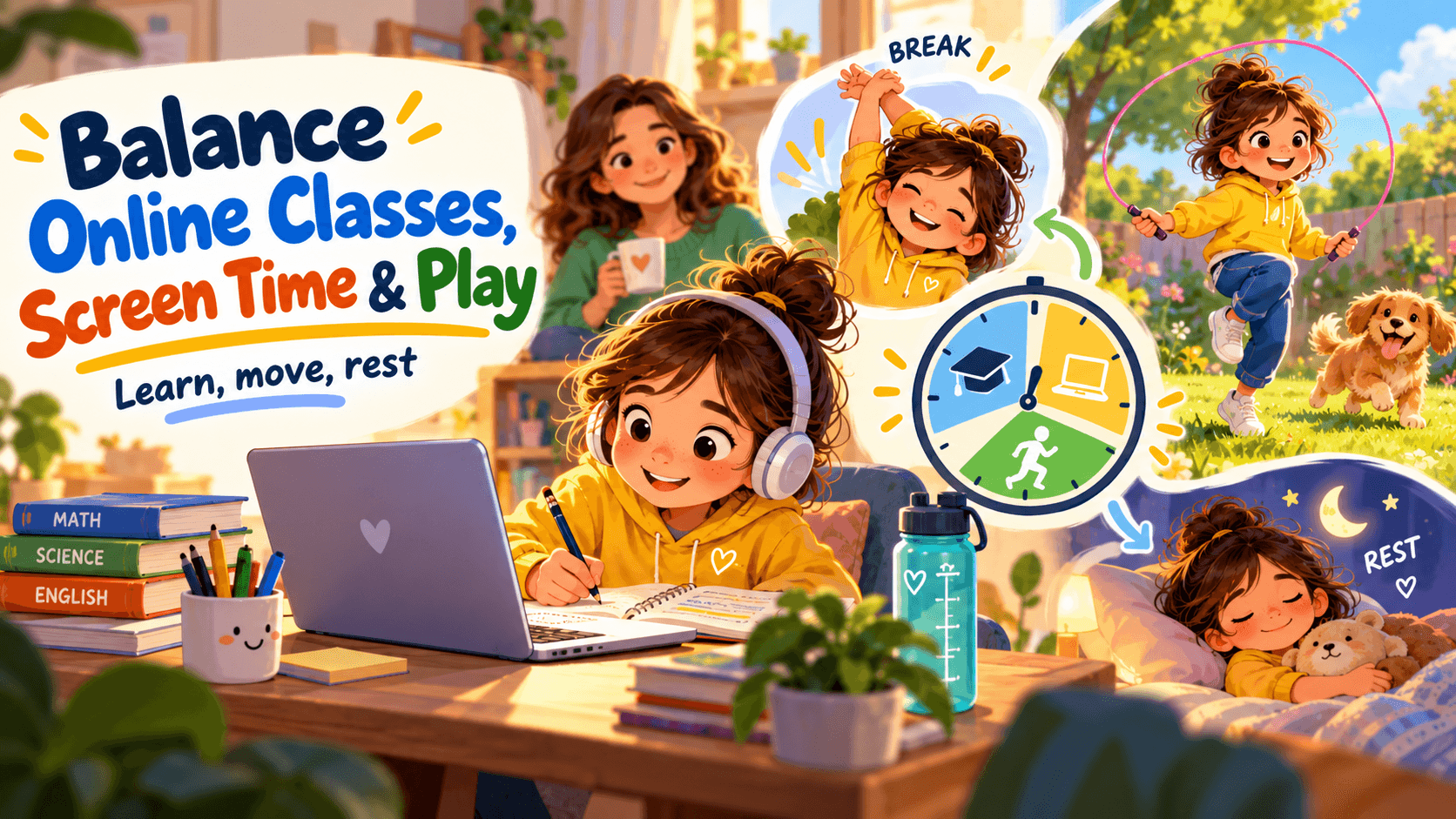

Your child finishes an online class, completes an assignment on the laptop, and then picks up a phone to watch videos. By evening, you realise they have spent most of the day sitting in front of a screen, with little time for outdoor play or physical activity.
For parents exploring a Top Online school in India, this can be a genuine concern. Online education offers children opportunities to learn from home, but how can parents make sure it does not affect their physical health or daily routine?
The solution is not to eliminate screens completely. It is to help children develop habits that balance digital learning with movement, rest, and activities beyond the classroom.
Is All Screen Time Equally Harmful for Children?
Not all screen time serves the same purpose. Attending an interactive science class, completing a digital assignment, and watching entertainment videos are different activities.
Educational screen time can help children access lessons, communicate with teachers, and explore subjects through digital resources. However, even when children are using devices for learning, spending long hours sitting in one place can cause physical discomfort.
Children may experience tired eyes, headaches, or stiffness when they remain in front of screens without breaks.
The American Academy of Pediatrics encourages families to consider how children use digital devices and whether screen time interferes with important activities such as sleep, exercise, and social interaction.
Instead of focusing only on the number of hours spent online, parents should consider a few important questions:
- Is my child using the screen for learning or entertainment?
- Are they taking regular breaks between activities?
- Do they have enough time for outdoor play and physical movement?
- Is screen use affecting their sleep or family interactions?
Understanding these differences can help parents establish healthier boundaries without making children feel that technology itself is harmful.
Why Is Physical Activity Important for Online Students?
When children attend school from home, they may miss some of the natural movement involved in travelling to school, walking between classrooms, or playing during breaks.
Without a planned routine, they can spend much of their day sitting.
The World Health Organization recommends that children aged 5–17 engage in an average of at least 60 minutes of moderate-to-vigorous physical activity daily across the week.
Physical activity supports children's fitness, strengthens muscles and bones, and contributes to overall wellbeing. It can also provide a refreshing break from academic responsibilities.
The encouraging part is that children do not need professional sports training to stay active.
Parents can introduce simple activities such as:
- Cycling, skipping, or playing badminton in the evening.
- Dancing to music during free time.
- Walking with family members after classes.
- Playing outdoor games with neighbourhood friends.
- Practising yoga or age-appropriate exercises at home.
For example, a child attending online classes until afternoon could spend an hour playing outside in the evening. Another child who enjoys dancing might divide their activity into shorter sessions throughout the day.
What matters is making movement a regular part of life rather than treating it as an occasional activity.
How Can Parents Create a Balanced Daily Routine?
One of the biggest advantages of a predictable routine is that children know when to study, when to take breaks, and when to relax.
A balanced schedule does not need to be strict or complicated. It simply needs to give enough attention to learning, physical activity, meals, sleep, and personal interests.
Start the day with movement. Children can begin with stretching, a short walk, or simple exercises before attending their first online class. This helps them develop a habit of being active.
Encourage breaks between lessons. During scheduled breaks, children can stand up, walk around, drink water, or look away from their screens. The 20-20-20 rule suggests looking at something approximately 20 feet away for 20 seconds after every 20 minutes of screen use to help reduce eye strain.
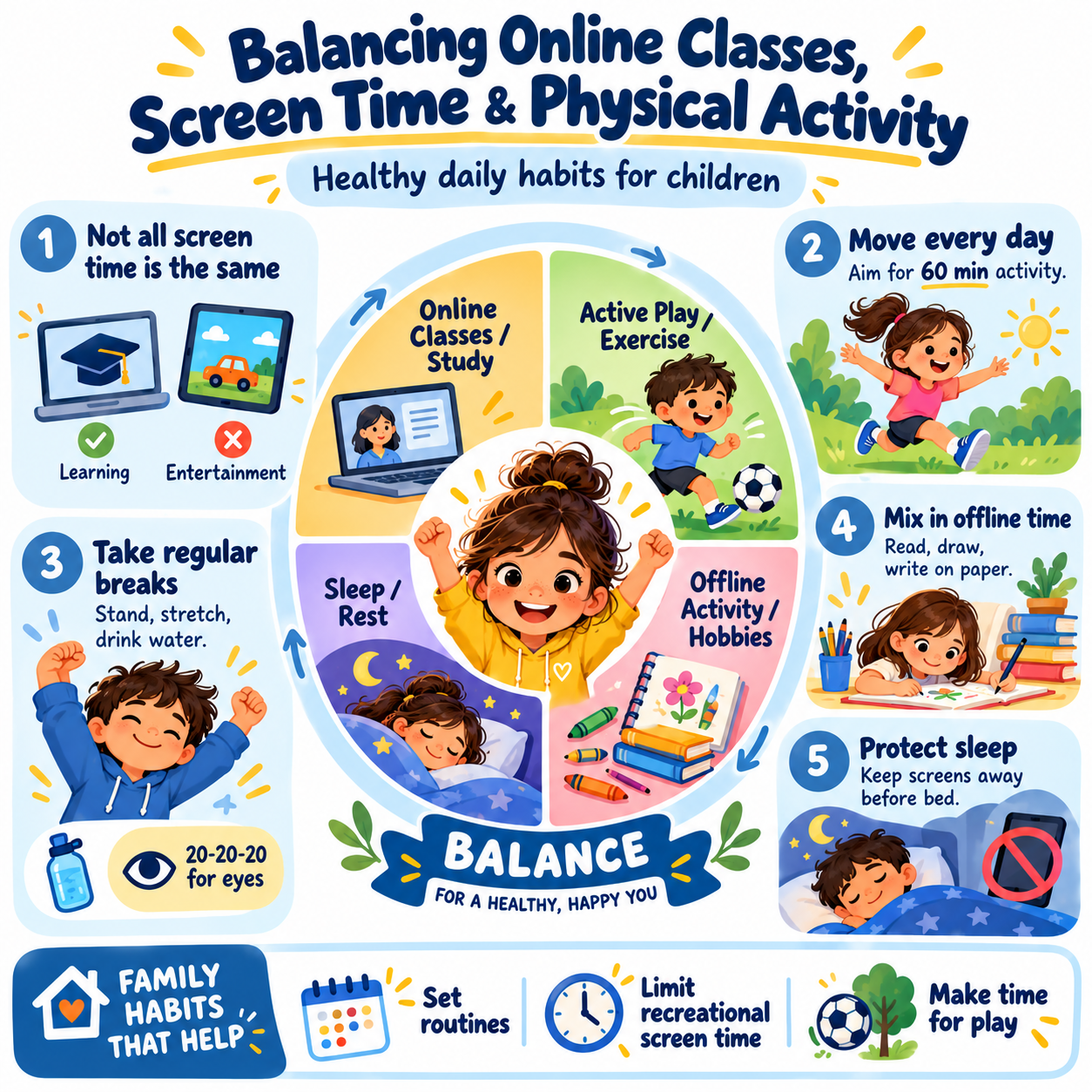
Keep some learning activities offline. Reading printed books, practising handwriting, drawing diagrams, or completing suitable assignments on paper can provide a change from digital tasks.
Reserve time for outdoor activities. Once classes and essential assignments are completed, children should have opportunities to play, exercise, or spend time with friends.
Maintain consistent sleep habits. Children aged 6–12 generally need 9–12 hours of sleep, while teenagers aged 13–18 need 8–10 hours. Late-night gaming or entertainment should not interfere with adequate rest.
Parents should adjust these habits according to their child's age, class schedule, interests, and family circumstances.
How Can Parents Encourage Healthy Screen Habits?
Children are more likely to follow screen time rules when they understand why those rules exist.
Instead of suddenly taking away devices, parents can involve children in deciding when recreational screen use is appropriate.
For example, a family might agree that phones are not used during meals, entertainment videos are watched after homework, and devices are put away before bedtime.
Parents should also practise the habits they expect from their children. If adults constantly check their phones during conversations, children may find it difficult to understand why their own screen use needs limits.
Another useful approach is to encourage enjoyable offline interests. Reading, painting, gardening, music, sports, and spending time with friends can help children discover activities that do not depend on digital devices.
The aim is not to make children afraid of screens. It is to help them understand when technology is useful and when taking a break is equally important.
Finding a Healthy Balance With Online Schooling
For families considering the Best Online school in india, maintaining a balanced lifestyle is an important part of the educational decision. The World Ecademy(TWE), Online School offers an online learning environment where children can continue their education from home.

This makes it important for parents to create a daily routine that accommodates academic lessons alongside physical activity, hobbies, rest, and meaningful social interactions. A thoughtful balance between screen-based learning and offline experiences can help children develop healthy habits while managing their educational responsibilities.
A Healthy Routine Matters More Than Perfect Screen Limits
Online learning and physical activity do not have to compete for a child's time. Both can become part of a healthy daily routine when parents establish realistic expectations and encourage consistent habits.
Rather than measuring every minute spent on a device, focus on whether your child is learning effectively, staying active, sleeping well, and enjoying life beyond screens.
Small, consistent changes can help children develop a healthier relationship with technology while making time for the activities that support their overall development.
To know more about other Online Schools, click on the link below









 as a preferred source on