









Have you ever noticed how environmental issues often feel distant to students, even though their impact is felt every day? From climate change and pollution to shrinking green spaces, today’s generation is growing up in a world that urgently needs informed and responsible action. Creating awareness is important, but inspiring real involvement is what truly shapes future changemakers.
Parents and educators now recognize that environmental education cannot be limited to textbook chapters. Students must experience sustainability in action, understand real-world ecological challenges, and develop habits that reflect care for the planet. Schools that integrate experiential environmental programmes help students build a deeper connection with nature and a stronger sense of responsibility.
This article explores how initiatives like Terra Care encourage learners to move beyond theory and engage meaningfully with environmental issues, how project-based and community-driven activities foster eco-conscious habits, and how KR Mangalam World School, Gurgaon, takes pride in inspiring environmental awareness and action through its Terra Care signature programme, nurturing informed, proactive guardians of the environment.
Also Read | Nurturing Neoteric Innovators: Inside K.R. Mangalam World School's Project-Based Learning Revolution
Understanding Environmental Education in the 21st Century
Environmental education today is no longer limited to learning definitions or memorising facts about ecosystems. It is about helping students understand the real-world impact of human actions on the planet and empowering them to become part of the solution. As environmental challenges grow more complex, education must evolve to equip learners with knowledge, responsibility, and the confidence to act.
Modern environmental education focuses on:
- Building awareness of global and local issues: Students learn about climate change, waste management, conservation, biodiversity loss, and sustainable resource use, helping them see how these challenges affect everyday life.
- Encouraging critical thinking: Learners are prompted to question existing practices, analyse problems, and explore innovative solutions rather than accepting information passively.
- Connecting learning to real life: Environmental concepts become meaningful when students can relate them to their homes, communities, and surroundings.
- Nurturing responsible citizenship: By understanding their role in protecting the planet, students begin to see themselves as active contributors to a sustainable future.
Through this approach, environmental education shifts from theoretical knowledge to a mindset of stewardship, preparing students to care for the world they will one day lead.
Why Experiential Learning is Key to Building Eco-Conscious Habits
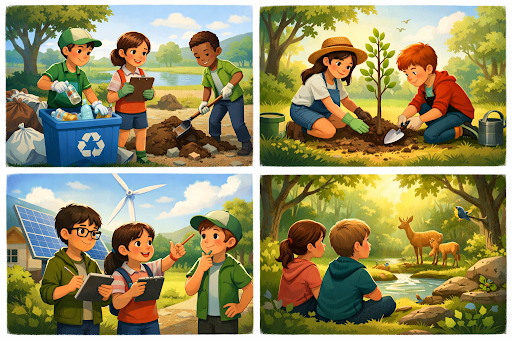
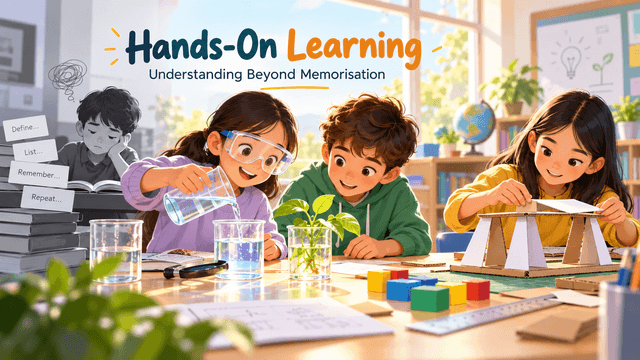
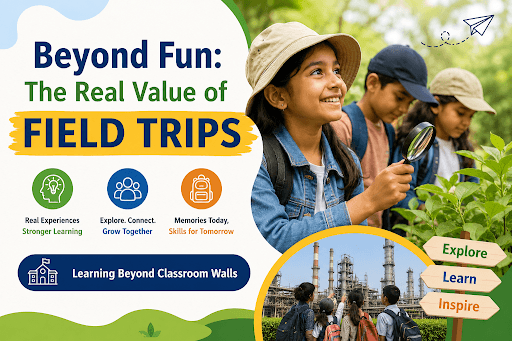
Students learn best when they actively engage with what they are studying. In environmental education, experiential learning plays a crucial role in turning awareness into action. When learners participate in hands-on activities, sustainability stops being an abstract idea and becomes a lived experience.
Experiential learning supports eco-conscious development in several ways:
- Transforms knowledge into practice: Students move from simply knowing about environmental problems to actively addressing them through real tasks and projects.
- Strengthens personal responsibility: When learners take part in activities like waste segregation, tree planting, or energy-saving initiatives, they begin to see how individual actions matter.
- Builds problem-solving skills: Real-world environmental challenges encourage students to think critically, analyse situations, and propose practical solutions.
- Creates emotional connection with nature: Direct interaction with the natural world fosters empathy and a deeper sense of care for the environment.
By experiencing sustainability firsthand, students develop habits that extend beyond the classroom, shaping everyday choices that support a healthier planet.
How Project-Based Activities and Clubs Deepen Environmental Understanding
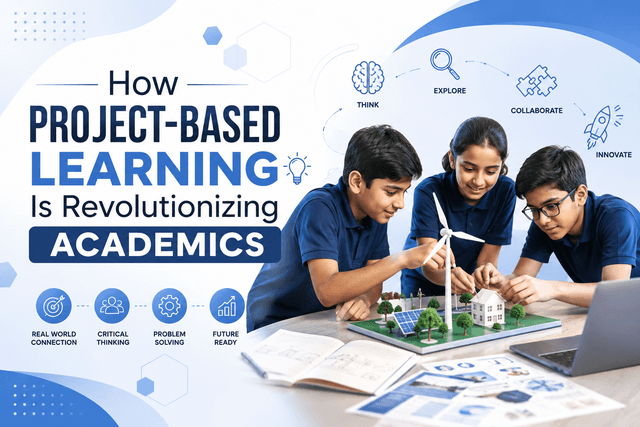
Project-based learning and student clubs provide powerful platforms for translating environmental awareness into meaningful action. These spaces allow learners to explore ecological challenges in depth while working collaboratively on real solutions.
Such initiatives support environmental understanding by:
- Encouraging hands-on exploration: Students investigate real issues such as waste management, water conservation, and energy usage, gaining practical insight into sustainability.
- Promoting teamwork and collaboration: Working on environmental projects in groups teaches students to share ideas, listen to diverse perspectives, and build solutions together.
- Developing leadership and initiative: Clubs and projects give learners opportunities to lead campaigns, organise drives, and take ownership of change.
- Linking local actions to global impact: Students begin to understand how small everyday choices connect to larger environmental goals.
Through these experiences, learners don’t just study the environment; they actively participate in protecting it, strengthening their identity as responsible stewards of the planet.
Check Out | Be a Radio Star
KR Mangalam World School: Inspiring Environmental Action Through Terra Care
KR Mangalam World School, Gurgaon, takes pride in nurturing responsible, environmentally conscious learners through its Terra Care signature programme, an initiative designed to move students beyond classroom theory and into real-world environmental action.
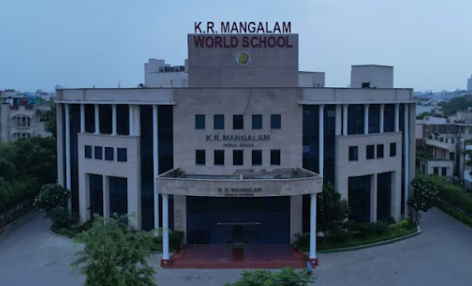
The school believes that true environmental education begins when students experience sustainability in practice. Terra Care provides meaningful opportunities for learners to explore ecological challenges, understand their impact, and adopt habits that support a healthier planet.
Highlights of the Terra Care Programme
- Project-based environmental learning that encourages students to research issues such as waste reduction, conservation, and sustainable living, and propose practical solutions.
- Climate action and eco-clubs where learners collaborate on awareness campaigns, green drives, and sustainability initiatives within the school and community.
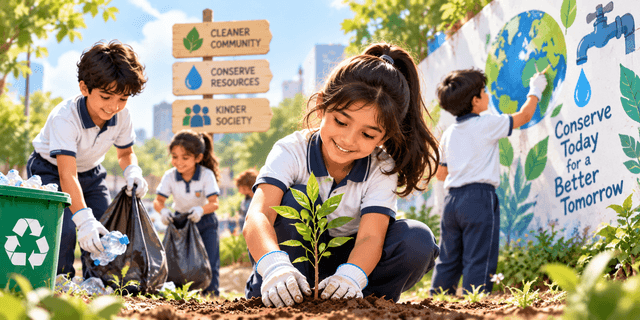
- Hands-on sustainability activities such as plantation drives, recycling projects, and resource conservation efforts that build everyday eco-conscious habits.
- Community engagement initiatives that help students understand how environmental responsibility extends beyond campus and into society at large.
- Integration of environmental values into daily learning, reinforcing the idea that sustainability is a lifestyle, not a one-time activity.
At KR Mangalam World School, Terra Care is not treated as a standalone programme; it is a culture of care for the planet. Students gradually develop a deeper connection with nature, stronger critical-thinking skills, and a sense of responsibility for protecting the environment.
By embedding sustainability into its educational framework, the school demonstrates that when students are empowered with knowledge, experience, and purpose, they grow into informed and proactive guardians of the Earth.
For more information on this and other such schools in the area, check out this list of the best schools in Greater Noida West.




 as a preferred source on