







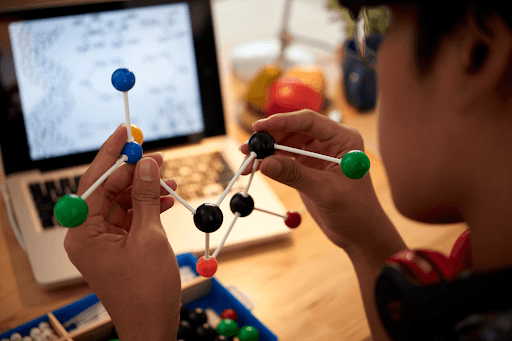

The classroom of 2025 looks nothing like it did a decade ago. Gone are the days when students sat in rigid rows, memorising facts from textbooks only to forget them after exams. Today's learners need more—they need to question, create, collaborate, and solve real problems that matter.
Indian education is witnessing a paradigm shift, thanks largely to the National Education Policy 2020, which emphasises experiential learning over rote memorisation. Schools across the country are reimagining what education means, moving toward models that prepare students not just for exams, but for life.
K.R. Mangalam World School in Gurgaon stands at the forefront of this revolution, implementing project-based learning methodologies that transform students into innovators, critical thinkers, and global citizens. In this article, we'll explore how project-based learning is reshaping education and why it matters for preparing the next generation.
Also Read | Redefining Education with Imagination at KR Mangalam World School, Gurgaon
The Shift from Traditional to Experiential Learning in Modern Education
Modern education demands a radical departure from conventional teaching methods. The world has evolved rapidly, and so must our approach to learning. Let's examine why this transformation is not just beneficial but necessary.
The Limitations of Conventional Classroom Teaching
Traditional classroom teaching, with its emphasis on passive listening and information retention, simply cannot equip students with the skills they need. Research consistently shows that students forget most of what they memorise within weeks. What sticks, however, is what they experience, create, and apply.
The teacher-centred model, where knowledge flows in one direction, creates disengaged learners who view education as something done to them rather than with them. This approach fails to develop critical thinking or problem-solving abilities.
NEP 2020's Vision for Active Learning
The National Education Policy 2020 recognised this gap and made experiential learning a cornerstone of its vision. It emphasises developing critical thinking, creativity, and problem-solving abilities—skills that can only be nurtured through active participation, not passive consumption.
Schools are now encouraged to move beyond textbooks and create learning environments where students engage with real-world challenges. This shift isn't just about changing teaching methods; it's about changing mindsets completely.
Benefits of Learning by Doing
When students become active participants in their learning journey, they develop curiosity, resilience, and a genuine love for learning that goes far beyond grades. Experiential learning enhances retention rates significantly because students connect concepts to personal experiences.
This approach also builds confidence as students see themselves as capable creators rather than just consumers of information. The skills developed through hands-on learning—adaptability, innovation, and critical analysis—become lifelong assets.
What is Project-Based Learning and Why Does It Matter?
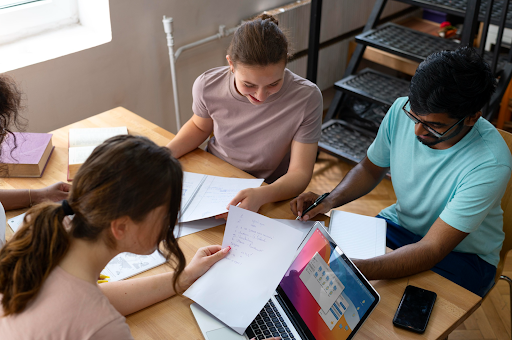
Project-Based Learning represents a fundamental shift in educational philosophy. Rather than learning about topics in isolation, students engage with meaningful work that integrates multiple disciplines and produces tangible outcomes.
Defining Project-Based Learning
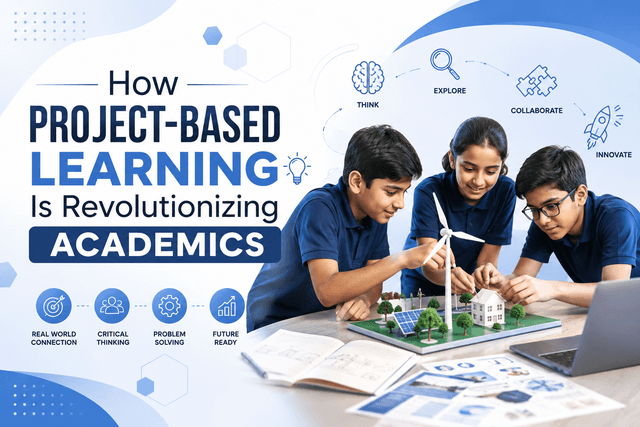
At its core, Project-Based Learning is simple yet profound: students learn by doing. Instead of studying a topic in isolation, they work on meaningful projects that require them to apply knowledge from multiple subjects, think critically, and create tangible outcomes.
Think of a traditional science lesson on water conservation versus a project-based approach where students conduct experiments, measure wastage, devise solutions, implement them, and present findings. The difference is transformative.
Key Characteristics of Effective PBL
Projects extend over days, weeks, or even months, giving students time to dive deep, make mistakes, iterate, and arrive at solutions through their own inquiry. The process matters as much as the outcome.
Essential elements include:
- Student-driven inquiry and decision-making
- Real-world relevance and authentic challenges
- Collaborative teamwork and peer learning
- Presentation of findings to authentic audiences
- Integration of multiple subject areas
Preparing Students for the Future
Why does this matter in 2025 and beyond? Because the skills PBL develops—collaboration, communication, creativity, and critical thinking—are precisely what employers, universities, and society need. These aren't skills you can cram the night before an exam. They're cultivated through sustained engagement with meaningful work.
Core Components of Effective Project-Based Learning Programs
Understanding the theory behind PBL is one thing; implementing it effectively is another. Successful project-based learning rests on several foundational pillars that work together to create powerful experiences.
Inquiry and Research Skills
Students in PBL environments become natural researchers. They start with questions—genuine curiosities about how things work, why problems exist, or what solutions might look like. Teachers act as facilitators, guiding students toward resources but letting them drive the investigation.
This inquiry-based approach develops information literacy, a crucial skill in our information-saturated world. Students learn to evaluate sources and synthesise knowledge from multiple perspectives.
Real-World Application and Innovation
The best projects connect classroom learning to authentic challenges. Whether designing sustainable solutions for environmental problems, creating business plans for social enterprises, or building working models that solve community issues, students see the relevance of their education.
When learning has a purpose beyond grades, engagement soars. A student working on a project to reduce plastic waste isn't just learning chemistry—they're becoming an active citizen making tangible change.
Collaborative Problem-Solving
Few real-world problems are solved by individuals working alone. PBL inherently requires teamwork, with students taking on different roles, leveraging each other's strengths, and navigating the complexities of group dynamics.
Through collaboration, students develop emotional intelligence and interpersonal skills. They learn to communicate ideas clearly, give and receive constructive feedback, and celebrate collective success.
The Role of STEAM Education in Project-Based Learning
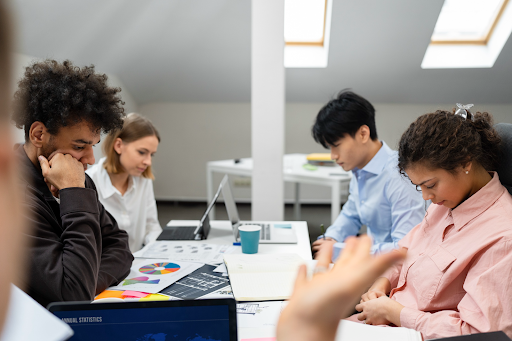
STEAM—Science, Technology, Engineering, Arts, and Mathematics—represents an evolution of educational thinking. By integrating arts into STEM, educators recognize that innovation requires both technical proficiency and creative thinking.
Why Arts Matter in STEM
The relationship between STEAM and PBL is natural and powerful. STEAM projects are inherently interdisciplinary, requiring students to apply scientific principles, use technology, employ engineering design, express creativity, and work with mathematical concepts simultaneously.
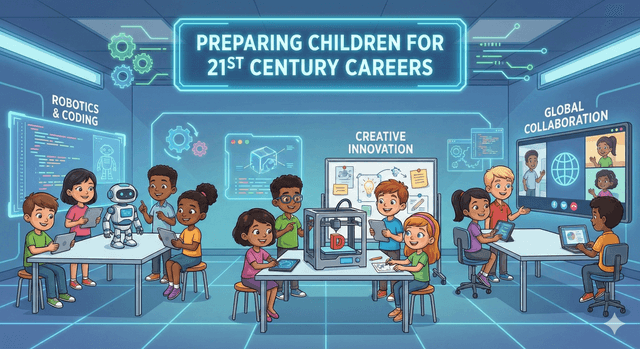
A robotics project, for instance, involves coding (technology), mechanical design (engineering), problem-solving (mathematics), scientific principles (physics), and aesthetic considerations (arts). This integration reflects how professionals actually work in real scenarios.
Breaking Down Subject Barriers
Engineers don't just calculate; they design and innovate. Scientists don't just experiment; they visualise and communicate findings creatively. By breaking down artificial subject barriers, STEAM-based PBL prepares students for the integrated nature of modern work.
This holistic approach ensures students see connections between disciplines rather than viewing subjects as isolated silos of knowledge.
Global Perspectives: International Exchange and Collaborative Projects
In an interconnected world, education cannot remain insular. Students today will work with colleagues across continents, navigate diverse cultural contexts, and solve problems that transcend borders.
The Value of Cross-Cultural Learning
International exchange programs, both virtual and physical, enrich project-based learning significantly. When students collaborate with peers from different countries, they encounter new viewpoints, challenge their assumptions, and develop cultural sensitivity.
A project on climate change gains depth when students hear firsthand accounts from peers experiencing different environmental realities. These exchanges transform academic exercises into genuine cross-cultural collaborations.
Building Global Citizens
The British Council's International School Award recognises institutions that embed international dimensions into their curriculum. Such global connections prepare students to be citizens of the world, not just their immediate communities.
Exposure to diverse perspectives helps students develop empathy, adaptability, and the ability to work in multicultural environments—skills increasingly valued in our globalised world.
Check Out | Nurturing Tomorrow’s Global Citizens
K.R. Mangalam World School, Gurgaon: Where Innovation Meets Implementation
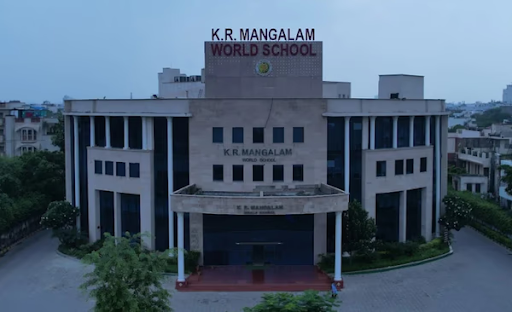
Located in Sector 41, Gurgaon, K.R. Mangalam World School was established in 2010 as a CBSE-affiliated institution. Spread across 5 acres, the school operates on a 5-day schedule, serving students from nursery through grade XII while following NEP 2020 guidelines.
The school's PBL spans all age groups remarkably. Grade I students undertake week-long animal habitat research projects. Grade VII students spend a month creating Multi-Cultural Fairs, transforming classrooms into mini countries with cultural presentations, cuisine, and music. Grade XII students developed "Kisaan Anumaan," an AI-powered app for farmers, earning IBM mentorship. The Tinkerpreneur program offers 9-week entrepreneurial boot camps with industry leaders. Grade XI students created "Seaspiracy," a website exploring ocean conservation.
The Atal Tinkering Lab, recognised by NITI Aayog, serves as the innovation hub. Students work with robotics kits, 3D printers, and electronics equipment. The AI-integrated curriculum, robotics workshops, and science exhibitions showcase working models bringing concepts to life. Mathematical intelligence activities and space astronomy classes foster a scientific temperament. Grade X students tracked evaporation rates over five days—simple yet profound in teaching methodology.
KRM earned British Council accreditation for three consecutive terms (2014-2023). Students participate in exchanges with Red Hill Primary School, Australia. The NASA Earth KAM program allows students to generate satellite images. Winning first prize at the Odyssey of the Mind Eurofest in Germany (2018) demonstrated global competitiveness. These international platforms enrich students' worldviews significantly.
Signature programs address environmental consciousness (Terra Care), creative expression (Expressions Enhanced), and physical wellness. The 14:1 student-teacher ratio in the primary wing ensures personalised attention. The 4-year career counselling program guides students from grade IX through XII with aptitude testing, profile building, and university applications. World-class sports facilities include shooting ranges, golf courses, and gymnastics arenas.
The school's motto—"Engage. Learn. Innovate."—manifests in every classroom and project. From parent-shared morning assemblies to leadership camps, KRM creates an ecosystem where innovation thrives alongside strong ethical values.
Is your child ready to become a neoteric innovator who thinks critically, collaborates effectively, and creates solutions to real-world problems? Discover how K.R. Mangalam World School's project-based learning approach can provide the foundation for lifelong success, preparing them not just for exams but for life in a rapidly evolving world.
For more information on this and other such schools in the area, check out this list of the best schools in Greater Noida West.







 as a preferred source on