









The way we think about education in India has quietly but decisively shifted. Memorising textbook pages no longer cuts it — parents, educators, and policymakers alike are waking up to the fact that real learning happens when students are challenged to think, not just recall. The National Education Policy 2020 made this pivot official, pushing schools toward flexibility, experiential learning, and holistic student development. But policy on paper and practice on the ground are two very different things. Some schools have genuinely embraced this change; many others are just rebranding the same old approach.
G.D. Goenka Public School, Greater Noida, is one of the institutions quietly proving that the shift is real — not through flashy marketing, but through the way its classrooms actually function day to day.
In this article, we'll explore why rote learning is losing ground, what project-based learning actually looks like inside a classroom, why international recognition programmes matter more than most people think, and how co-curricular activities quietly build the skills that matter most.
Also Read | Shaping Well-Rounded Global Citizens through Holistic Learning
The Problem With How We Used to Learn
Education in India has long leaned on a single strategy: memorise, reproduce, repeat. For decades, this worked well enough — exams were designed around recall, and students who could cram the hardest simply scored the highest. But the world these students are stepping into doesn't reward memorisation. It rewards adaptability, problem-solving, and the ability to work with incomplete information.
Research backs this up. A 2023 meta-analysis published in Frontiers in Psychology, drawing from 66 separate studies, found that students taught through project-based approaches significantly outperformed their peers in both academic achievement and critical thinking skills. Lucas Education Research placed that gap at roughly 8 percentage points on science assessments alone.
Why Rote Learning Falls Short
The core issue isn't effort — it's design. Rote systems train students to store information, not to use it. When the exam is over, most of what was memorised disappears. What remains are surface-level habits, not deep understanding.
What the NEP 2020 Changed
The National Education Policy 2020 acknowledged this gap head-on. It called for a shift toward competency-based education, reduced emphasis on rote memorisation, and greater integration of experiential and inquiry-based methods across all grade levels.
Project-Based Learning: What It Actually Looks Like

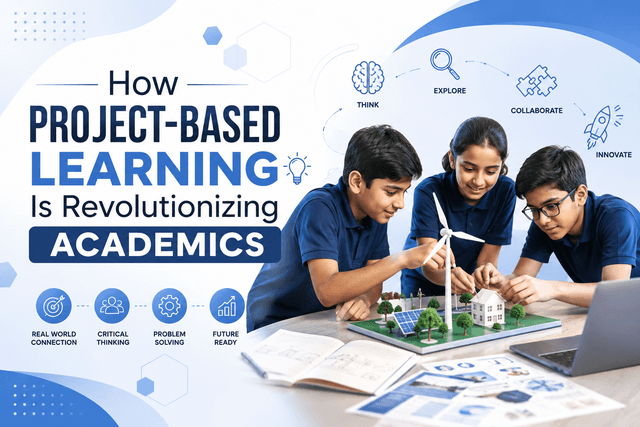
Project-based learning sounds impressive on paper, but what does it mean in a real classroom? It means students aren't just reading about environmental challenges — they're designing small-scale solutions. It's not about passively consuming knowledge; it's about actively building something with it.
The method works because it forces collaboration, sustained effort, and genuine curiosity. Students have to communicate, delegate, fail, adjust, and try again — all skills that textbooks simply cannot teach.
The Skills It Builds
- Critical thinking — Students must evaluate information, not just absorb it
- Teamwork — Projects rarely succeed when done alone; collaboration becomes non-negotiable
- Communication — Presenting findings to a class builds confidence and clarity
- Real-world relevance — Problems are drawn from actual challenges, not hypothetical ones
Why Schools Are Adopting It
With over 24,000 CBSE-affiliated schools across India, the pressure to differentiate is real. Schools that stick to traditional methods risk blending into the crowd. Project-based learning gives institutions a structured way to move beyond the textbook without abandoning academic rigour.
International Recognition: More Than Just a Badge
A school earning an international award might sound like a marketing win. But programmes like the British Council's International School Award (ISA) and Microsoft's Showcase School designation aren't handed out casually — they require sustained, verified effort.
The ISA, which ran across 31 countries and reached thousands of Indian schools between 2003 and 2020, evaluated schools on how effectively they integrated global perspectives into everyday teaching. It wasn't about one event or one project; it was about whether the school's culture genuinely reflected international thinking.
What the British Council ISA Evaluated
Schools had to demonstrate real collaboration with international partners, embed global themes into curriculum planning, and show measurable impact on student understanding — not just participation.
What Being a Microsoft Showcase School Means
This designation is reserved for schools where technology isn't just present — it's woven into how students learn. Microsoft evaluates whether the school has visionary leadership, active student participation in tech-driven learning, and a genuine culture of innovation. Roughly 900 schools globally held this status in 2025–26.
Co-Curriculars: The "Extra" That's Actually Essential

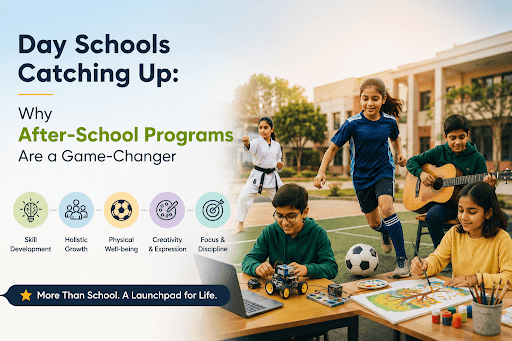
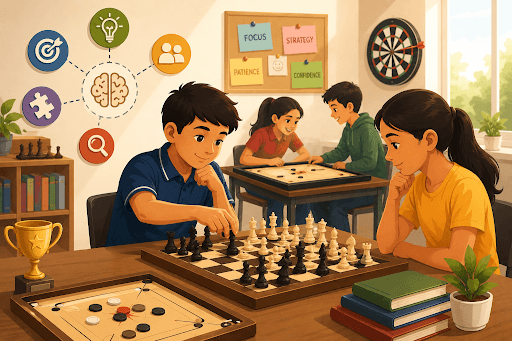
Sports, arts, music, robotics — these are often treated as extras that students do after the "real" learning is done. That framing is outdated. The NEP 2020 explicitly positions co-curricular activities as central to holistic development, not peripheral to it.
A well-structured co-curricular programme doesn't just fill afternoons. It builds leadership, resilience, and the kind of soft skills that universities and employers increasingly prioritise when evaluating candidates.
How Good Programmes Are Structured
The best co-curricular setups balance indoor and outdoor activities, run on a weekly cadence, and involve specialist coaches — not just enthusiastic volunteers. They give students consistent exposure, not one-off experiences.
Check Out | Comprehensive Curriculum at St. Teresa School
G.D. Goenka Public School, Greater Noida: Shaping Confident, Globally Aware Learners
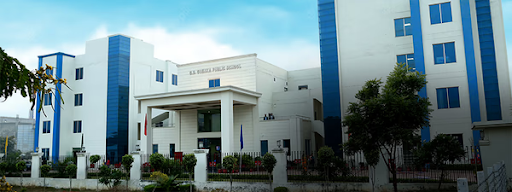
Established in 2011 in Swarn Nagri, Greater Noida, G.D. Goenka Public School is a CBSE-affiliated coeducational institution operating under the motto "Higher, Stronger, Brighter." It serves students from Pre-Nursery through Class XII.
The school participated in the British Council's ISA programme from 2016 to 2019 and holds a Microsoft Showcase School designation. Its Principal, Dr. Renu Sehgal, was honoured with a National Award by former President Dr. Pranab Mukherjee for her contributions to education.
The school follows a "Seed to Plant" integrated curriculum, emphasising hands-on, activity-based learning from the earliest grades. At the senior level, students choose from Science, Commerce, or Humanities streams, with elective options in areas ranging from economics to physical education.
Offerings span both indoor and outdoor activities — from robotics, art, and western music to cricket, swimming, karate, and lawn tennis. Educational excursions run monthly, tied directly to subject curricula, ensuring that learning doesn't stay confined to classrooms.
Ready to explore further? Visit the G.D. Goenka Public School, Greater Noida overview page to learn more about admissions, facilities, and what makes this school different.
For more information on this and similar schools in the area, check out this list of the best schools in Greater Noida.



 as a preferred source on