








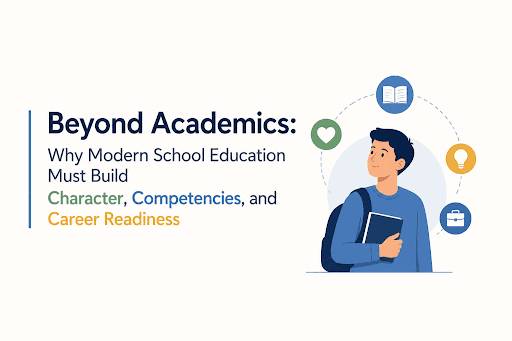
It's not simply about getting good grades or remembering what you read in school. More and more, parents are realising that their kids need more skills to get through life, beliefs to help them make decisions, and interests to give them a sense of purpose. The change from rote learning to holistic development shows that we comprehend more: successful people are not just smart in school, but also emotionally intelligent, physically active, creatively expressive, and morally anchored.
This article looks at how holistic education changes young learners, the significance of Montessori in child-centred learning, the effects of different extracurricular activities, and the relevance of a value-based curriculum. We'll also look at how one of the best schools in Gurugram, Sri Ma Montessori International (SMMI) in Gurgaon, puts these ideas into action.
Also Read | From Passion to Proficiency: The After-School Advantage
The Foundation of Holistic Education
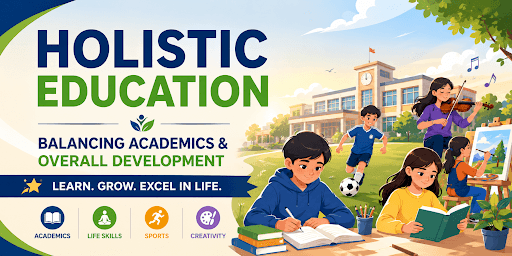
Holistic education goes beyond books and helps every part of a child's personality grow. It's about making people who think critically, feel deeply, and behave appropriately. Let's look at what makes this method so important and how it can change things.
What Holistic Education Really Means
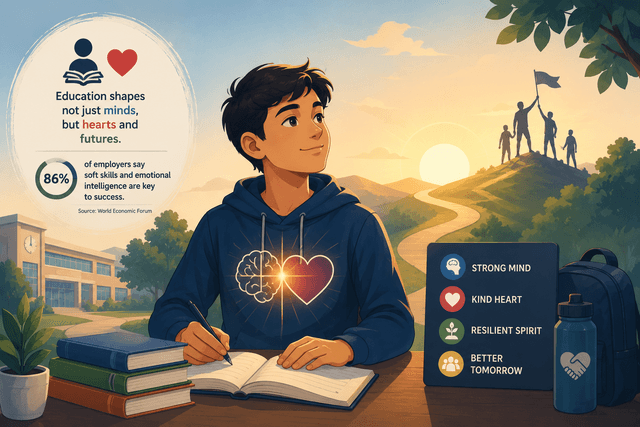
Holistic education works on all of a person's abilities at the same time, including their intellectual, emotional, social, physical, creative, and spiritual ones. Traditional systems sometimes put more emphasis on academic performance than on other areas of development. However, studies repeatedly demonstrate that well-rounded persons excel over their counterparts, not only in professional domains but also in life satisfaction and mental health. Real education doesn't just help you get a job; it also shapes your character.
Policy Recognition and Research Backing
The National Education Policy (NEP) 2020 clearly says that schools must spend a lot of time on experiential learning in the curriculum in order to support holistic development. The Ministry of Education said that NEP 2020 plans for 50% of learning to happen through hands-on experiences by 2025. Neuroscience research corroborates that early childhood—the formative years—provides optimal brain plasticity, rendering holistic interventions during this period profoundly influential for lifelong development.
Montessori Methodology: Child-Centred Learning at Its Best
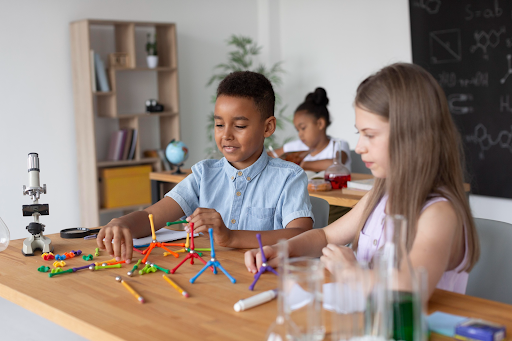
Montessori education has changed the way we think about how kids learn. Dr Maria Montessori came up with this method more than a hundred years ago. It regards children as natural learners. Here's why it still matters and is a great tool for making people autonomous and sure of themselves.
The Core Philosophy
The Montessori approach is based on self-directed activity, learning by doing, and playing together. Instead of strict deadlines, kids choose what work they want to do and go at their own pace. Teachers help students learn by watching and guiding them instead of telling them what to do. This method fosters intrinsic motivation; youngsters learn voluntarily rather than out of obligation, cultivating lifelong learners.
The Prepared Environment Advantage
There is nothing random about a Montessori classroom; it is well planned. Every item has a purpose, every shelf is at a height that is safe for kids, and every activity promotes independence. This "prepared environment" lets kids explore without fear of getting hurt. They automatically learn how to focus, stay organised, and work together. The environment itself becomes the instructor, helping kids learn how to fix their own mistakes and solve problems without help from adults.
Multi-Age Classrooms and Peer Learning
Montessori classrooms are different from regular classes because they group kids of different ages. Younger kids watch and learn from older kids, and older kids learn more by teaching. This dynamic is like real-life social systems, and it helps people learn how to be leaders, be kind, and talk to others. Instead of competing, kids work together to establish learning communities where everyone can do well.
The Power of Extracurricular Diversity
Being good at school can help you get into college, but doing things outside of school helps you become a better person. Different activities teach skills that you can't learn in a classroom, such as how to work with others, keep going, be creative, and express yourself. Let's look into why variety is important and how it helps people become well-rounded.
Beyond the Classroom: Real-World Skills
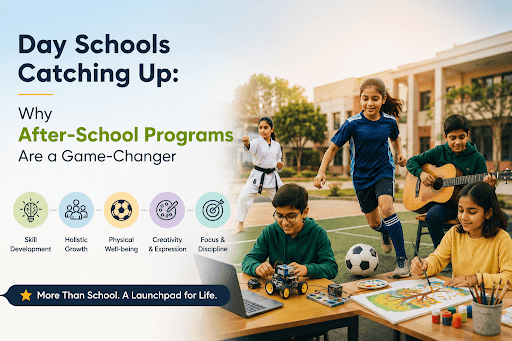
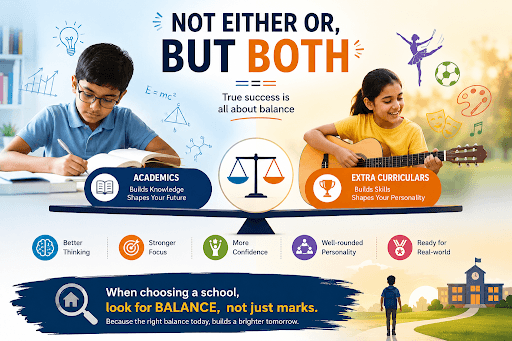
Research shows that kids who participate in extracurricular activities are better at solving problems, managing their time, and understanding their own emotions. Sports teach how to be strong and work together; arts teach how to be creative and express yourself; clubs teach how to be a leader and develop certain interests. These aren't just "add-ons"; they're important parts of education that lead to success in your career and happiness in your personal life for the rest of your life.
Why Diversity in Options Matters
Limiting exploration by simply offering mainstream activities. Children can explore different interests when schools offer a wide range of activities, from standard sports to more unusual ones like woodworking, journalism, or disaster response training. A kid who doesn't like cricket might be really good at chess or acting. This exposure helps children find real passions instead of just going along with what everyone else is doing, which helps them learn more about themselves.
Building Specialised Skills Through Societies
Clubs and societies bring people together who have similar interests. Here are several important benefits:
- Developing Leaders: Putting together events and guiding your peers helps you become more responsible and confident.
- Specialised Knowledge: Learning a lot about topics like the environment, politics, or home science that aren't covered in school
- Social Connection: Finding peers who think like you makes you feel like you belong and less alone.
- Career Exploration: Getting to know professions like photography, journalism, or electronics early on helps you choose your future route.
Environmental clubs educate how to be environmentally friendly, first aid societies get students ready for emergencies, and dramatics helps people learn how to speak in public. Each society teaches useful life skills.
Value-Based Education in a Modern Context
Having intelligence but not honesty is risky. Professionals who are academically brilliant but lack an ethical basis will do anything to get ahead. Value-based education fills this gap by making sure that information is used for the good of all people, not only for personal gain. Here's why teaching kids good character is important and how it fits in with modern schooling.
The Character Gap in Education
Schools are good at teaching maths and science, but they don't always do a good job of helping students grow as people. What happened? Graduates who know how to make money but not how to have a meaningful life. Value-based education asks important questions like, "What kind of person do I want to be?" How should I handle people? What do I owe society? These aren't just nice ideas; they're things we need to do.
Ancient Wisdom Meets Contemporary Learning
India's rich cultural legacy is full of timeless wisdom. Stories from ancient books teach us to be brave and kind, and the life sketches of famous people motivate us to serve others and be honest. When schools use hymns, stotras, and stories about morals in their lessons every day, kids automatically learn values. This isn't religious indoctrination; it's cultural anchoring that gives people moral anchors in a world that is getting more complicated.
Practical Integration and Long-Term Impact
You don't learn values in lectures; you learn them by doing things. Schools that make values a part of everyday life, such as having meaningful morning assemblies, doing service projects, and talking about moral dilemmas, leave a lasting influence. Studies suggest that adults who have continuous value education as children make better decisions, have healthier relationships, and contribute more to their communities.
Check Out | Building Real World Skills
Sri Ma Montessori International (SMMI), Gurgaon: Where Holistic Development Comes Alive
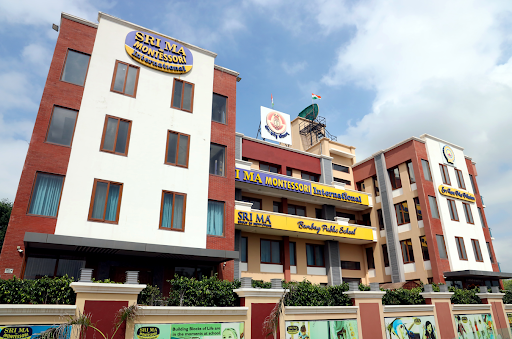
Sri Ma Montessori International (SMMI) is in Gurugram, in New Palam Vihar, off the Dwarka Motorway, in Sector 109. The Sri Ma Group of Institutions, which was started by Divine Mother Sri Tara Ma in 1975, is the parent organisation of SMMI, which is a Pure Montessori School.
The Sri Ma Group has been dedicated to helping people grow into well-rounded persons for almost 50 years. With unflinching dedication, SMMI carries on this legacy. The school uses real Montessori principles and has a lot of resources, like big sports fields, separate activity areas, and expert coaches, to make sure that every kid finds their passion and follows it with the right support and tools.
SMMI has more than 20 societies that address a wide range of topics, such as literature, physics, math, history, geography, the environment, journalism, photography, home science, politics, and more. Bharatnatyam, Kathak, and Western forms are all part of the dance curriculum. Cricket, badminton, basketball, athletics, table tennis, football, skating, roller hockey, chess, martial arts, NCC, and Scouts are among the sports that can be played at sports facilities. This variety makes sure that each youngster finds their own special skills.
Values aren't a separate subject at SMMI; they're part of everything we learn every day. Stotras and hymns are part of morning routines, stories from ancient literature show everlasting truths, and life sketches of famous people urge people to be their best. The school's "parents-on-campus" attitude implies that teachers see their job as helping students build character as well as academics, so they are ready to face problems around the world.
SMMI combines the old Montessori way of teaching with new technologies for schools. Digital classrooms, audio-visual lessons, hands-on learning activities, and regular field trips make sure that kids learn in a way that is useful to them. The school's teaching style focuses on hands-on learning, including science experiments, environmental initiatives, and creative arts. This makes school fun and meaningful for all students.
Are you ready to give your child an education that helps them grow in every way? Find out how Sri Ma Montessori International (SMMI) in Gurgaon helps people become confident, capable, and kind so they can do well in the world of tomorrow. Go to the school, see how it is, and take the first step towards your child's overall growth.
For more information on this and other such schools in the area, check out this list of the best schools in Gurgaon.
 as a preferred source on