









Learning does not only happen inside four walls. Some of the most powerful lessons begin when students step outside the classroom and see the world for themselves. A museum visit can make history come alive. A nature trail can explain science better than a diagram. Real experiences create lasting understanding.
Parents today look for schools that connect academics with real life. They want children to observe, question, and explore beyond textbooks. Educational trips and excursions play a vital role in achieving this balance.
This article explores how thoughtfully planned trips deepen learning and how Salvation Tree School, Greater Noida West, one of the best schools in Greater Noida West, takes pride in enriching education through structured excursions that expand students’ real-world understanding.
Also Read | From Confusion to Clarity: How Career Counselling Empowers Students
Why Trips and Excursions Matter in School Education
Classroom learning builds knowledge. Excursions build understanding. When students see concepts in real settings, they connect lessons with life. This connection strengthens memory and interest.
Educational trips give students the chance to observe, ask questions, and think independently. Instead of only reading about history, they walk through historical spaces. Instead of only studying ecosystems, they see plants and wildlife closely. These experiences create clarity that textbooks alone cannot provide.
Well-planned excursions support learning in several important ways:
- Deeper Subject Understanding: Students relate classroom topics to real environments. A visit to a science centre or museum reinforces what they have already studied.
- Stronger Observation Skills: Students learn to notice details, compare information, and record findings. This improves analytical thinking.
- Improved Social Interaction: Group travel encourages teamwork, communication, and cooperation. Students learn responsibility while working together.
- Growing Independence: Stepping outside routine settings helps students make decisions and adapt to new situations with confidence.
Types of Educational Excursions That Expand Learning
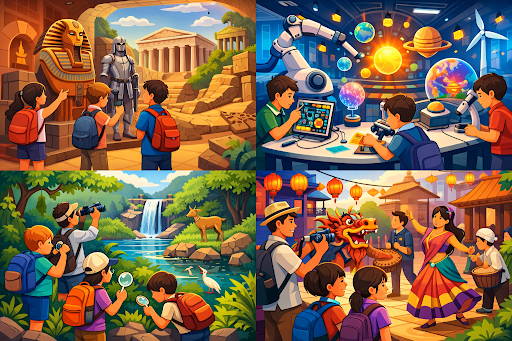
Different kinds of excursions serve different learning goals. When schools plan visits carefully, each trip supports specific academic and developmental outcomes.
Visits to Museums and Historical Sites
Museums and heritage sites help students understand history, art, and culture in a practical way. Instead of memorising dates and events, students see artefacts, monuments, and exhibitions that tell real stories. This visual exposure strengthens memory and builds curiosity.
Historical visits also encourage students to ask questions about the past and connect it with the present. They begin to understand how societies evolve and why cultural preservation matters.
Science Centres and Innovation Hubs
Science centres make abstract scientific ideas easier to understand. Interactive models, demonstrations, and experiments allow students to observe principles in action. Concepts from physics, biology, and environmental science become clearer when students see them applied.
Such visits also inspire innovation. Students become curious about how machines work, how energy is generated, and how technology shapes daily life.
Nature Reserves and Outdoor Learning Spaces
Nature trips help students understand ecosystems, biodiversity, and environmental responsibility. When students observe plants, soil, water systems, and wildlife directly, learning becomes real and memorable.
Outdoor excursions also promote environmental awareness. Students develop respect for nature and understand the importance of conservation.
Cultural and Community Landmarks
Visits to cultural centres and community institutions expose students to diverse traditions and social structures. These experiences build empathy and cultural awareness. Students learn to appreciate different lifestyles and perspectives.
Through such excursions, schools nurture responsible and informed citizens.
Skills Students Develop Through Educational Excursions
Educational trips do more than support academics. They help students grow as individuals. When students step outside the classroom, they face real situations that require awareness, responsibility, and interaction. These experiences shape confidence and character.
Excursions help students develop:
- Observation and Analytical Skills: Students learn to pay attention to details in real environments. They compare what they see with what they have studied. This strengthens understanding and critical thinking.
- Communication and Teamwork: Group activities during trips require cooperation. Students discuss ideas, share responsibilities, and work together. This improves social confidence and teamwork.
- Adaptability and Independence: New environments encourage students to think independently. They learn to follow instructions, manage time, and adjust to unfamiliar settings.
- Curiosity and Love for Exploration: Real-world exposure inspires students to ask deeper questions. They become eager to learn beyond textbooks and explore subjects with interest.
When schools plan excursions thoughtfully, they create balanced learning experiences that support both academic and personal growth.
Check Out | From Special Education to Foreign Languages
Salvation Tree School, Greater Noida West: Learning Beyond Boundaries
Salvation Tree School believes that education must extend beyond classroom walls. The school plans trips and excursions with clear academic objectives. Each visit is thoughtfully designed to match grade-level learning goals and curriculum themes.
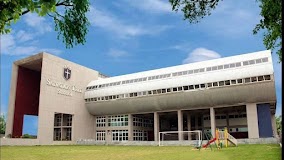
The focus is not on recreation alone. The school ensures that every excursion has educational value, reflection time, and guided observation. Students are encouraged to connect what they see with what they study in class.
Key highlights of the school’s excursion framework include:
- Curriculum-linked destinations
Visits are chosen to support classroom topics. Museums, science centres, historical landmarks, and nature spaces reinforce subject understanding. - Structured supervision and safety
Teachers and coordinators guide students throughout the visit. Clear instructions and planning ensure safety and meaningful engagement. - Reflection and follow-up activities
After each trip, students participate in discussions, projects, or presentations. This helps them process their experience and connect it to academic learning. - Balanced development focus
Excursions aim to build knowledge, confidence, responsibility, and social awareness together.
Through this structured approach, Salvation Tree School transforms simple outings into purposeful educational journeys. Students return not just with memories, but with deeper understanding and stronger life skills.
Conclusion
Educational trips and excursions play a vital role in shaping well-rounded learners. They help students connect classroom lessons with real-life experiences, strengthening understanding and curiosity. Visits to museums, science centres, cultural landmarks, and nature spaces build observation skills, confidence, teamwork, and independence. These experiences make learning memorable and meaningful.
At Salvation Tree School, Greater Noida West, excursions are carefully planned to align with academic goals while ensuring safety and engagement. The school’s structured approach turns every trip into a purposeful learning journey. Parents seeking an institution that values experiential learning and holistic growth can explore Salvation Tree School as a place where education truly extends beyond the classroom.
For more information on this and other similar schools in the area, check out this list of the best schools in Greater Noida West.





 as a preferred source on