




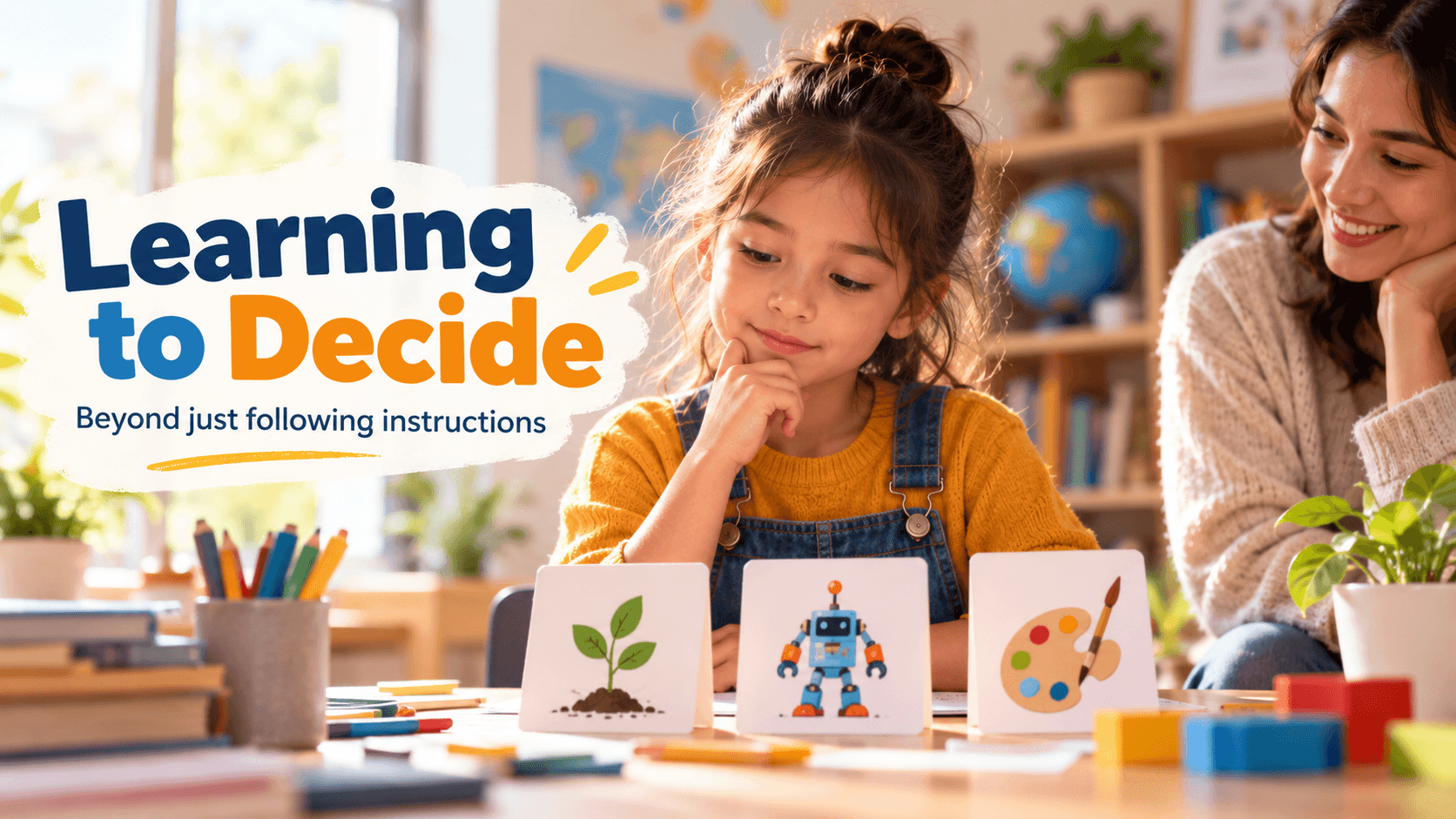

Imagine asking your child to complete a school project independently. They have all the materials and understand the assignment, yet they repeatedly ask, "What should I do next?" They can follow instructions perfectly but struggle when expected to make their own decisions.
This is an important difference parents sometimes overlook. While following instructions helps children develop discipline and structure, making decisions teaches them to think independently and take responsibility.
When searching for the Best School in Hyderabad, parents may also consider how schools encourage independent thinking. Schools like DRS International School (DRSIS), Gundlapochampally, Hyderabad, which emphasise student participation and inquiry-based learning, provide a relevant example of this educational approach.
Why Following Instructions Is Not Enough
Instructions are essential for children's learning. They help establish routines, maintain safety, and teach children how to complete tasks correctly.
However, when adults make every decision, children may have fewer opportunities to practise evaluating situations independently.
For example, a student might complete a science project successfully when a teacher provides detailed instructions. But what happens when they must choose materials, organise their work or solve an unexpected problem?
These situations require more than remembering directions. Children need to consider their options, predict possible outcomes and decide what to do next.
Independent decision-making does not mean allowing children to ignore rules or act without guidance. Instead, it means helping them understand why certain choices are appropriate and how their actions may affect themselves and others.
How Decision-Making Helps Children Develop Important Skills
Decision-making involves several abilities that become increasingly useful as children grow.
1. Encourages Independent Thinking
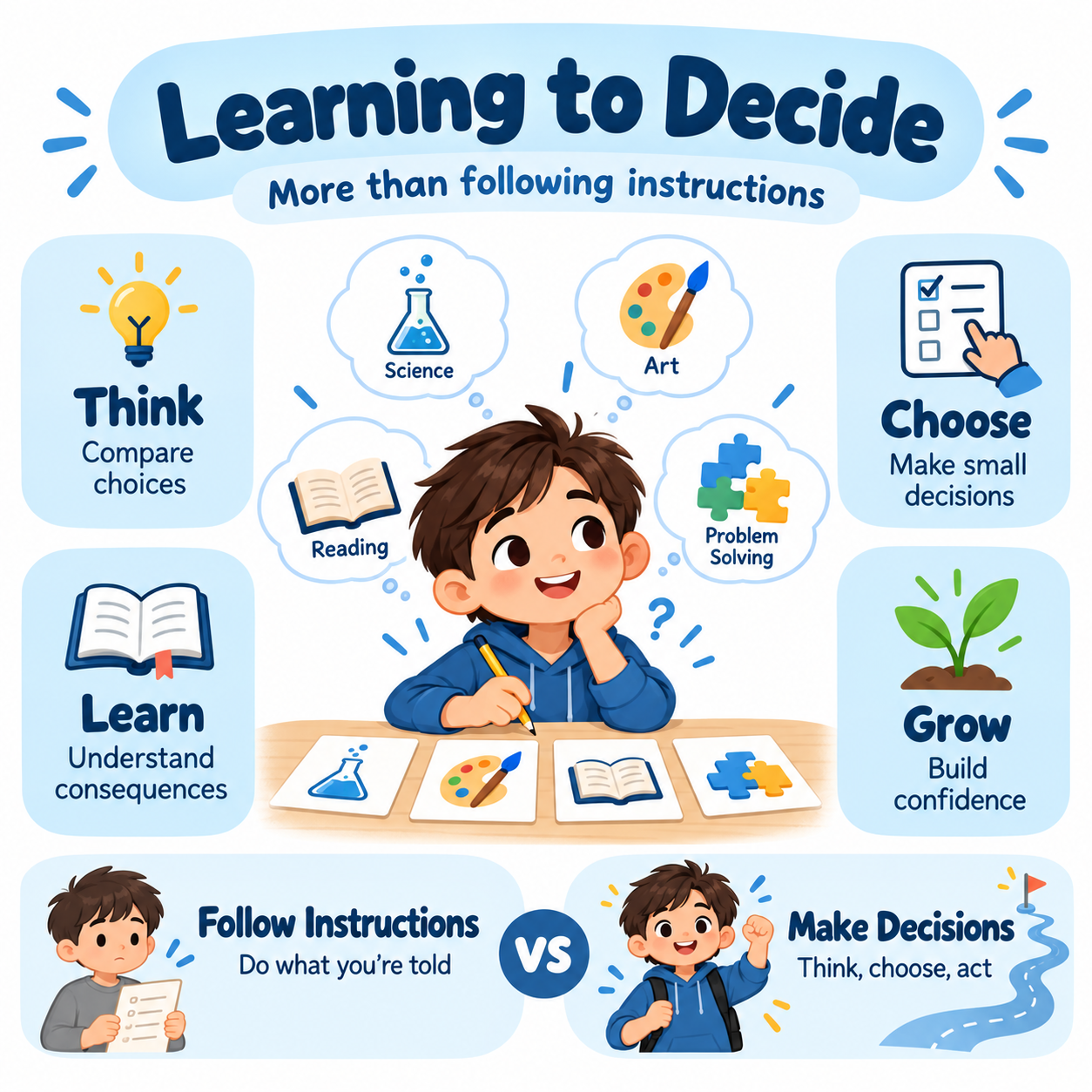
When children make choices, they practise comparing alternatives rather than automatically accepting the first suggestion.
For example, choosing how to complete a school assignment may require them to consider available time, materials, and different approaches.
Harvard University's Center on the Developing Child explains that executive function skills help children plan, focus attention, and manage tasks. These abilities develop gradually through experience and supportive interactions.
2. Builds a Sense of Responsibility
Making decisions allows children to experience the consequences of their choices.
A child who decides to finish homework before playing may discover the benefit of organising their time. If they postpone the work, they may realise why planning matters.
The goal is not to punish mistakes but to help children understand the relationship between choices and outcomes.
3. Strengthens Problem-Solving Abilities
Not every decision produces the expected result.
When children encounter difficulties, they can learn to reconsider their approach, explore alternatives, and try again.
For instance, if a model bridge collapses during a classroom activity, students can examine its structure and decide what changes might improve its stability.
Such experiences provide opportunities to practise flexible thinking and problem-solving.
How Parents Can Encourage Better Decision-Making at Home
Parents can develop these abilities through simple everyday experiences. Children do not need complete freedom; they need appropriate choices within safe boundaries.
Start With Small, Age-Appropriate Choices
Younger children can choose between two suitable outfits, select a bedtime story, or decide which activity to complete first.
Older children can participate in planning homework schedules, selecting extracurricular activities, or managing small amounts of spending money.
The complexity of decisions should increase gradually as children demonstrate greater understanding.
Ask Questions Instead of Providing Every Answer
When your child faces a problem, resist immediately offering a solution.
Try asking:
- What options do you have?
- What might happen if you choose this?
- Which option seems most suitable, and why?
These questions encourage children to examine their reasoning rather than depend entirely on adult instructions.
Allow Children to Make Manageable Mistakes
Children sometimes learn valuable lessons when harmless decisions do not work as expected.
If your child chooses an unsuitable approach to a craft activity, allow them to observe the result and consider improvements.
However, decisions involving health, safety, or serious consequences still require appropriate adult involvement.
Gradually Increase Responsibility
UNICEF's parenting guidance supports helping children develop independence while maintaining supportive relationships and appropriate boundaries.
Parents can gradually involve children in decisions that affect their daily lives while remaining available when guidance is needed.
What Role Can Schools Play in Developing Independent Thinkers?
Schools provide opportunities for children to practise decision-making beyond the home.
Classroom discussions, group assignments, research projects and practical activities can encourage students to evaluate information, share opinions and consider alternative solutions.
For example, allowing students to select a project topic or explain their preferred problem-solving approach gives them opportunities to exercise judgement.
Teachers also play an important role by providing feedback and helping students reflect on their decisions.
When comparing schools, parents can ask whether students are encouraged to express their ideas, participate in discussions, and make age-appropriate choices during learning activities.
These practices can complement academic instruction while helping children become more active participants in their education.
How DRS International School Encourages Independent Thinking
When parents explore the Best School in Hyderabad, opportunities for student participation and independent thinking deserve attention alongside academic performance. DRS International School (DRSIS), Gundlapochampally, Hyderabad, describes an educational approach that encourages curiosity, self-expression and active classroom participation.

According to its official website, students are encouraged to contribute to discussions, collaborate on problems and communicate their ideas. Its IB Diploma Programme also emphasises inquiry-based teaching and self-directed learning through activities such as debates, projects and research. These approaches provide opportunities for students to practise thinking independently while receiving teacher guidance. For families comparing options for a Top School in Hyderabad, examining how schools encourage responsible choices and student involvement can be a useful consideration.
Conclusion
Children need guidance, but they also need opportunities to make decisions, evaluate consequences, and learn from experience.
Following instructions provides structure, while independent decision-making helps children apply their understanding when clear directions are unavailable.
Parents can support this development by offering age-appropriate choices, encouraging thoughtful discussions, and allowing manageable mistakes.
Sometimes, instead of immediately telling children what to do, asking "What do you think would be the best next step?" can create a valuable learning opportunity.
Wanna explore more about this school and others in the nearby area? Visit


 as a preferred source on