




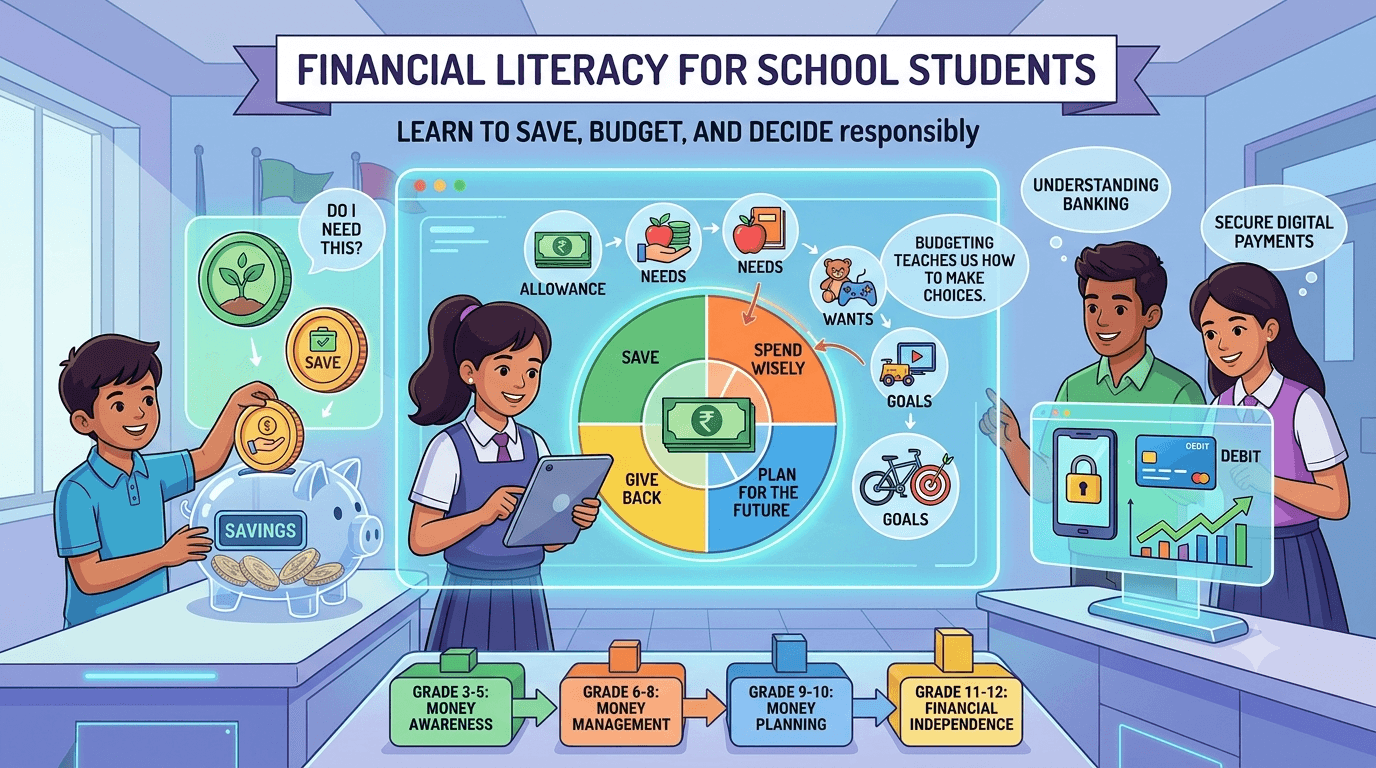

Imagine you've given your child ₹500 in pocket money. The child is delighted and now plans how to spend all of it. Maybe, they will spend the whole money on toys, sweets, games in several days. But, what if the child will learn to save some money and spend others wisely?
Financial literacy is important because children gain a great deal of knowledge in school, but understanding how to manage finances is a vital skill in life as well. Learning to save, manage expenses, and make intelligent decisions regarding finances can help them become responsible adults.
Why Children Need to Understand the Importance of Money Management
Children observe how their parents buy things, pay bills, and make different payments, but they do not understand how people manage their finances.
Educating children about financial issues helps them understand that money should be managed with great responsibility. Also, children learn the difference between their necessities and their desires.
For example, a child asks to buy a new toy even though there are a few other toys at home. At such moments, the parents can explain why it is necessary to think twice before buying something. Also, they can ask if the new toy is really necessary or if it would be better to save money.
Such conversations will help the children understand the value of money and that it is impossible to buy everything they desire.
Why Saving and Budgeting Makes Kids More Responsible?
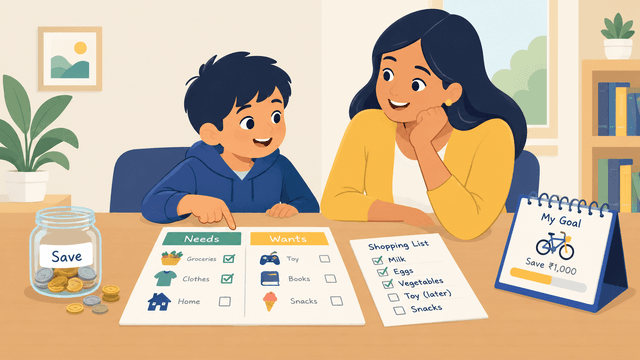
Saving money is one of the easiest money habits that children can acquire. You can give the child a weekly allowance and encourage them to save part of it.
For example, if the child receives ₹100, then he or she can save ₹30, spend ₹50, and save ₹20 for the future. Such a scheme will introduce them to budgeting.
Also, you can encourage the child to save money for something that they really want, a book, a toy, or board games. Instead of buying such things immediately, the child will save a bit of money weekly.
Once they buy the wanted thing with their savings, they will feel happy about reaching the goal. Also, they will understand that patience and proper planning can help them reach their goals.
Budgeting will teach children how to make different choices. They will understand that spending money on one thing means spending less time on buying another.
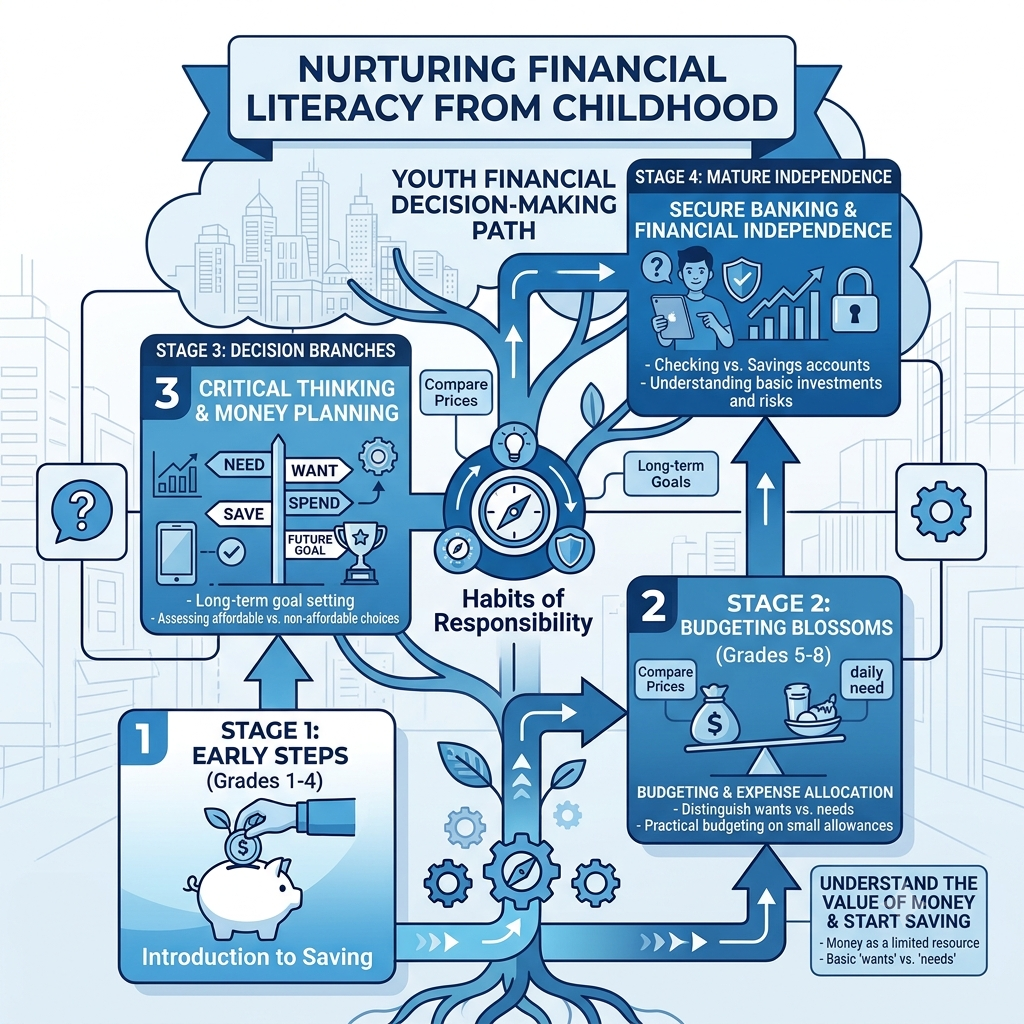
Understanding Banking and Making Digital Payments
Children observe how their parents pay by UPI, debit card, and mobile banking, but they do not understand how such payments work.
As they grow up, it is necessary for them to understand the basics of banking — savings accounts, deposits, withdrawals, and interest. It helps them understand where the money can be stored and how savings grow.
It is convenient to make payments using digital services, but children need to be careful. They should never give someone passwords, PIN codes, or OTPs. Also, children should avoid suspicious links and offers on the internet.
Learning about such issues early helps children become more responsible with money and online transactions.
How Financial Literacy Helps to Prepare Children for the Future?
Financial literacy is not only about saving pocket money. It develops the habit of thinking.
As children grow older, they have to manage their personal expenses, think about education, and make important financial decisions. Knowledge about finances helps them in managing these tasks.
For example, a teenager who wants to buy an expensive gadget can compare its price, consider his or her savings, and make the decision whether the purchase is affordable or not. They will learn how to make choices considering different alternatives instead of buying everything without thinking.
Older children can learn some basics about investing, interest rates, financial management, and risks. They do not have to be specialists in school, but understanding the basics will be quite useful.
It is possible to educate children on such questions easily with real-life examples and interesting activities.
How Meru International School, Tellapur Is Teaching It
For the parents who believe in giving their child the best school in Hyderabad, practical life skills must be a part of the curriculum. Meru International School, Tellapur offers lessons on financial literacy as part of the M-CLAP (Meru Career-Readiness, Leadership and Life Skills Academic Enrichment Programme).
A financial literacy programme- a learning journey from Grade 3 to Grade 12: 3-5 Money awareness for younger students; 6-8 Money management for middle school students; 9-10 Money planning for high school students;s 11-12 Financial independence for Grade 12 students

The course addresses some of the following elements: money budgeting, income and expenditure, banking, interest rates, protection from fraud, investment, risk, and money at different ages. As children travel through school, their knowledge of money can grow.
Through this programme, Meru International School, Tellapur, wants to help students learn habits of responsible money management and also to know about the basic skills involved in making financial decisions.
Helping Children Make Better Financial Decisions
They do not have to wait until they are working to learn about money. They can take their first steps by saving a little pocket money, budgeting for small spends, and asking, ' Do I really need this?'
They can also be supported by their parents and schools by providing them with small tasks and letting them make their own mistakes.
It is not only about giving children the skills to ace their exams and prepare for their future, but education will also help them prepare for their lives. When we teach kids about the value of money, they will be equipped to make wise decisions in life.
Wanna explore more about this school and others in the nearby area? Visit


 as a preferred source on