






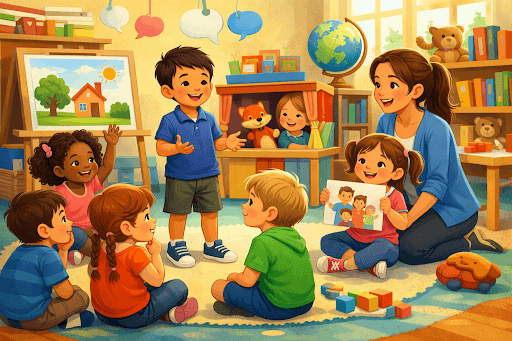

Have you ever noticed how some children speak freely, share stories confidently, and express their emotions with ease, while others struggle to find the right words? This difference often begins in early childhood, where language exposure and opportunities to communicate shape how children express themselves for years to come.
Parents today understand that strong communication skills are not just about speaking we ll, they are about confidence, emotional expression, and the ability to connect with the world. Schools that nurture language development from an early age help children grow into curious, expressive, and socially confident learners.
This article explores why early language and expression development is crucial in childhood, how structured communication activities build confidence and clarity, and how Tiny Tots English School, one of the best schools in Pune, creates a language-rich environment that helps young learners find their voice naturally and joyfully.
Also Read | Eco-STEM Explorers: Young Minds Building a Greener Tomorrow at Tiny Tots English School, Pune
Why Early Language Development Matters
The early years of a child’s life are a critical window for language acquisition. During this stage, young minds are naturally wired to absorb sounds, words, sentence structures, and expressions simply by observing and interacting with their surroundings. The experiences children have with language at this age shape how confidently and effectively they communicate later in life.
Strong communication skills developed early support a child’s overall growth in several important ways:
- Build confidence in expressing thoughts, needs, and emotions: When children have the words to express themselves, they feel more confident and secure. Instead of frustration or withdrawal, they learn to communicate what they want, how they feel, and what they are thinking, which supports emotional well-being.
- Develop listening and comprehension skills essential for learning: Language development is not only about speaking. Early exposure to conversations, stories, and instructions strengthens listening skills and understanding, which are essential for following directions, grasping concepts, and engaging meaningfully in classroom activities.
- Strengthen social interaction and peer relationships: Communication plays a key role in how children connect with others. Early language skills help children interact with peers, take turns in conversations, resolve small conflicts, and form friendships, building social confidence from a young age.
- Lay the foundation for reading, writing, and academic success: A strong vocabulary and understanding of sentence structure make it easier for children to transition into reading and writing later on. Early language skills support literacy development and help children approach academics with greater ease and confidence.
When children feel comfortable communicating, they participate more actively in class, ask questions without fear, and engage more deeply with their surroundings. This confidence in expression not only enhances learning in the early years but also lays the groundwork for lifelong communication, curiosity, and success.
How Communication Builds Confidence and Emotional Expression
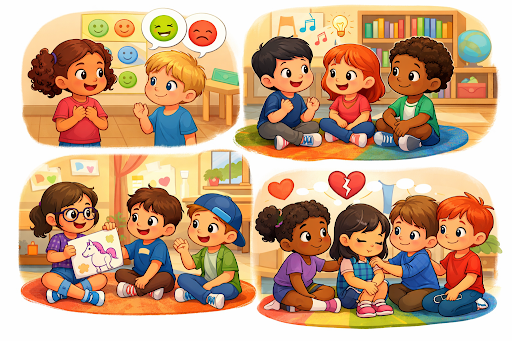
Language is deeply connected to how children understand themselves and the world around them. When young learners are encouraged to speak, share, and express freely, they begin to build not only communication skills but also emotional confidence. Being able to put thoughts and feelings into words helps children feel understood, valued, and secure.
Strong communication skills support emotional and social development in several ways:
- Helping children express emotions clearly: Young children often experience big emotions but may not know how to explain them. When they are guided to use words for feelings, such as happiness, sadness, excitement, or frustration, they learn healthier ways to express themselves instead of reacting through tears or silence.
- Building confidence in speaking: Regular opportunities to talk in small groups or familiar settings help children overcome shyness. As they grow more comfortable sharing ideas, they develop the confidence to speak up, ask questions, and participate actively without fear of making mistakes.
- Encouraging self-expression and individuality: Communication allows children to share their opinions, stories, and experiences. This freedom to express helps them develop a sense of identity and self-worth, making them feel respected and heard.
- Developing empathy and understanding: Listening to others and responding thoughtfully teaches children to recognize emotions in peers. Through conversation, they learn patience, empathy, and respect, skills that are essential for positive relationships.
When children are given a safe and supportive environment to communicate, they learn that their voice matters. This sense of emotional security strengthens confidence, supports healthy social behavior, and encourages children to engage more openly with both learning and relationships.
Learning Through Conversations, Stories, and Play
Young children learn language most effectively through interaction and experience, rather than formal instruction alone. Everyday conversations, storytelling, and play-based activities give children natural opportunities to hear new words, practice speaking, and understand how language works in real-life situations.
Engaging communication-based activities support language development in the following ways:
- Conversations that build vocabulary and understanding: Simple, meaningful conversations between teachers and children help expand vocabulary and improve sentence formation. Asking open-ended questions encourages children to think, respond, and express ideas in their own words.
- Storytelling and narration to spark imagination: Listening to and retelling stories helps children understand sequence, emotion, and expression. Storytelling enhances creativity while improving listening skills, vocabulary, and confidence in speaking.
- Role play and pretend play for expressive learning: Through pretend play, children experiment with language by taking on different roles and situations. This allows them to practice communication in a fun, pressure-free environment while developing creativity and problem-solving skills.
- Group discussions and show-and-tell activities: Activities like circle time and show-and-tell encourage children to speak in front of peers. These experiences build confidence, improve listening skills, and help children learn how to take turns and respect others’ ideas.
By integrating language into play and daily interactions, children learn to communicate naturally and joyfully. These experiences make language learning meaningful, helping young learners express themselves clearly while enjoying the process of learning and discovery.
The Power of a Language-Rich Environment
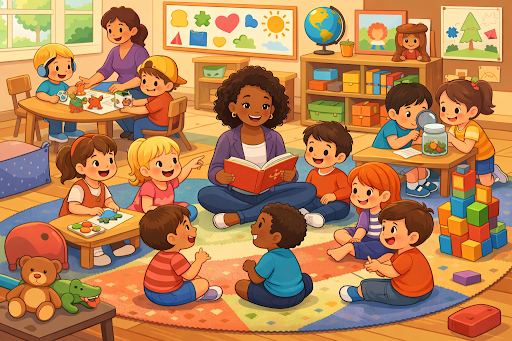
A child’s language development is strongly influenced by the environment they learn in. Classrooms that are rich in conversation, storytelling, songs, and guided interaction naturally encourage children to communicate more freely. In such spaces, language is not treated as a separate subject, it becomes part of everyday learning and play.
A language-rich environment supports young learners in several meaningful ways:
- Expanding vocabulary through daily exposure: When children regularly hear new words used in context, during conversations, stories, or activities, they begin to understand and use them naturally. This consistent exposure strengthens word recognition and usage without pressure.
- Improving clarity of thought and expression: Listening to structured sentences and engaging in dialogue helps children organize their thoughts. Over time, they learn how to express ideas more clearly and confidently, both verbally and emotionally.
- Encouraging curiosity and questioning: An environment that welcomes conversation motivates children to ask questions, seek explanations, and explore ideas. This curiosity becomes the foundation for active learning and critical thinking later on.
- Building social confidence: Regular interaction with teachers and peers helps children feel comfortable communicating in groups. They learn social cues, turn-taking, and respectful listening, which strengthens their confidence in social settings.
When children are surrounded by language in a warm and engaging way, communication becomes natural rather than forced. Such environments help young learners grow into confident speakers, attentive listeners, and expressive individuals, skills that support them throughout their academic journey and beyond.
Check Out | Coding the Future: The Automation Advantage at WisdomWood High
Tiny Tots English School: Nurturing Confident Little Communicators

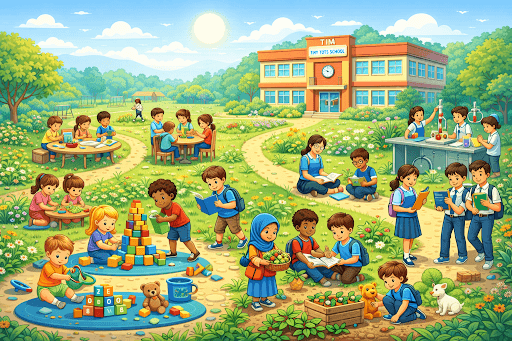
At Tiny Tots English School, one of the best CBSE schools in Pune, language and expression are seen as the building blocks of confidence and lifelong learning. The school takes pride in creating an environment where young children feel encouraged to speak, listen, and express themselves freely from the very beginning.
Language development at Tiny Tots is thoughtfully woven into everyday classroom experiences, ensuring that communication feels natural rather than forced. Through interactive, age-appropriate learning practices, children are gently guided to use words to share ideas, emotions, and experiences.
Key aspects of Tiny Tots’ approach include:
- Daily opportunities for conversation, where children are encouraged to talk about their thoughts, routines, and surroundings, helping them grow comfortable using language in familiar settings.
- Storytelling, role play, and show-and-tell activities that allow children to narrate, imagine, and express ideas creatively, building both vocabulary and confidence.
- Group interactions and guided discussions that promote listening skills, turn-taking, and respectful communication with peers.
- A warm and language-rich classroom environment where teachers model clear speech, encourage questioning, and respond patiently to every child’s voice.
By nurturing communication in a joyful and supportive manner, Tiny Tots English School helps children develop clarity of thought, emotional expression, and social confidence. Here, language learning is not just about words, it is about helping every child feel heard, understood, and confident in their ability to communicate with the world around them.
For more information on this and other such schools in the area, check out this list of the best schools in Pune.








 as a preferred source on