








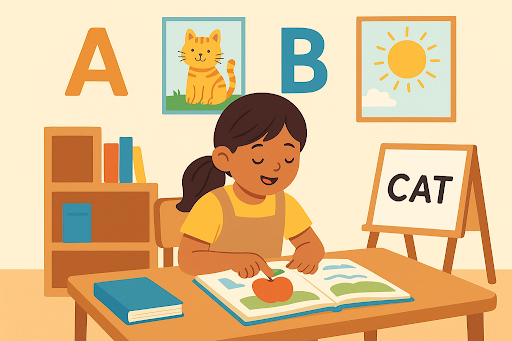
Have you ever noticed how a child’s first spoken words often spark a lifelong curiosity to explore, imagine, and express? The earliest years of education are when this magical connection between sounds, words, and meaning begins to form, shaping not just how children read, but how they think and communicate.
At Salwan Montessori School, Gurugram, one of the best schools in Gurugram, this journey from sounds to stories is nurtured with care. The school takes pride in fostering early literacy skills through phonics, storytelling, and language-rich environments that inspire both confidence and curiosity.
In this article, we explore why early literacy is the foundation of lifelong learning, how phonics and storytelling make language learning joyful, and how Salwan Montessori School ensures that every child begins their educational journey with strong communication and comprehension skills.
Also Read: The Ultimate Guide to Choosing the Right After-School Program
Why Early Literacy Matters
Language and literacy are the roots of every child’s growth. They shape how children think, express, and connect, influencing not just academics but imagination, confidence, and social-emotional skills.
- Foundation for learning:
Early exposure to words, sounds, and stories helps children recognize letters, build vocabulary, and understand meanings. This foundation strengthens comprehension across all subjects as they move ahead in school. - Confidence in communication:
When children learn to express thoughts through speaking and listening, they become active classroom participants. Clear communication boosts self-esteem and helps them collaborate and share ideas easily. - Cognitive development:
Activities like rhymes, phonics games, and storytelling enhance focus, memory, and reasoning. Every time a child listens, repeats, or predicts a story, their brain strengthens essential learning pathways. - Emotional and social connection:
Through stories, children experience empathy, kindness, and courage. They learn to understand emotions both their own and others’ which supports emotional intelligence and positive relationships. - Love for learning:
Making reading and storytelling fun nurtures curiosity. When learning feels joyful, children naturally develop a lifelong passion for books, language, and discovery.
Early literacy is not just a step in education, it's the seed that grows into curiosity, creativity, and lifelong learning.
The Role of Phonics and Storytelling in Language Development
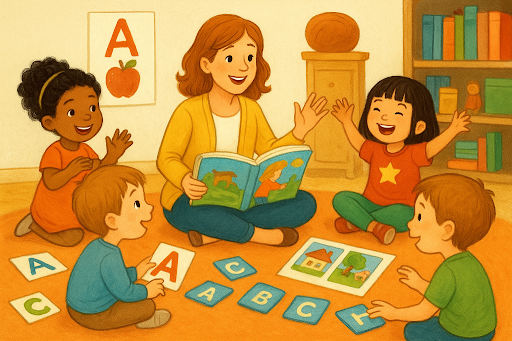
Children grasp language best when it feels like play, when lessons involve sound, movement, imagination, and emotion. Phonics and storytelling bring this joy into learning, helping young minds connect sound to meaning in natural, lasting ways.
- Phonetic awareness: Through phonics, children learn to recognize individual sounds (phonemes) that form words. This helps them decode new vocabulary confidently and builds a strong foundation for fluent reading and spelling later on.
- Interactive storytelling: Storytime is more than entertainment; it builds comprehension, memory, and imagination. When children listen, visualize, and act out stories, they connect words to emotions and experiences, making language learning meaningful.
- Rhymes and songs: Musical rhythm makes language easier to absorb. Singing rhymes helps children tune into patterns of sound, improving pronunciation, intonation, and auditory memory while making learning lively and fun.
- Visual and tactile aids: Tools like flashcards, picture books, letter tiles, and storyboards engage sight and touch. These materials help children associate sounds with letters, letters with words, and words with images turning abstract learning into real understanding.
- Multisensory exploration: By engaging multiple senses hearing, seeing, touching, and even movement children retain information more effectively. Every song sung, story enacted, or sound matched becomes a building block for literacy.
Together, phonics and storytelling make language come alive, transforming learning into a joyful, sensory-rich journey where words become tools for imagination, discovery, and self-expression.
Building Confidence Through Expression
In early childhood, communication isn’t about perfect grammar or flawless pronunciation, it’s about the courage to express freely. When children are given safe, supportive spaces to share ideas, they develop confidence that extends far beyond language skills.
- Speaking and listening circles:
Group discussions and storytelling sessions encourage children to speak up, share opinions, and respond to others. These circles build empathy and patience as children learn to listen, wait their turn, and appreciate diverse perspectives. - Vocabulary games:
Interactive activities like word hunts, rhyming challenges, and naming games help children discover new words naturally. Instead of memorizing vocabulary, they play with language which boosts curiosity, comprehension, and memory retention. - Creative expression:
Through role play, dramatization, and puppetry, children learn to convey emotions and ideas confidently. These activities merge creativity with communication, allowing even shy students to express themselves through characters and stories. - Positive reinforcement:
Teachers celebrate every attempt at expression whether it’s a sentence, a gesture, or a story fragment. This affirmation creates emotional safety, helping children shed hesitation and speak with enthusiasm. - Confidence through community:
Expressive activities foster belonging. When children see that their thoughts are heard and appreciated, they develop self-assurance, resilience, and a lifelong love for communication.
At this stage, expression becomes the foundation of self-esteem. By giving children room to talk, imagine, and connect, schools lay the groundwork for confident speakers, empathetic listeners, and creative thinkers.
Check Out: Beyond ABCs: The Multi-Sensory Journey in Pre-Primary Wing
Salwan Montessori School, Gurugram: Where Language Comes Alive
Salwan Montessori School, Gurugram, one of the best CBSE schools in Gurugram, is dedicated to building strong language foundations through creativity, curiosity, and care. The school’s classrooms are designed as vibrant learning spaces filled with sounds, stories, and conversations that turn language into an experience rather than a lesson. Here, children don’t just learn words, they live them.
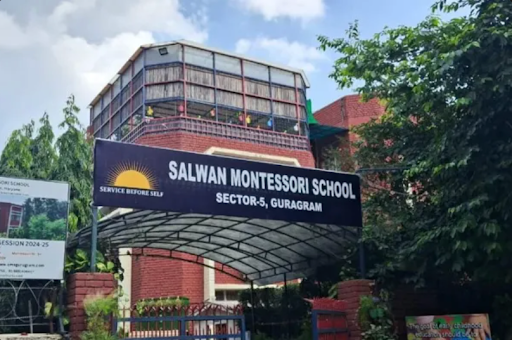
Highlights of Salwan Montessori’s Language Approach
- Phonics-based learning:
Instead of memorizing letters mechanically, children explore how sounds connect to form words. Activities like sound games, letter hunts, and interactive charts make reading intuitive, laying the groundwork for fluency and comprehension. - Storytelling sessions:
Teachers use tales, picture books, and dramatized narratives to make learning magical. Through these sessions, children learn vocabulary, sentence flow, and emotional expression, while absorbing values of kindness, honesty, and empathy. - Interactive discussions:
Every class is a conversation. Children are encouraged to describe their day, express feelings, and ask questions. These discussions improve articulation and listening skills while nurturing confidence and curiosity. - Rhymes, songs, and dramatics:
Music and movement bring words to life. Singing rhymes, enacting stories, or using puppets helps children remember language patterns naturally while building rhythm, coordination, and joy in learning. - Holistic literacy environment:
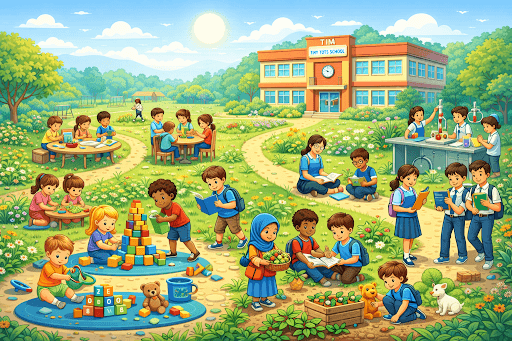
Every corner of the classroom encourages discovery from cozy reading nooks and story walls to visual aids and language games. This environment immerses children in words, turning everyday interactions into learning moments.
At Salwan Montessori School, language development is not limited to reading and writing; it's a bridge to imagination, confidence, and emotional growth. By weaving phonics, stories, and play into daily learning, the school ensures that every child develops both fluency and a lasting love for communication. When students move to higher grades, they carry not just language skills, but the ability to think, express, and connect meaningfully with the world.
For more information on this and other similar schools in the area, check out this list of the best schools in Gurugram.







 as a preferred source on