







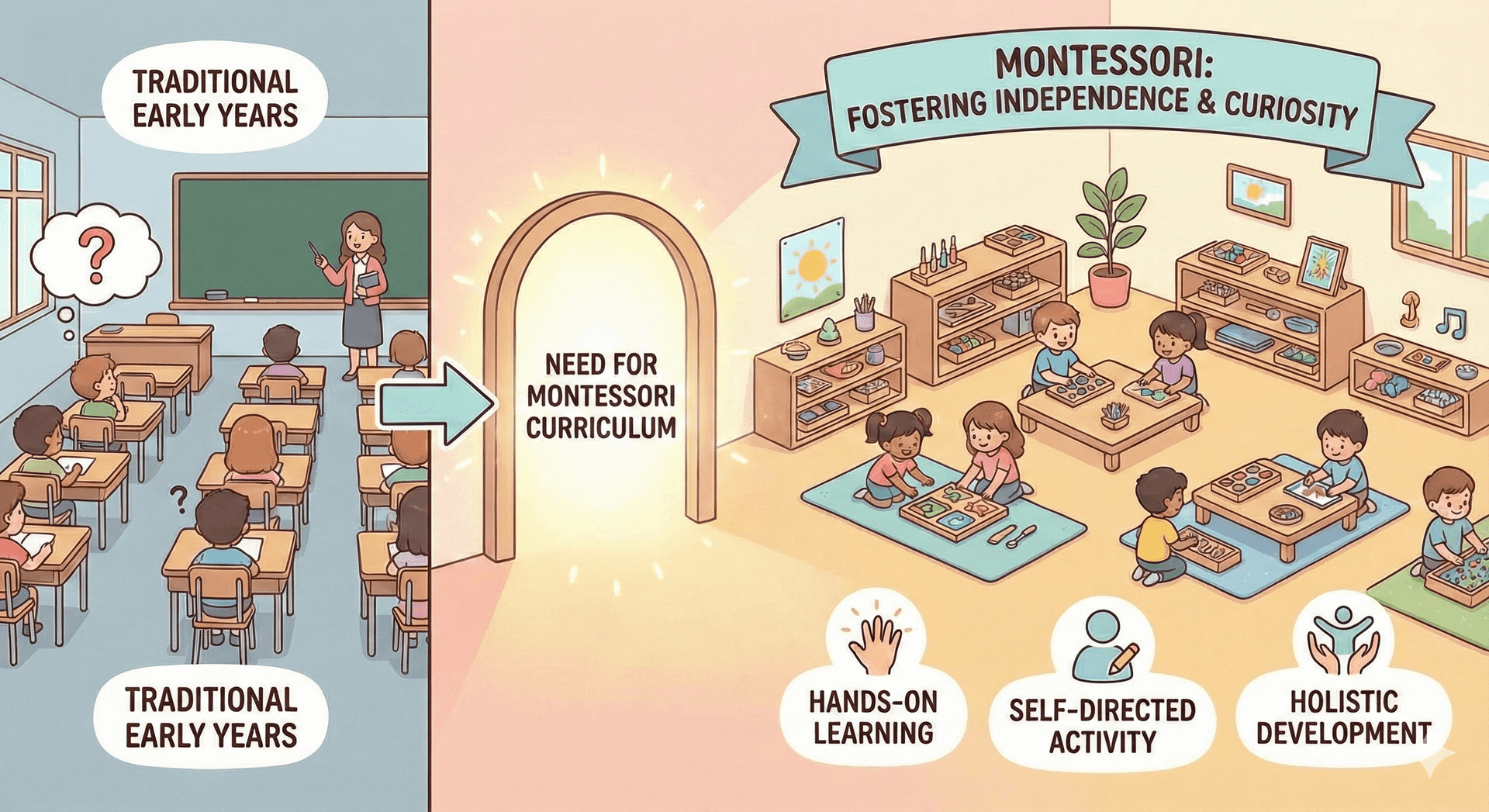

A child's brain develops about 90% of its neural pathways before the child turns five years old. This key period needs more than just keeping children busy all day long. It requires people to develop skills on purpose in children every single day. Right now many Indian preschools depend too much on the Play-way method every single day. They often mix unstructured play with real learning in a wrong way.
Play stays very important for children in every possible way. However, a chaotic environment without clear goals leave big gaps in a child's power to focus and grasp basic ideas well. Some of the good schools in Gurgaon are now mixing in the structured and purposeful ways of the Montessori method right away. This change matters a lot to help turn passive watchers into independent and focused thinkers from the very start of their school journey.
Also Read: Building Confidence Through Theatre
Understanding the Core Difference
To understand why we need a shift, we must first explain how both systems work. Teachers lead group activities in the Play-way method. They choose the activity, which often uses common toys, songs, or art projects that all children do at the same time. Children focus on talking with others and creative play in this approach.
The Montessori method works in a completely different way. Children choose their own activities in a carefully set-up space. Teachers guide them without taking center stage. Montessori avoids common toys meant for pretend play and uses special tools or materials instead. Each material teaches one clear idea or skill and keeps children interested by linking to real life, not bright lights or cartoon figures.
Why Play-way Often Falls Short?
The Play-way method helps children grow socially, but it fails to create deep focus in young kids. In a usual Play-way class, children often switch from one toy to another before they finish a full activity cycle. This quick jumping stops them from learning how to stick with a task until they complete it, which is an important skill for school later on.
Play-way also depends a lot on the teacher's energy to keep things in order. In big Indian classrooms, teachers often spend time controlling the crowd instead of helping each child learn on their own. Children learn to obey group rules, but they face problems when teachers ask them to work alone. Fantasy toys take up time that teachers could use to teach real-life skills like tying shoelaces, buttoning shirts, or cleaning up their own space, which form the main parts of Montessori.
The Montessori Advantage: Developing the Brain
Montessori principles fix the aforementioned gaps by focusing on executive functions, which serve as the brain's management system. Children choose a material during the Montessori work cycle, work with it as long as they want, and return it to its proper place. This easy sequence creates internal order, responsibility, and decision-making skills in children.
Montessori teaching shifts from concrete objects to abstract ideas in a major way. Children in a Play-way system might learn to count by singing a song and memorizing number sounds without grasping the quantity. Montessori children learn to count by holding physical rods of different lengths or stacking exact numbers of cubes.
They physically understand that 10 stands bigger than 2 through this hands-on approach. This strong base makes math and language learning much less scary and far more natural for them in higher classes. The method honors how children learn best through hands and senses, not only by listening to a teacher.
Also Read: Learn Farming & Life Skills
The Montessori Approach of Mother's Pride School
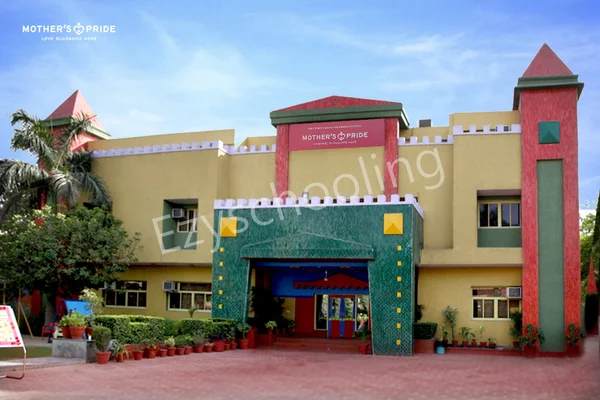
Mother's Pride School in Sector 5, one of the good CBSE schools in Gurgaon, knows that toys alone do not create the best growth for children. The school goes beyond simple fun and creates strong thinking skills. They mix major ideas from the Montessori method into their own "High Fives of Development" methodology. They see that a planned environment helps open up a child's true abilities.
Freedom with Structure from the Classroom Space
At the Sector 5 branch, the school applies the Montessori idea that the environment serves as the third teacher. Teachers and environments guide children together in these spaces. Their classrooms and special Intellectual Development (ID) rooms have a clear purpose for every item and activity.
Children do not play without direction in these areas. They work with special materials that develop skills such as problem-solving, visual memory, and sequential thinking. This arrangement supports self-chosen learning inside a safe setup. Children gain power from picking activities that attract them, which creates independence and a strong inner push to learn, instead of waiting for adults to direct the next step.
Hands-On Learning Instead of Rote Teaching
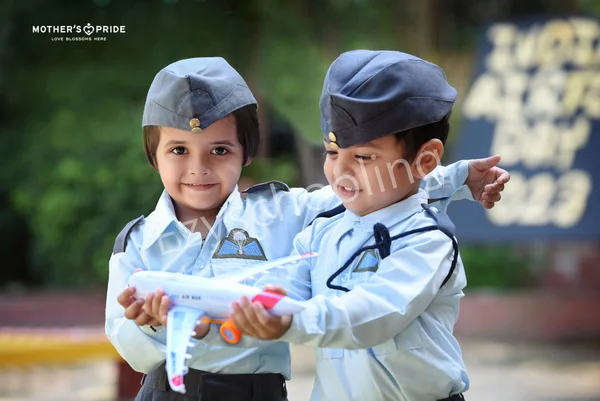
Mother's Pride follows the Montessori idea of learning by doing, which means experiential learning. The curriculum makes sure that children understand ideas through their senses first, before they handle abstract concepts.
For example, children practice fine motor skills with real tasks like threading beads, sorting objects with tweezers, or solving puzzles in ID sessions, long before anyone asks them to hold a pencil and write letters.
They understand math ideas through real blocks and sorting tools, so their knowledge goes deep instead of just repeating number patterns from memory. This method creates great confidence because children succeed through their own efforts with the materials, which forms a strong base for future school work.
Conclusion
India needs to change early education from teacher-led Play-way methods to child-centered Montessori methods. This change helps children gain important life skills such as focus, order, and independence. Play-way gives children activities, but Montessori provides a strong base for thinking skills through hands-on learning tools.
Schools like Mother's Pride in Sector 5, Gurgaon show how well this planned method works. Teachers use special materials and carefully set-up rooms, so children stay productively busy while they gain strong focus and real-world skills for future school success and personal growth.
To learn more about this and other schools nearby, see this list of the top schools in Gurgaon.







 as a preferred source on