







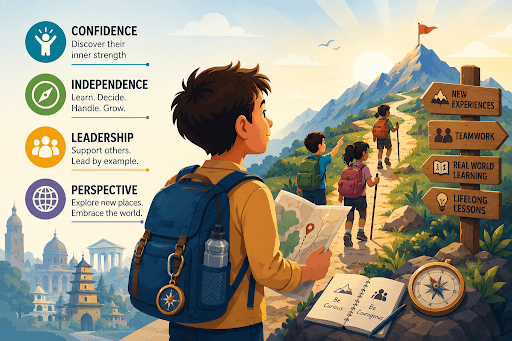

What happens when children spend a few days away from the people who usually solve problems for them? It sounds like a simple question, but schools have been exploring the answer for decades through educational trips, exchange programmes, camps, and expeditions.
Parents often look at these experiences through a practical lens:
- Is the destination safe?
- Will the learning be worthwhile?
- Has everything been organised properly?
Meanwhile, children usually have other concerns, like:
- Who will I sit next to on the bus?
- Will the food be good?
- Can we stay up late?
Yet, none of these concerns can underscore the importance of such educational trips. In fact, several studies have found that students who participate in educational travel report higher levels of confidence, curiosity, and willingness to explore new experiences. That is why the best schools in Noida, such as Manav Rachna International School, have integrated educational expeditions as an indispensable part of the school year.
Also Read | How Field Trips Turn Lessons Into Experiences
How Educational Trips Move Learning Beyond the Classroom
While classrooms are the traditional setting for learning, there are sometimes a few limitations with learning within the four walls. The classroom has its own rhythm. There are timetables, familiar seating arrangements, and expectations that rarely change. Children settle into certain roles. So do the teachers.
But that changes on a trip. Consider what a single overnight trip quietly demands of a ten-year-old:
- Keeping track of their own belongings, with no parent on hand to ask about the missing water bottle
- Deciding whether the money goes on the snack now or the souvenir later
- Staying with the group in a museum that is crowded, loud and a little overwhelming
- Speaking up to an adult when they feel unwell, because nobody else will do it for them
- Settling into food, weather and surroundings that look nothing like home
Stacked up over two or three days, these activities teach a child, almost without their noticing, that they can manage the world. Such a lesson may sound small to adults, but it can feel significant to a child. The first time they solve a problem independently, recover from a mistake, or adapt to an unfamiliar situation, they begin to realise that they are capable of handling more than they thought.
Confidence and Independence Often Grow Together
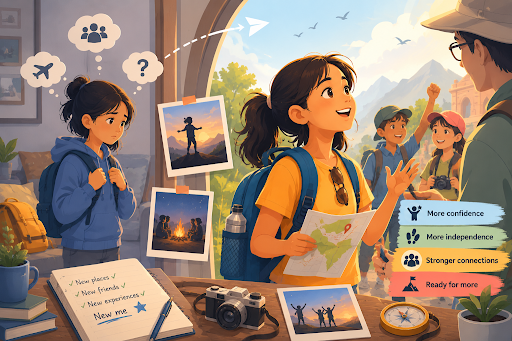
People often talk about confidence as though it can be taught through encouragement alone. In reality, confidence tends to grow from experience.
Many students leave for a trip carrying a mixture of excitement and uncertainty. They may be worried about being away from home, participating in an unfamiliar activity, or interacting with new people. By the time they return, those worries are often replaced by stories.
The child who hesitated before speaking to a guide asks questions without prompting. The student who was nervous about an outdoor activity talks proudly about completing it. The child who worried about spending a night away from home begins asking when the next trip will be.
Independence develops in a similar way. It is rarely built through advice. It grows when children are trusted with responsibility and discover that they can handle it. Educational trips create dozens of opportunities for this to happen naturally.
The Leadership Lessons Hidden in Everyday Moments
When people imagine leadership, they often picture a student captain giving a speech or leading a school event. Educational trips, however, tell a different story.
Leadership during an expedition is usually much quieter and far less formal. Here’s how it often looks like:
- Helping a classmate who is struggling during an activity
- Organising a group task when nobody has been assigned the responsibility
- Keeping teammates focused when plans change unexpectedly
- Taking responsibility for shared resources and equipment
One of the reasons educators appreciate educational trips is that they place students in situations where teamwork becomes necessary. There are no marks attached to helping a classmate or solving a practical problem. Children do these things because the situation calls for it.
These experiences help children understand that leadership is not always about being in charge. Often, it is about being someone others can rely on.
Why Schools Continue Investing in Expeditions
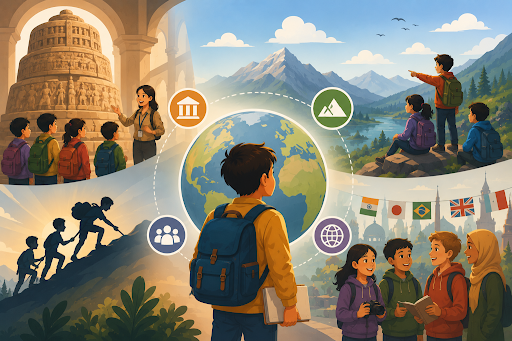
Educational trips require significant planning. However, schools continue organising them because some lessons are difficult to recreate within four classroom walls.
A history lesson can explain the significance of a monument. Standing before it creates a different kind of understanding. A geography lesson can describe a landscape. Experiencing it firsthand leaves a stronger impression.
The same is true for personal development. Qualities such as confidence, independence, communication, and leadership become more meaningful when children experience situations that require them.
Exchange programmes and expeditions add another dimension by exposing students to different cultures, perspectives, and ways of thinking. Such experiences encourage adaptability and help children become more open to the world around them.
Check Out | Exploring Beyond the Classroom via Trips and Excursions
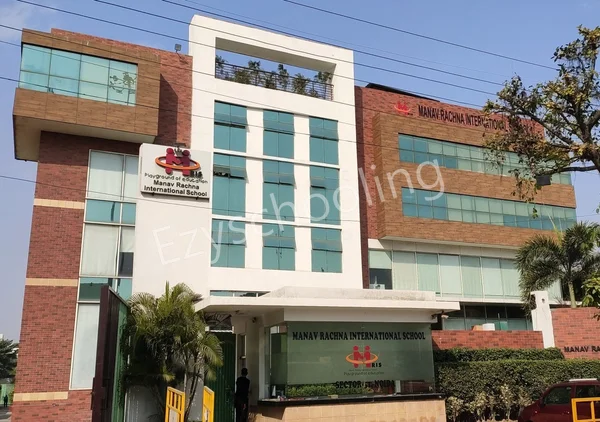
How Manav Rachna International School, Sector 51, Noida, Nurtures Growth through Educational Trips
Established in the year 2013, Manav Rachna International School in Sector 51, Noida, is known for its strong vision of holistic child development. With a student-teacher ratio of 20:1, the school aims to nurture learners who are academically capable, socially responsible, and prepared for future challenges.
The school holds a very clear stance on building core independence through safe travel. MRIS firmly believes that experiential learning is absolutely crucial for any modern education. They actively integrate outdoor adventure and cultural exploration right into their regular academic calendar. Their annual school trips beautifully combine physical adventure and leadership training with pure enjoyment. This careful planning helps young children discover their own hidden strengths quite naturally.
One of the best CBSE schools in Noida, MRIS regularly organizes informative trips to important places like the Parliament museum and heritage sites. Students get to meet successful industry experts like ICAI professionals and leading corporate CEOs directly. These practical real-world experiences beautifully bridge the wide gap between textbook theory and real life.
Providing global exposure remains a massive top priority for the entire school administration team. The school proudly connects its eager students with ambitious peers from completely different cultures. They successfully achieve this ambitious goal through unique global initiatives like the Manav Rachna Global Summer School. Students also frequently participate in highly prestigious international learning programs like the UK Summer School.
For any parent who has ever hovered over a permission slip, slightly reluctant to sign, it is crucial to remember that such experiences shape the growth of a child. It provides your child with the rare space to grow into themselves completely, as it helps children discover not only new places, but also new possibilities within themselves.
For more information on MRIS and similar other schools, check out this list of the best schools in Noida.






 as a preferred source on