







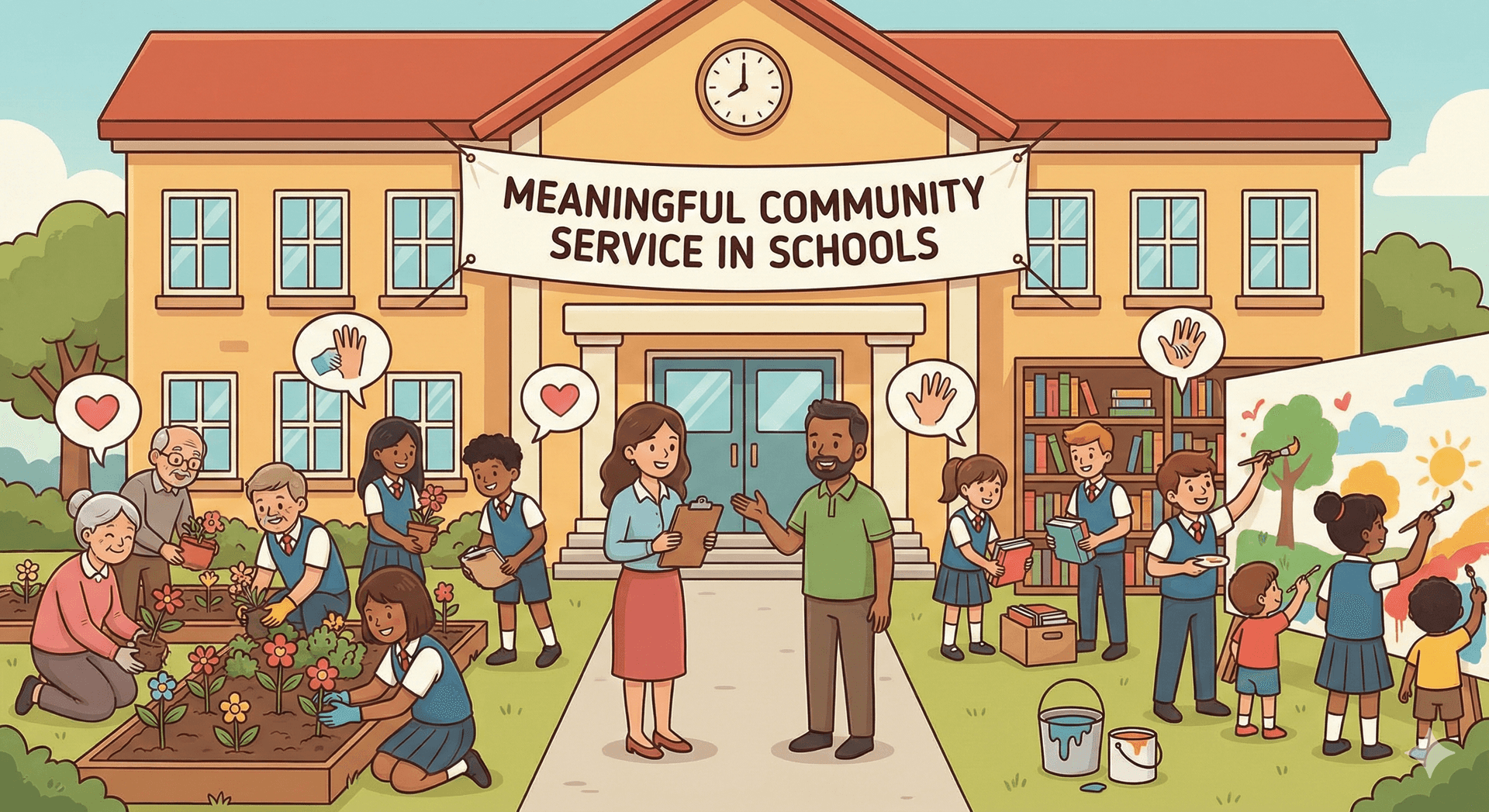

Indian students today face huge pressure to create the perfect college application resume. They often treat community service like just another quick task to check off their list. Recent data shows that millions of students are involved in volunteering, but very few truly gain the deep empathy or leadership skills these programs promise to deliver.
The present system of just counting hours for community service involves students more like tourists who visit a village or a designated place to just explore and talk rather than getting truly involved with the community. They take a few photos for social media and never come back to learn the real causes of the problems they see.
Some of the good boarding schools in India are making a big change from this shallow hour-counting to planned, meaningful programs towards community service. These programs push students to leave their safe comfort zones and face the tough truths of the real world.
Also Read: Community Radio Station in Schools
The Problem with Check-Box Charity
Many Indian schools use a standard model for community service that does not work well because students focus on quantity instead of quality. Schools often make students complete a set number of hours, so students pick easy activities that need no real effort or deep thinking. A student might spend 10 hours filing papers at a local NGO or painting a school wall, but these tasks seldom teach them why the NGO runs or why the school needs more money.
Studies show that mandatory and unstructured community service actually lowers a student's future interest in helping the community because it feels like a boring job instead of their own choice. This shallow method causes a gap where students help a community but never talk to the people they serve.
Filling the Big Gap in India
Urban and rural India face one of the largest lasting gaps in education and money anywhere in the world. Rural students drop out of school 30% more often than urban students because they lack good buildings and supplies. Urban students live in closed neighborhoods and go to top schools, so they rarely see this problem up close.
Schools make the gap worse when they only ask students to raise money or visit poor areas for a short weekend. Real learning happens when students step across this gap in body and heart to see rural struggles every day. They then grasp the big system problems that trap these communities in hardship.
How Structured & Meaningful Community Service Works?
Students learn much better through long stays in communities than through quick help trips because these stays use the full brain. Students apply school lessons to true life issues during these long visits. They get over the first shock of seeing poverty and start real friendships with local people.
Neuroscientific studies show that these strong social links release a chemical called oxytocin, which grows empathy and creates lasting brain paths linked to helping others. Immersive programs change pity into team spirit, so students shift from watchers to doers who drive real solutions.
Also Read: Developing Reading & Technical Skills in Young Learners
A Model of True Community Service: Mussoorie International School (MIS)

Many schools still count hours for service work, but Mussoorie International School (MIS), one of the best ICSE boarding schools in India, leads with a new way that shows true student social responsibility. The school sets a high standard for this kind of work by focusing on real programs that connect deeply with local communities.
MIS Village Immersion Program
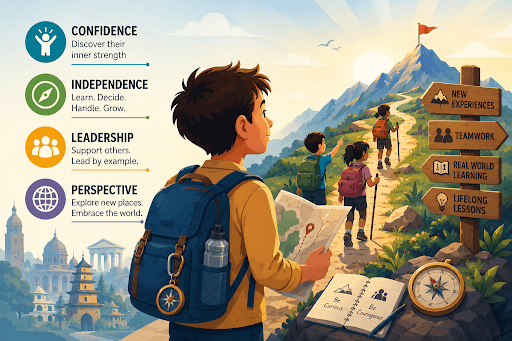
MIS runs its main program called the Village Immersion Program as a full 5-day stay with help from Tata Trusts. Students go to Churedhar village in the Dhanaulti area of Garhwal district and live right with the villagers instead of staying in hotels. The program feels tough and real because it takes away comforts and shows students the hard work of village life.
Students join in the daily jobs that keep the village going during these 5 days. They work on farms, carry water, and care for cows to learn the real effort of rural jobs. They also visit local government schools and see the big gaps in supplies and chances compared to their own school. This real experience breaks wrong ideas and teaches students that villagers show strength against tough systems. Students gain a view of life that books or videos can never give them.
MIS Adult Literacy Initiative
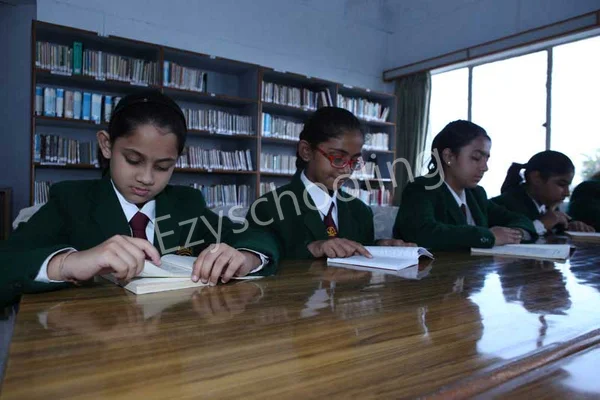
MIS keeps a strong long-term link with nearby people through its Adult Literacy Initiative outside the Garhwal mountains. The school chooses Beera Village near the Rawal Temple in Mussoorie to run a program on Cultural Literacy. This work sees literacy as more than letters because it brings power and helps people know their role in society.
MIS students go to Beera Village often to teach adults reading and writing skills. The lessons go beyond basics because they cover legal rights and ways to handle papers for government help. This give-and-take helps students and villagers in equal ways every time. Students learn to talk across different ages and groups while they grow calm teaching skills.
Women in Beera Village change their lives with these skills as they gain trust to handle money and speak up for their families. This ongoing link shows that MIS sees community service as a lasting duty to help those nearby more than a checklist.
Conclusion
Indian schools now need to stop treating community service as a small extra task and start treating it as an important and central part of teaching good values and character. We must move beyond the empty goal of collecting certificate hours, and we must accept the hard, sometimes confusing, but very rewarding experience of real community work and community life.
Programs like the Village Immersion at Mussoorie International School show that when teachers trust students with real-world duties and serious responsibilities, the students handle them well and respond with surprising maturity and deep kindness.
By taking responsibility for Beera Village and staying in Churedhar, these students are not just adding extra lines to their resumes or only thinking about future jobs, they are developing the emotional intelligence and inner strength they need to guide India toward a fairer and more equal future for everyone.
To learn more about this and other schools nearby, see this list of the top boarding schools in India.






 as a preferred source on