









Have you ever pondered when is the right time to start teaching your child about letters, numbers, or even just the happiness of reading a book together?
As parents, we all want to give our children the best possible start, but with so much information out there in the bubble, we don’t know how to go ahead with it. Here's the comforting truth: you don’t need to be a teacher or early childhood expert to make an impactful difference. What matters is starting early with love and care for the children.
In those early years, your child’s brain is extending itself faster than it ever will again. It’s during this period of time that the fundamentals for both literacy and numeracy are laid, not through flashcards or worksheets, but through simple interactions.
In this article, we’ll explore why early literacy and numeracy matter so much, how you can build them naturally at home, and how schools like MRIS include the use of multiple intelligences and integrated learning.
Also Read | Learning with Purpose | How MRIS 21C Nurtures Young Minds through Real-World Experiences
Why Early Literacy and Numeracy Matter
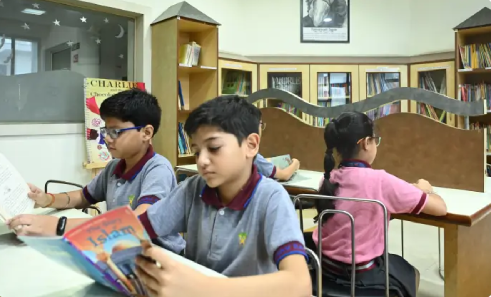
Early childhood is a sensitive period for cognitive development, where children’s brains are rapidly forming connections. According to the Harvard Center on the Developing Child, 90% of brain development occurs before the age of five. This makes the early years the ideal time to introduce children to structured literacy and numeracy exposure.
Here’s why these skills matter:
- Early literacy is linked to stronger academic performance, higher self-esteem, and better language development.
- Numeracy affects a child’s ability to understand logical patterns, solve problems, and even impacts later science and technology skills.
- Gaps in literacy and numeracy in early childhood often widen over time, making it harder for students to catch up later.
When children are regularly exposed to rich language environments through books, conversations, songs, and stories, they develop a strong linguistic base. They’re also more adept at understanding instructions and expressing their thoughts clearly, both critical life skills.
The CREST Curriculum: Conceptual Learning with a Modern Approach
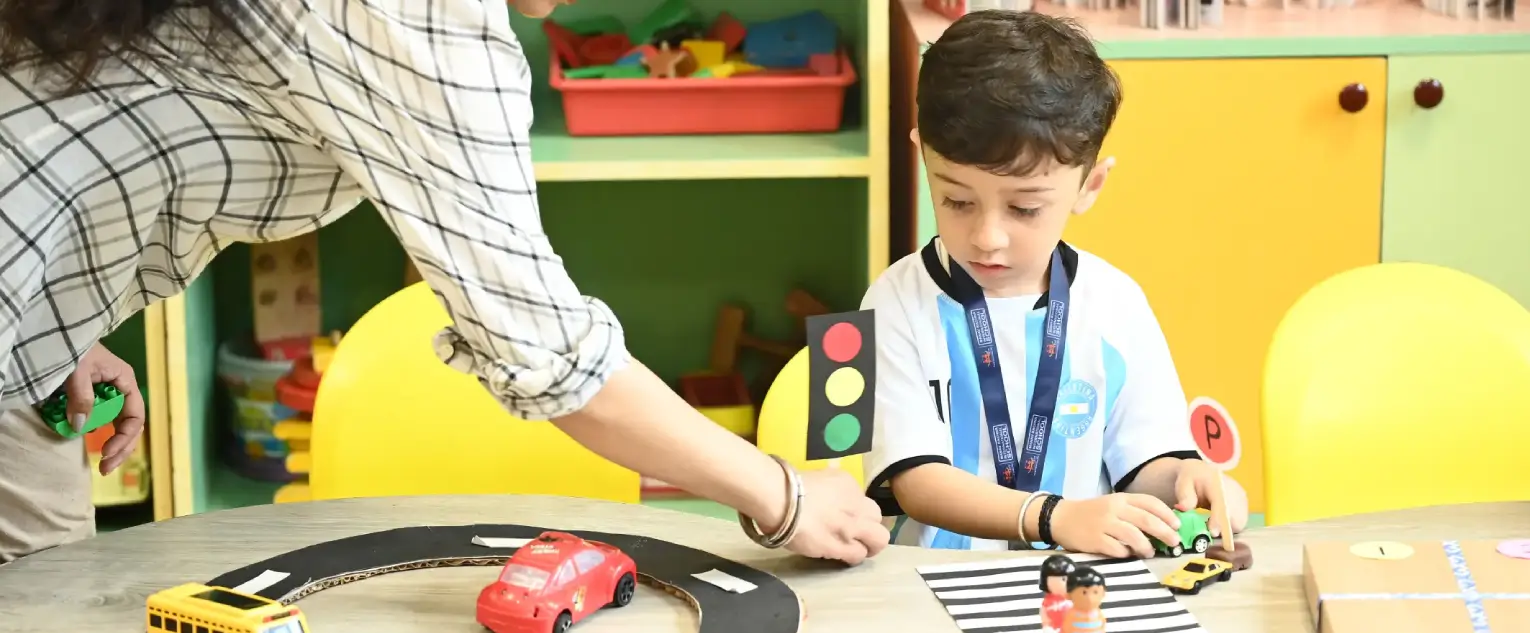
When it comes to helping young children develop strong literacy and numeracy skills, the method of teaching is just as important as what is being taught. One such model is a research-informed learning framework often used in the primary years, which emphasizes reasoning, exploration, and skill-building over rote memorization. This approach is designed to introduce academic content in ways that are meaningful, interactive, and relevant to children's everyday lives.
Let us look at how conceptual learning supports the development of foundational skills:
- Children are encouraged to ask questions and explore answers rather than just receive information.
- Concepts like reading comprehension or number sense are taught using real-life examples, stories, experiments, and collaborative activities.
- Subject areas such as science, math, language, and art are blended into thematic units, making learning more engaging and interconnected.
Here’s why this approach is beneficial for children:
- Develops Reasoning and Critical Thinking: Rather than simply learning to "do sums" or memorize letters, children are taught to understand why things work the way they do. For example, instead of just reciting numbers, they might explore how numbers apply to patterns in nature, recipes in cooking, or distances in travel.
- Encourages Exploration and Active Learning: Students learn by doing– observing plants grow, building simple machines, or measuring ingredients in class projects. This experiential learning deepens comprehension and memory.
- Builds Real-World Connection: Literacy and numeracy are not taught in isolation. A reading session might involve analyzing a story’s sequence (literacy) and counting how many objects the characters used (numeracy), helping children see how skills overlap in real life.
- Fosters Independence and Curiosity: Students are encouraged to make choices, conduct experiments, and share what they’ve discovered, developing confidence in their ability to learn.
Home and School: An Indispensable Alliance for Constructing Solid Foundations
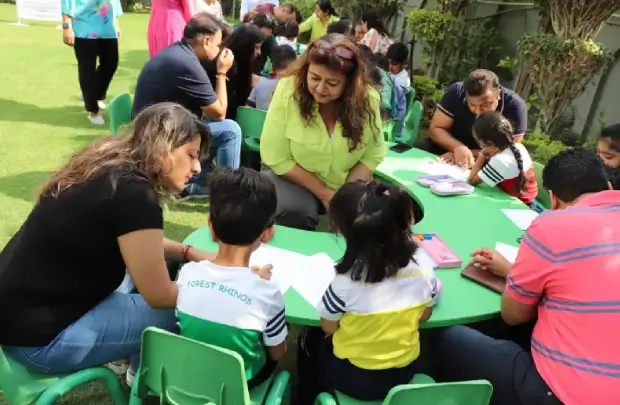
Have you thought about those moments when your child starts humming to a song that you would have maybe played in the car or tries to imitate while you’re cooking in the kitchen?
Specialists across the globe, even the researchers from OECD, also assert that when the parents are persistently a part of their child’s learning journey, that leads to the child portraying improved academic scores, a strong hold on communication skills and an optimistic approach towards things.
This points out that your child’s growth in early literacy and numeracy not only depends upon what is happening inside the classroom, it also relies on what happens at home.
Here’s how parents can support learning at home (without making it feel like homework):
- Create Reading Rituals Together: Parents should try to reserve 10-15 minutes daily for their children. They should ask them about the characters of the story or maybe the next happenings in the story, and then ask them to connect it to their own life. This would be fostering to build the emotional intelligence and comprehension skills in their children.
- Make Math Part of Everyday Activities: The child, while helping out their parents in the everyday activities, should be involved to know about the measurement of the ingredients used while cooking the food, making them know about money while going shopping or trying to sort the laundry by colour and size. These activities would help them realise and understand numbers and quantities.
- Use Technology Intentionally and Wisely: The screen time when used purposefully by fostering age-appropriate e-books or maybe simple math games that could allow your child to play alongside the art of learning.
You don’t need to be a trained teacher to support your child; you just need to be present, observant, and encouraging. Whether you're reading a bedtime story or chatting about colors on a walk, you’re doing important educational work. These moments, when consistent and intentional, build the foundation for lifelong skills in literacy, numeracy, and critical thinking.
MRIS Sector 21C: Where Early Learning Sets Persisting Success in Motion
Established in 2006, Manav Rachan International School, one of the best CBSE schools in Faridabad, the school stands out for its individualized attention, creative teaching philosophy, and energetic campus life. From a devoted football academy to varied programs in music, theatre, skating, and taekwondo, the school gives students a multi-thriving environment to go beyond academics.

What truly sets MRIS 21C apart is its dedicated commitment to emphasizing strong educational foundations in the early years. With a deep understanding that the first 6-8 years are critical for intellectual growth, the school has now catered to appropriate and interactive methods to nourish early literacy and numeracy skills. Through storytelling sessions, experiential math activities and multilingual exposure, students not just learn but instead explore themselves to make connections that are true in nature.
Recognised as the Best Middle School of Faridabad and the CBSE Innovators Topper in the Times School Survey 2023, MRIS 21C combines academic excellence with preliminary skill-building plans that prepare students for school and practical problems. With a 100% board exam pass rate and numerous top scorers, the school’s success speaks to the strength of its foundations—foundations built carefully, purposefully, and together with families.
For more information on MRIS and other similar schools in the region, explore this list of the best schools in Faridabad.
 as a preferred source on