







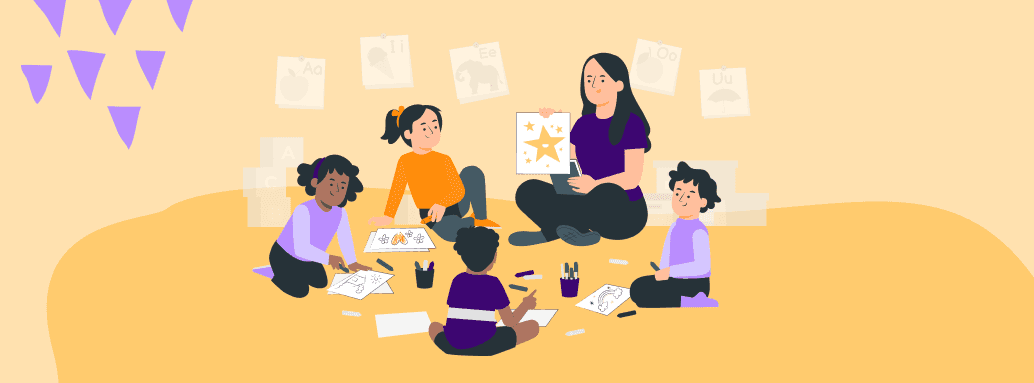

As education is rapidly evolving to break free from the confines of textbooks and standardised tests, more and more schools are embracing hands-on, interactive approaches like peer tutoring, experiential workshops, and inquiry-based learning to bring lessons to life. These dynamic strategies don’t just make learning more engaging but also help build confidence, foster collaboration, and develop critical academic and social skills from the earliest years.
At Manav Rachna International School (MRIS), Sector 21C, one of the best schools in Faridabad, they prioritise a hands-on, engaging approach to education. Students move beyond rote memorisation to explore learning through curiosity and creativity.
This article highlights how learning at MRIS is active and student-driven, showing how hands-on activities, teamwork, and real-world projects make education more fun, effective, and meaningful for a child’s development.
Also Read | Why Kids Learn Better Outdoors | MRIS 21C Faridabad’s ApproachMoving Beyond Textbooks: The Power of Experiential Learning
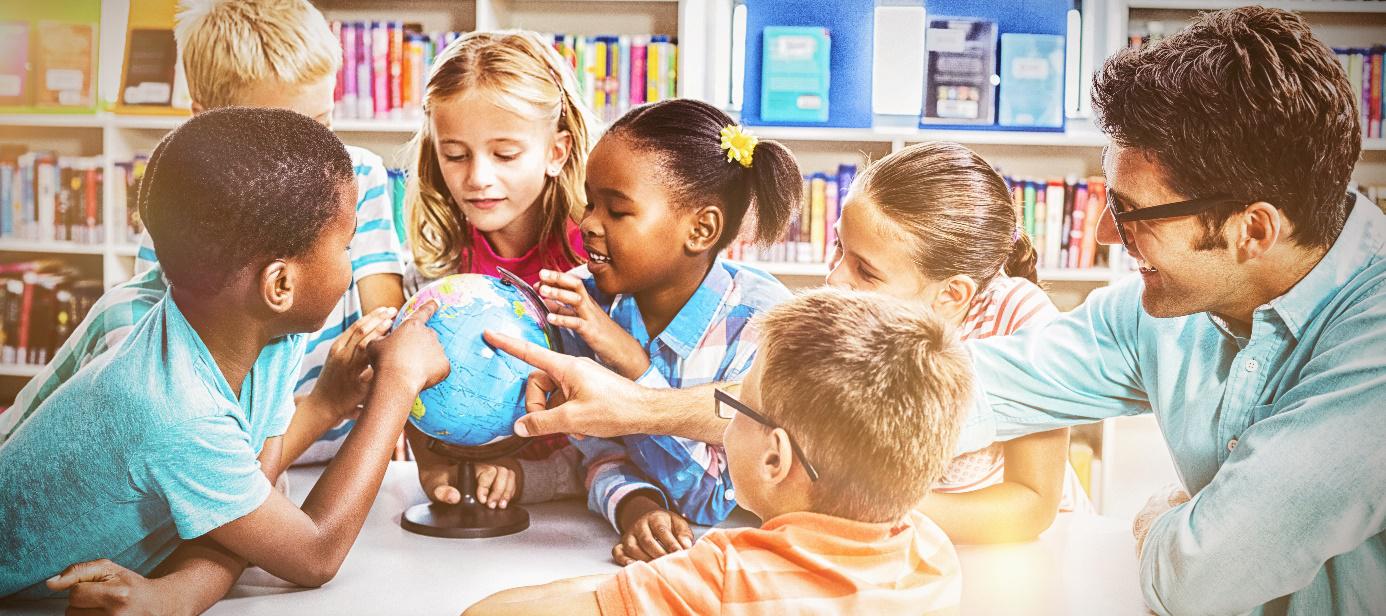
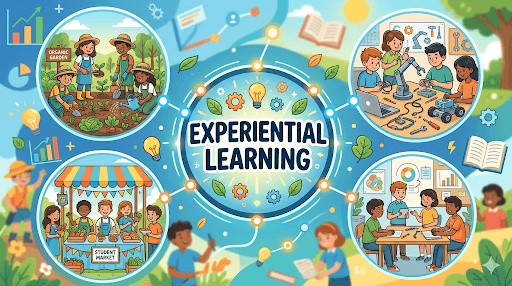
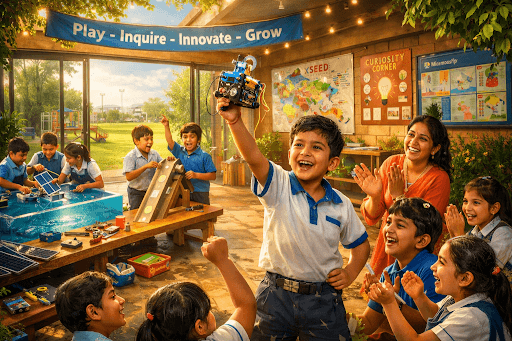
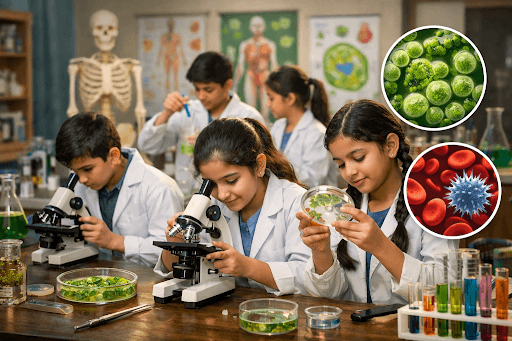
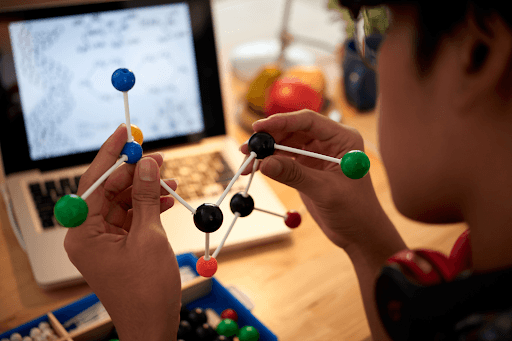
Experiential learning is a cornerstone of effective early education. Instead of passively receiving information, students engage directly with concepts through hands-on activities, experiments, and projects. This method helps children internalise ideas by connecting theory with practice. For example, exploring scientific principles through experiments rather than just reading about them makes learning tangible and memorable.
Here's how experiential learning benefits early education:
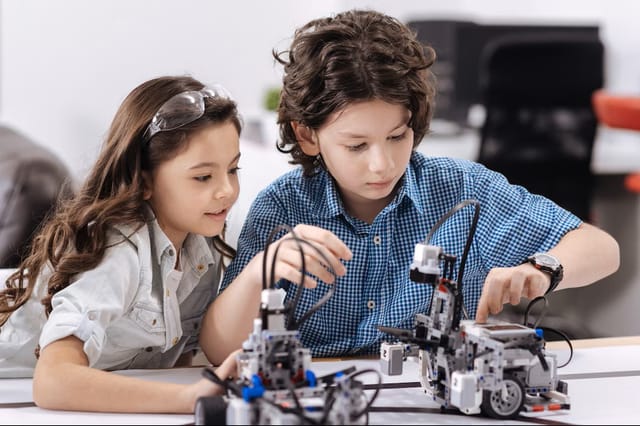
- Active Engagement Enhances Understanding: When students physically interact with materials and concepts, such as conducting science experiments or building models-they move beyond memorisation. This active involvement helps them grasp complex ideas by experiencing them firsthand, which leads to deeper comprehension.
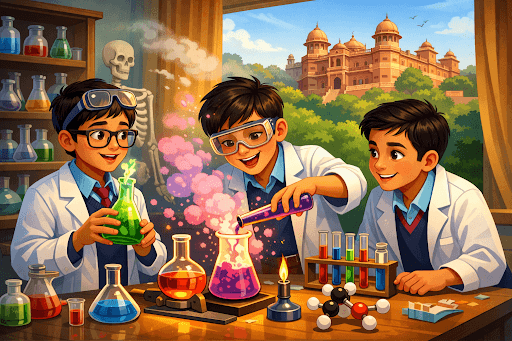
- Connecting Theory with Real-World Application: Instead of simply reading about scientific principles, children can observe these principles in action. For example, mixing substances to see chemical reactions or measuring forces in a bridge-building activity allows students to see how abstract concepts function in the real world, making learning more meaningful.
- Improved Retention and Memory: Hands-on activities create memorable learning experiences by stimulating multiple senses and encouraging curiosity. These multisensory interactions help solidify knowledge in long-term memory, ensuring that students retain what they learn far better than through passive study.
- Development of Critical Thinking and Problem-Solving Skills: Experiential learning often involves trial and error, experimentation, and exploration, which encourages students to ask questions, analyse results, and think critically. This nurtures problem-solving abilities essential for academic success and future challenges.
Inquiry-Based Learning: Cultivating Curiosity and Critical Thinking
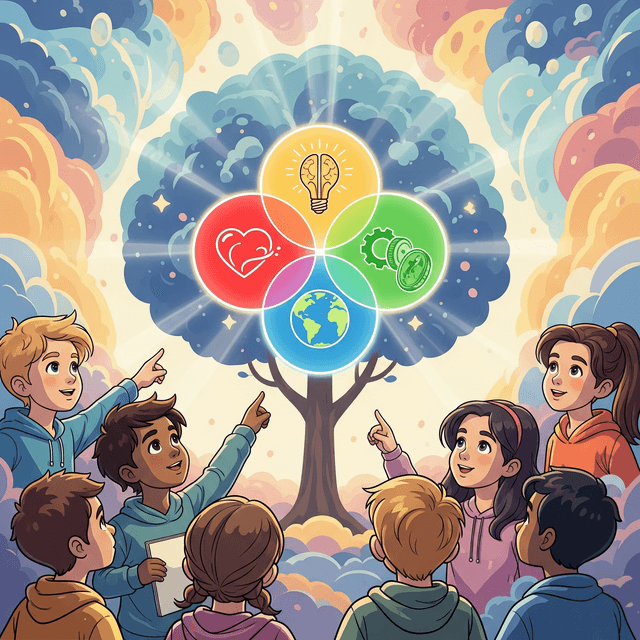
Inquiry-based learning encourages students to ask questions, investigate, and discover answers independently or collaboratively. This nurtures natural curiosity and develops problem-solving skills. When lessons are framed around real-world problems and scenarios, learners see the relevance of their studies, which boosts motivation and engagement.
Here are a few benefits of inquiry-based learning:
- Fosters Natural Curiosity
- Develops Critical Problem-Solving Skills
- Promotes Independent and Collaborative Learning
- Connects Learning to Real-World Contexts
Peer Tutoring and Collaborative Growth
When students teach and learn from one another, they reinforce their own understanding, as explaining concepts demands clarity and deeper mastery. Working in teams also sharpens essential communication skills, helping students express ideas clearly, listen actively, and engage thoughtfully in dialogue.
Beyond academic benefits, collaboration nurtures important personal qualities such as empathy, patience, and confidence. Engaging with diverse peers encourages students to appreciate different perspectives and adapt to various learning styles, fostering emotional intelligence.
Why Real-World Learning Matters
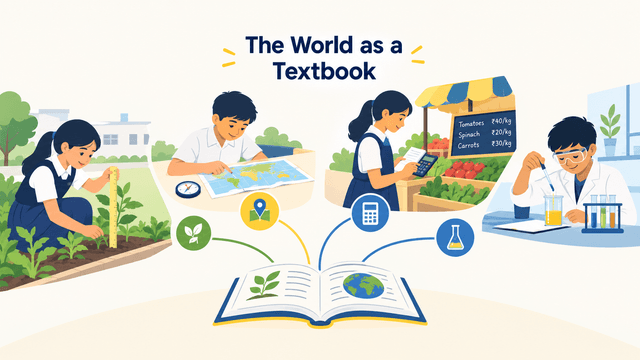
Real-world learning means teaching children through experiences that relate to their everyday lives. Instead of just reading from textbooks or memorising facts, students explore concepts by doing things—like building models, conducting experiments, solving real problems, or working in teams. This way, learning becomes active, not passive.

Research shows this hands-on approach helps children understand and remember information much better. The knowledge sticks and becomes useful beyond the classroom when they can see how lessons apply to real life.
Thinkers like John Dewey have long said that “learning by doing” is key to developing curious, capable learners. At MRIS, we bring this philosophy to life. Through activities that involve thinking, creating, and collaborating, we ensure that your child’s learning journey is meaningful, engaging, and built for the real world.
Let us look at the key benefits of real-world learning:
- Critical Thinking and Problem-Solving: When children learn by asking thoughtful questions and exploring a variety of possibilities, they step into the role of active thinkers rather than passive learners. For example, when faced with a real-world problem, like designing an eco-friendly garden or figuring out how to reduce classroom waste, students collaborate with their peers to brainstorm ideas, test strategies, and refine their approaches.
- Creativity and Confidence: Exploring learning through real-world contexts sparks creativity and fuels curiosity. When students encounter open-ended projects or scenarios, such as inventing a new product or storytelling based on local history, they are invited to think outside the box and let their imaginations run free.
- Holistic Development: Real-world learning goes well beyond memorising facts or preparing for tests as it focuses on the whole child’s growth. This balanced approach ensures that children are not only knowledgeable but also emotionally intelligent, socially aware, and ready to navigate the complexities of life.
Manav Rachna International School: Where Today’s Curiosity Becomes Tomorrow’s Leadership
Established in 2006, ranked among the best CBSE schools in Faridabad, Manav Rachna International School provides personalised attention in a state-of-the-art campus. The school boasts world-class sports and arts facilities, including a dedicated football academy and diverse extracurricular activities like skating, taekwondo, music, and theatre.

Manav Rachna International School in Sector 21C, Faridabad, embodies the principle of learning with purpose, blending academic rigour with hands-on experiences in a nurturing environment. Through innovative strategies such as peer tutoring, experiential workshops, and inquiry-based learning, MRIS 21C empowers students to explore concepts deeply, ask meaningful questions, and learn collaboratively.
Renowned for academic excellence and innovation, MRIS 21C has earned accolades such as the Best Middle School of Faridabad and topped the CBSE Innovators category in the Times School Survey 2023. Its students consistently achieve outstanding board results, with 100% pass rates and numerous top scorers. Inclusive programs like the Atal Tinkering Lab and Special Education Needs department further enrich the holistic development of every learner.
For more information on MRIS and other exceptional institutions in the region, explore this list of the best schools in Faridabad.





 as a preferred source on