







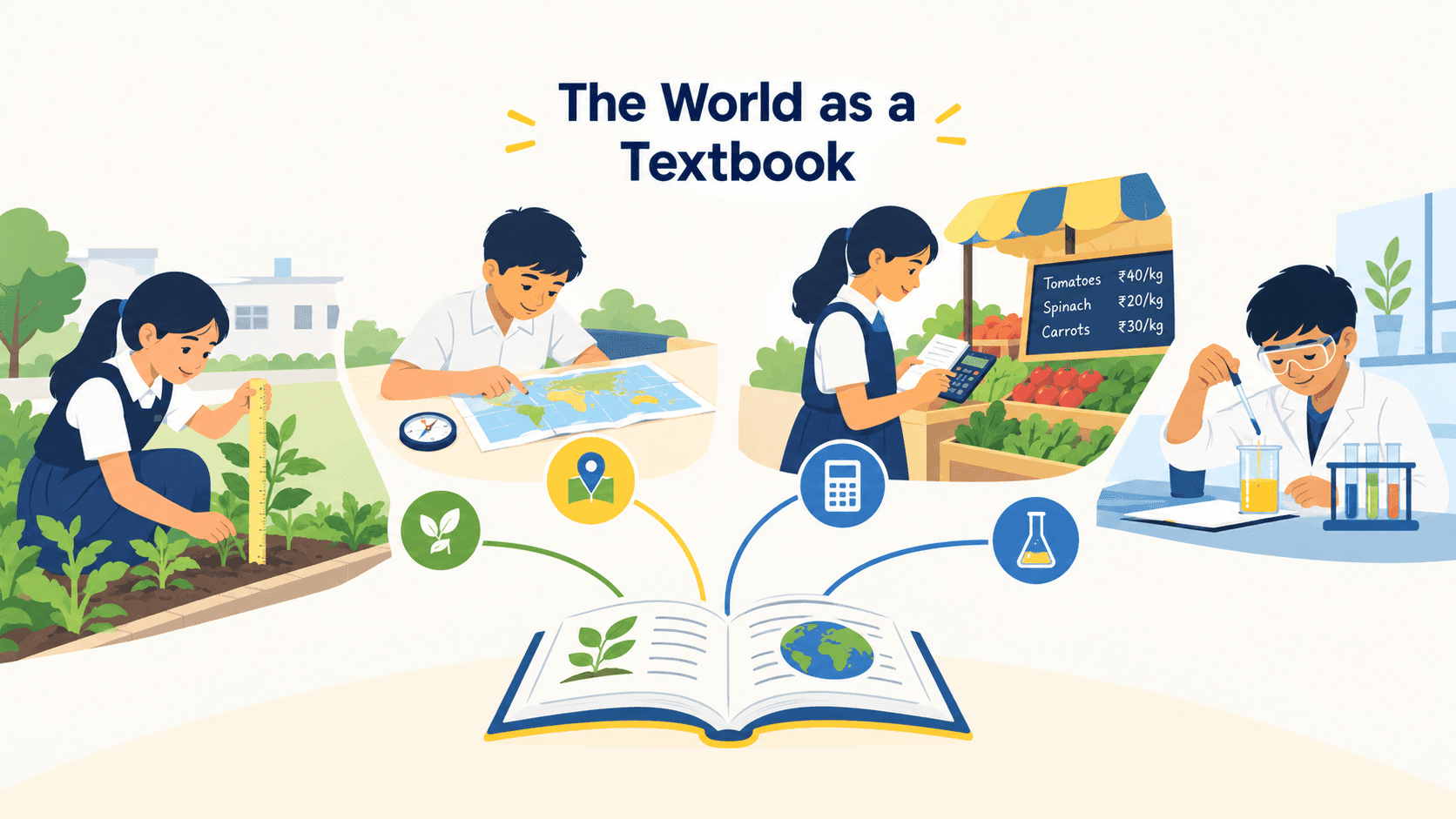

For all the emphasis on real-world learning, many school subjects already introduce children to concepts they encounter in everyday life. For example, a child learns about money in mathematics, pollution in science, democracy in social science, and writing in English. But what happens when these ideas leave the textbook and appear in everyday life? This is where the difference between knowing something and understanding it begins to show.
For parents exploring the top schools in Faridabad or comparing schools anywhere in India, this is an important question to ask. A school such as Manav Rachna International School, Sector 14, reflects a wider shift in education: learning is increasingly expected to connect with questions, problems, and experiences outside the classroom.
CBSE itself encourages this approach. Its curriculum emphasizes hands-on learning, competency development, real-life problem-solving, interdisciplinary connections, and experiential learning rather than relying only on memorization.
When a Lesson Becomes a Real-Life Problem
Imagine a Class 6 student learning about percentages. Instead of solving only questions from a worksheet, the child could compare prices during a grocery trip, calculate discounts, or work out how much a family spends on different categories.
The same idea works across subjects: This kind of learning also makes children ask better questions. Why does one product cost more than another? Why does a particular area have more traffic? How much water does a leaking tap waste?
CBSE describes experiential and active learning as useful approaches for developing critical thinking, creativity, and study skills. Its learning-outcomes framework also asks schools to focus on what students can demonstrate with their knowledge, not simply how much content they can remember.
The Neighborhood Can Become a Learning Lab
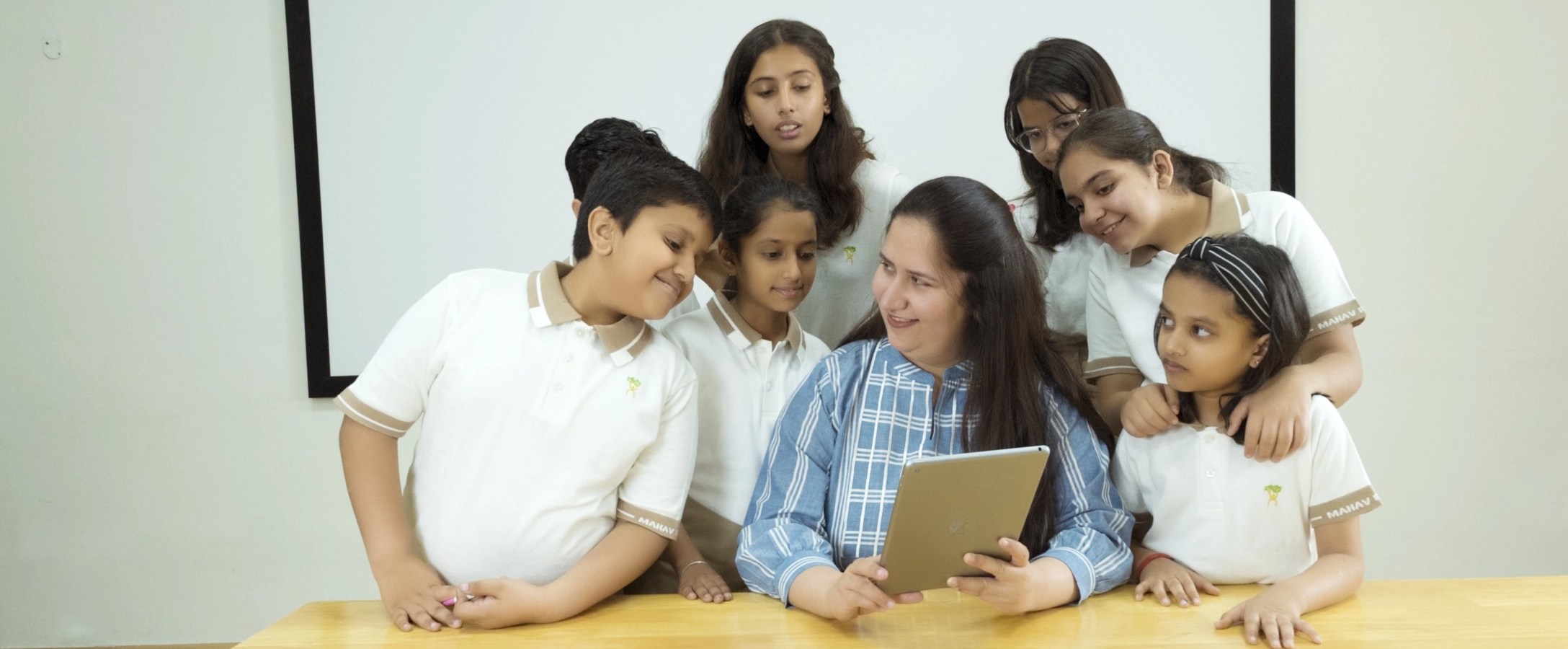
Real-world learning does not always require an expensive field trip. A school playground, neighborhood market, kitchen, or nearby park can become a useful learning space when a teacher gives students a question to investigate.
A simple walk around a neighborhood, for example, can become an environmental science activity. Students might observe the kinds of trees they see, record areas with litter, compare shaded and unshaded spaces, and think about how the design of a public space affects people.
A visit to a local market can connect mathematics with economics. Students can compare prices, calculate percentages, and think about why prices change.
History can also move beyond dates. A visit to an old building or monument can lead students to investigate who built it, what materials were used, how the surrounding area has changed, and what the structure tells us about the society of that time.
The important part is what happens after the experience. Students need to record observations, discuss what they found, check their assumptions, and explain their conclusions.
The Ministry of Education's experiential-learning initiatives similarly use hands-on activities, technology, heritage, and real-world settings to help students connect ideas with experience.
Also Read | The Advantage of Two Boards
From Knowing the Answer to Solving the Problem
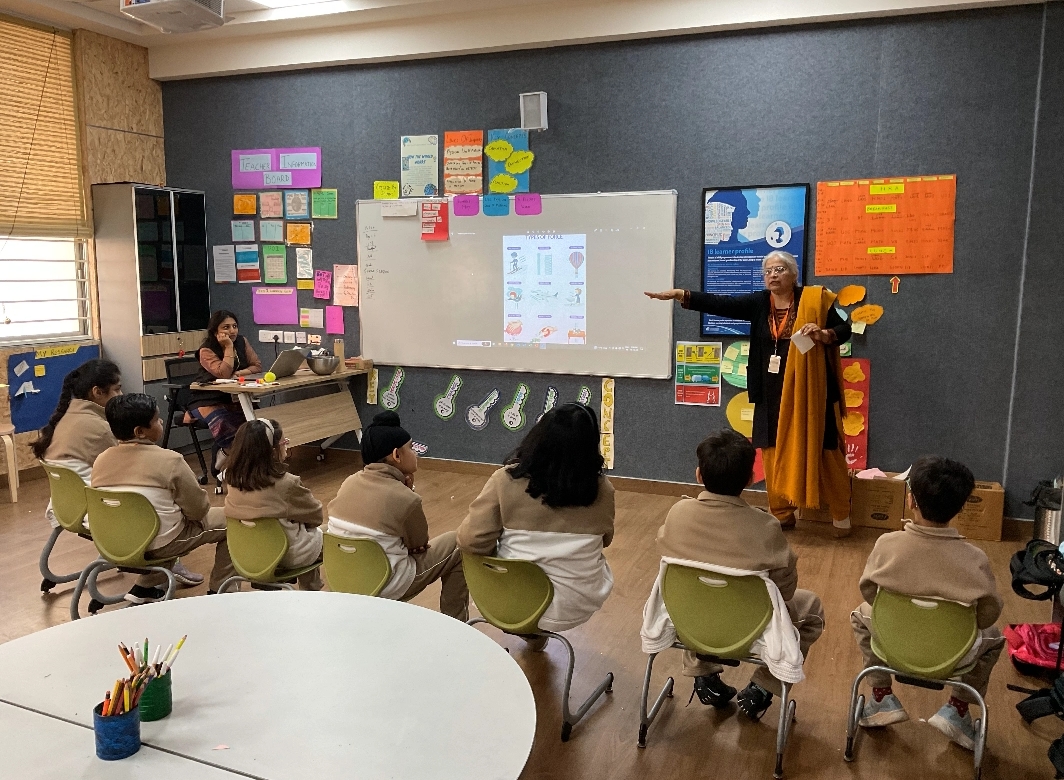
One of the biggest changes in modern school learning is the move from asking, “What is the answer?” to asking, “How did you arrive at it, and where can you use it?”
Consider a science lesson about air pollution. Students could learn definitions and causes from a textbook. But they could also collect observations about traffic near their school, study publicly available air-quality information, discuss possible sources of pollution, and suggest practical changes.
The process teaches children to:
- Identify a problem before trying to solve it;
- collect and organize information;
- distinguish evidence from assumptions;
- work with other people who may have different ideas;
- explain why they reached a particular conclusion; and
- think about how their solution might work in real life.
This is closely connected to the idea of transfer of learning: using something learned in one situation to handle a new situation. The APA notes that effective practice should ultimately help students transfer acquired knowledge and skills to new and more complex problems.
It also explains why interdisciplinary projects can be powerful. A single project can require mathematics for data, science for understanding causes, language for communication, and social science for considering people and communities.
What Parents Should Look for in a School
For parents, “experiential learning” should mean more than occasional activities added to the timetable. The real question is whether everyday teaching gives children opportunities to use what they learn.
A useful checklist is:
- Does the school connect classroom concepts with familiar situations?
- Are students encouraged to ask their own questions?
- Do projects involve research, observation, or problem-solving?
- Are subjects connected when a topic naturally requires it?
- Do teachers discuss mistakes and different possible solutions?
- Are students asked to explain their thinking rather than only give answers?
- Is assessment used to understand learning and provide feedback?
CBSE's competency-based approach places importance on demonstrating knowledge, skills, and understanding in real-life situations. Its SAFAL framework similarly focuses on core concepts, application of knowledge, and higher-order thinking.
For schools, therefore, the world outside the classroom is not a distraction from the curriculum. It can be one of the places where the curriculum becomes meaningful.
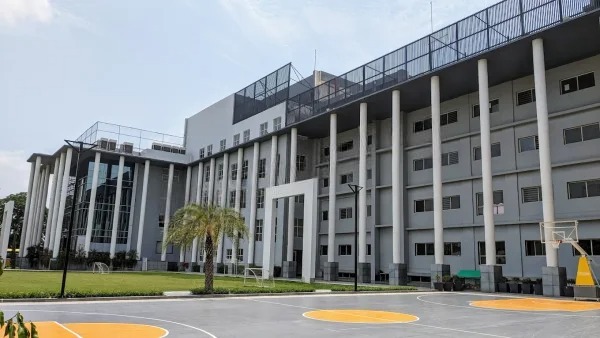
At Manav Rachna International School, Sector 14, the approach described on the school's official website places strong emphasis on inquiry, conceptual understanding, interdisciplinary learning, action and service, and connecting learning with wider contexts. The campus also lists spaces such as a Design Thinking Lab, Learning & Interactive Centre, Performing Arts Learning Hub, and Learning Commons for Global Citizenship.
For families considering the best schools in Faridabad, Sector 14, MRIS Sector 14 can therefore be part of the conversation about how schools are creating learning experiences that extend beyond conventional classroom teaching. Its linked campus information specifically describes inquiry-led, concept-driven learning and interdisciplinary connections as important parts of its educational approach.
Conclusion
A textbook can introduce an idea, but experience can give that idea meaning. When a child uses percentages while shopping, studies water through actual consumption, investigates a local environmental issue or uses writing to communicate a real message, the curriculum starts becoming part of everyday thinking.
The goal is not to replace textbooks with activities. It is to make textbooks a starting point for asking better questions about the world. When schools create that connection consistently, children do not just learn what a concept means; they begin to understand why it matters and where they can use it.
To know more about other schools in Faridabad, click on the link below



 as a preferred source on