








Curious about what makes the perfect foundation for your child’s early learning years?
Early childhood is a time of imagination, curiosity, and rapid growth. These formative years shape a child’s confidence, creativity, and emotional well-being, making it essential to provide an environment that nurtures both joy and discovery.
At Ramagya School, Sector 50, Noida, one of the best schools in Noida, early education goes beyond academics. The school’s Early Years Program blends the Montessori, Play Way, and Thematic approaches, fostering independence, hands-on exploration, and meaningful learning connections.
In this article, we’ll explore how the best early education programs combine these three time-tested methodologies to build a holistic foundation for young learners and how this integrated model at Ramagya School helps children grow into confident, and compassionate individuals ready for the world ahead.
Also Read | Building Life Skills by the Hour at Ramagya School
The Power of a Blended Pedagogy
The hallmark of quality early education lies in its balance between freedom and structure, creativity and reasoning, exploration and discipline. By merging the Montessori, Play Way, and Thematic approaches, educators bring together the best features of each world: independence, joy, and connection. This blend ensures children learn not only academic concepts but also self-confidence, curiosity, and empathy skills essential for thriving in the 21st century.
Understanding the Three Pillars of Early Learning

Each of these methodologies complements the others. The Montessori approach builds focus and independence; the Play Way method brings joy and spontaneity; and the Thematic approach ensures concepts are understood deeply and meaningfully. Together, they form a balanced ecosystem for growth.
|
Approach |
Core Focus |
Key Features |
Learning Outcomes |
|
Montessori |
Independence and sensory exploration |
Child-led activities, specialized learning materials, and prepared environments |
Self-discipline, fine motor development, and intrinsic motivation |
|
Play Way |
Experiential and joyful learning |
Games, dramatization, music, storytelling, and hands-on art |
Creativity, collaboration, problem-solving, and emotional expression |
|
Thematic |
Interdisciplinary concept learning |
Central theme connecting multiple subjects like science, art, and literacy |
Holistic understanding, curiosity, critical thinking |
Montessori Method: Learning by Doing
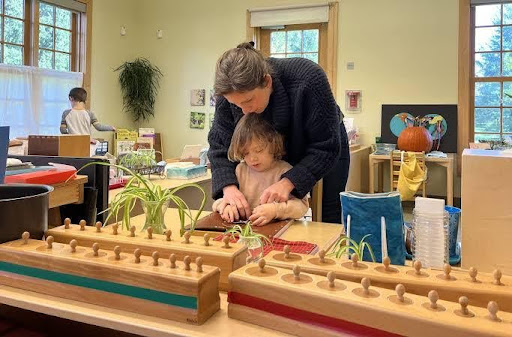
The Montessori philosophy emphasizes hands-on discovery. Classrooms or specialized Montessori labs are filled with tactile materials that allow children to explore ideas through sight, touch, and movement. Pouring grains, sorting beads, and tracing letters are not just activities; they’re tools for strengthening fine-motor coordination and cognitive sequencing.
Teachers act as guides rather than instructors, allowing children to progress at their own pace. This autonomy helps children build self-discipline, problem-solving skills, and internal motivation qualities that form the bedrock of future academic success.
Play Way Method: Joy as the Gateway to Learning
Play is not a break from learning; it is learning. The Play Way method turns everyday activities into exciting adventures. Through pretend play, songs, outdoor games, and creative arts, children express emotions, develop social skills, and learn to navigate relationships.
According to child psychologists, play enhances 80% of emotional intelligence and cognitive flexibility. For instance, building with blocks teaches geometry and balance; role-playing a shopkeeper introduces math, communication, and empathy through fun and engagement. The Play Way approach ensures that learning remains joyful, meaningful, and memorable, making it ideal for early learners.
Thematic Approach: Connecting the Dots
The Thematic Approach weaves various disciplines into a single, cohesive learning experience. For example, a theme like “Seasons” may include science (weather changes), art (seasonal crafts), language (poems on rain), and math (counting leaves). This cross-curricular strategy helps children make connections between ideas, improving comprehension and recall.
Thematic teaching also nurtures curiosity. Children begin to see learning as a continuous story rather than isolated subjects, developing the ability to transfer knowledge across contexts, an essential skill for lifelong learning.
A Day in the Life of an Early Learner
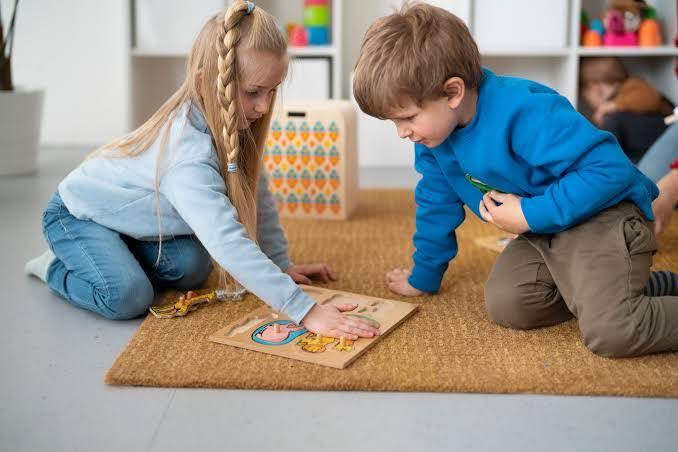
These elements create a rhythm that balances freedom with focus, empowering children to explore confidently while feeling secure and supported. A thoughtfully designed early years program often includes a mix of structured and open-ended activities:
- Circle Time to build community and communication skills
- Montessori sessions for self-paced, hands-on learning
- Creative Play through art, music, and storytelling
- Reflection Time to help children process experiences and emotions
The Role of the Learning Environment
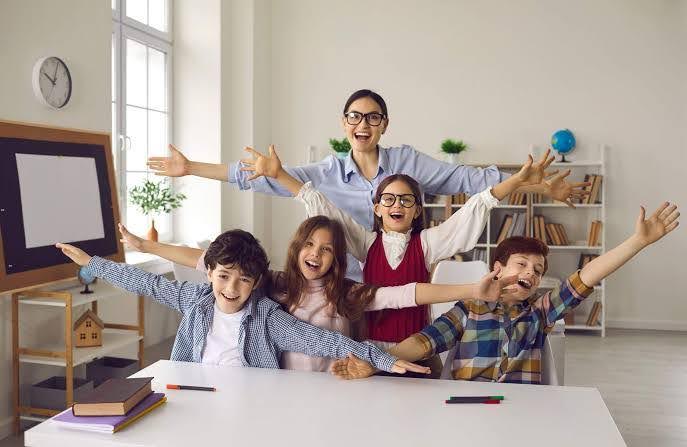
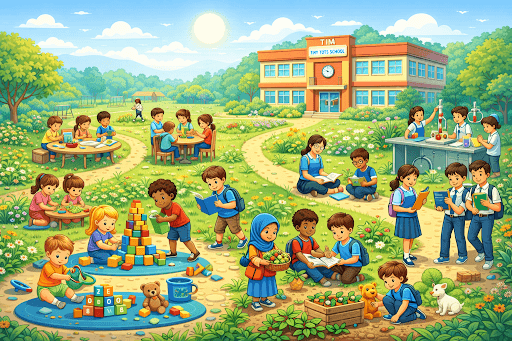
A stimulating early learning environment is as crucial as the curriculum itself. Classrooms are designed to be safe, vibrant, and sensory-rich, with materials displayed at the child’s eye level to promote independence. Quiet corners for reading, music nooks for rhythm, and outdoor spaces for exploration all contribute to balanced growth.
Educators trained in multiple pedagogies provide personalized attention and ensure every child feels seen and valued. Small student–teacher ratios allow teachers to observe, guide, and adapt activities according to each child’s pace and interests.
Parental Involvement: The Fourth Dimension
No early education program is complete without family participation. Parents are encouraged to partner with educators through workshops, open-house sessions, and home-learning extensions. Regular communication helps reinforce classroom lessons at home, ensuring consistency and security for the child.
This partnership cultivates trust and mutual understanding, key ingredients in creating a truly supportive ecosystem for growth.
The Impact: Whole-Child Development
Blending Montessori, Play Way, and Thematic approaches results in balanced development across all domains:
|
Developmental Domain |
Outcome of Integrated Approach |
|
Cognitive |
Enhanced reasoning, memory, and critical thinking |
|
Social |
Improved cooperation, empathy, and conflict resolution |
|
Emotional |
Stronger self-esteem and resilience |
|
Physical |
Better coordination and spatial awareness |
|
Creative |
Greater imagination and curiosity |
Check Out | Shaping the Whole Child: Multidimensional Development
Ramagya School: Shaping Young Minds through Innovation and Care
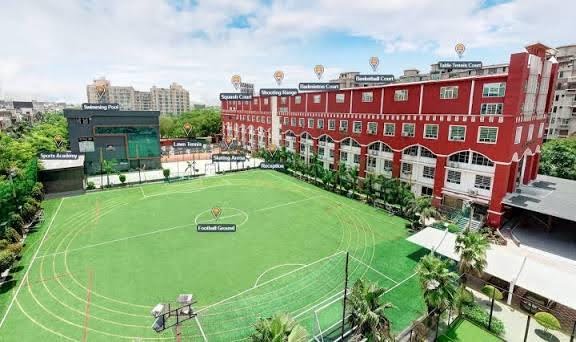
Ramagya School, Sector 50, Noida, established in 2005, is a CBSE-affiliated K–12 institution and is one of the best CBSE schools in Noida for its progressive educational practices and child-centric approach. The campus features smart classrooms, well-equipped science and computer labs, creative activity zones, sports arenas, and dedicated Montessori labs that cater to the unique learning styles of every child.
View Profile
The Early Years Program at Ramagya stands out for integrating the Montessori, Play Way, and Thematic learning methods, an innovative blend that nurtures independence, creativity, and curiosity in young learners. Teachers act as facilitators, guiding children through hands-on experiences that encourage exploration and conceptual understanding. The environment is thoughtfully designed to spark imagination while instilling discipline, empathy, and responsibility.
By merging structured learning with joyful discovery, Ramagya School creates a strong foundation for holistic development. Its balanced approach ensures that every child steps forward with confidence, not only for academic excellence but also for life beyond the classroom.
For more information on this and other such schools in the area, check out this list of the best schools in Noida.







 as a preferred source on