








Being fluent in STEM Science, Technology, Engineering, and Mathematics isn’t just an advantage; it’s essential. And the best way to spark that passion early? Let kids get their hands on building, coding, experimenting, and creating. That’s where Atal Tinkering Labs (ATL) comes in, a visionary initiative by the Government of India under the Atal Innovation Mission, designed to turn classrooms into innovation playgrounds.
Leading the way is St. Teresa School, one of the best schools in Ghaziabad. With its vibrant ATL setup, the school gives students a chance to dive into the exciting worlds of electronics and robotics, right from a young age. Through this hands-on experience, St. Teresa is shaping curious thinkers, bold creators, and the tech leaders of tomorrow.
This article highlights the importance of early STEM education and experiential learning, focusing on how ATL programs build practical skills in electronics and robotics. It also explores the supportive role of schools and parents, with a special look at how St. Teresa School, Ghaziabad, integrates ATL into everyday learning to nurture young innovators.
Also Read | Empowering Students Through Practical LearningThe Power of ATL in Early STEM Education

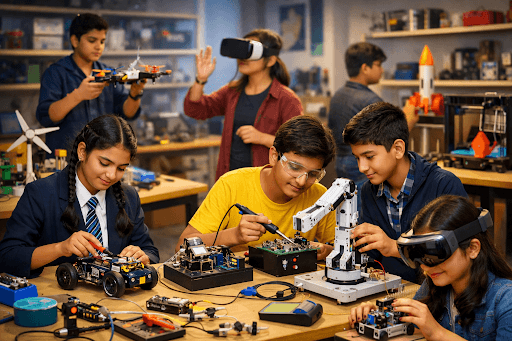
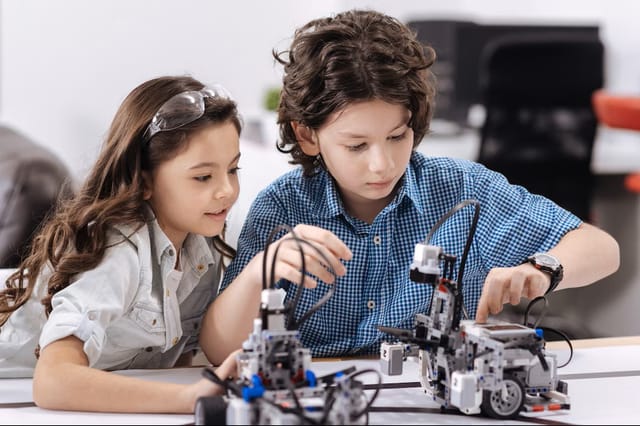
Early exposure to electronics and robotics does more than just build technical know-how; it lays the foundation for essential life skills. Through hands-on activities like circuit-building, experimenting with microcontrollers such as Arduino or Raspberry Pi, and designing their own robotic projects, students gain a deeper understanding of how technology functions in the real world.
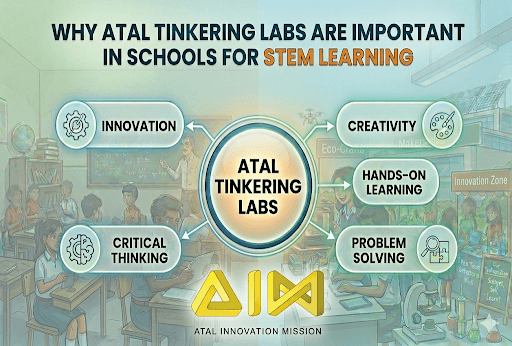
Beyond the technical side, ATL fosters key cognitive and emotional growth:
- Problem-solving and Critical Thinking: Students learn to analyse challenges, break them down into manageable parts, and develop logical solutions, skills that are valuable in every aspect of life.
- Creativity and Innovation: With every project, students are encouraged to think independently, explore new ideas, and come up with inventive solutions, strengthening their ability to think outside the box.
- Teamwork and Collaboration: Working in groups teaches students how to communicate effectively, share responsibilities, and value diverse perspectives, preparing them for real-world team dynamics.
- Confidence and Perseverance: By embracing trial-and-error, students learn that setbacks are part of the learning process. Each failed attempt becomes a stepping stone to success, helping them build resilience and self-belief.
Through ATL, students are not only becoming tech-savvy but also gaining the mindset and skills needed to thrive in an ever-evolving world.
The Psychology Behind Innovation and Skill Building
Innovation flourishes when students are allowed to view failure not as a setback, but as a stepping stone to growth. At ATL, learners are encouraged to tinker, experiment, and even make mistakes, an essential part of the creative and learning process.
- Repetition and Experimentation: By repeatedly testing and refining their ideas, students deepen their understanding and move closer to mastering both concepts and skills. Each trial becomes a valuable lesson in what works and what doesn’t.
- Mentorship and Peer Learning: With the support of knowledgeable mentors and the collaboration of peers, students grow through shared insights, feedback, and teamwork. This collective learning process boosts both competence and confidence.
- A Positive Environment: When students feel supported and safe to try new things, it nurtures perseverance and sparks natural curiosity. They become more open to challenges and more motivated to explore innovative solutions.
This balance of freedom and structure helps students build practical problem-solving skills and an innovation-first mindset that will serve them well beyond the walls of the classroom.
The Role of Parents and Schools in Supporting Technological Exploration

Parents and educators are key partners in nurturing a child’s curiosity and love for technology. At home, parents can spark interest by introducing simple electronics kits, coding apps, or by simply encouraging children to ask questions and explore how things work. This early exposure helps build a mindset of inquiry and creativity that forms the basis for lifelong learning.
In schools, structured programs like ATL offer the perfect environment for students to dive deeper into practical learning. When guided by a supportive approach, one that values curiosity, celebrates effort, and encourages exploration, students gain the confidence to innovate fearlessly. Providing access to the right tools, mentors, and platforms to bring ideas to life, along with opportunities to showcase their projects, empowers children to develop both their technical abilities and creative thinking. When schools and parents work together, they lay a strong foundation for the next generation of problem-solvers and innovators.
Check Out | Empowering Students through Atal Tinkering Labs
St. Teresa School, Ghaziabad: Igniting Young Minds through the Atal Tinkering Lab
St. Teresa School, located in Ghaziabad, is a well-established institution known for its dedication to academic excellence and holistic student development. With a progressive vision, the school blends strong core values with modern, future-ready learning. A key highlight is its Atal Tinkering Lab (ATL), an experiential innovation hub set up under the Government of India’s Atal Innovation Mission, where students dive into the world of electronics, robotics, and problem-solving from an early age.

St. Teresa School, one of the best CBSE schools in Ghaziabad, has thoughtfully integrated the ATL program to spark curiosity and foster innovation. In this creative space, students engage with electronic circuits, sensors, and microcontrollers, working on real-world projects that bridge theory and application. From building smart prototypes to participating in tech challenges, learners are empowered to think critically and turn their ideas into working models under the guidance of expert mentors.
What truly elevates the ATL experience is the school’s supportive and structured learning environment. With dedicated ATL coordinators and experienced faculty, students receive consistent mentorship. The lab is equipped with modern tools, and the atmosphere encourages collaboration, exploration, and resilience. By combining creativity with technical learning, the school is paving the way for a new generation of confident, tech-savvy innovators.
For more information on this and similar boarding schools in India, check out this list of the best schools in Ghaziabad.













 as a preferred source on