







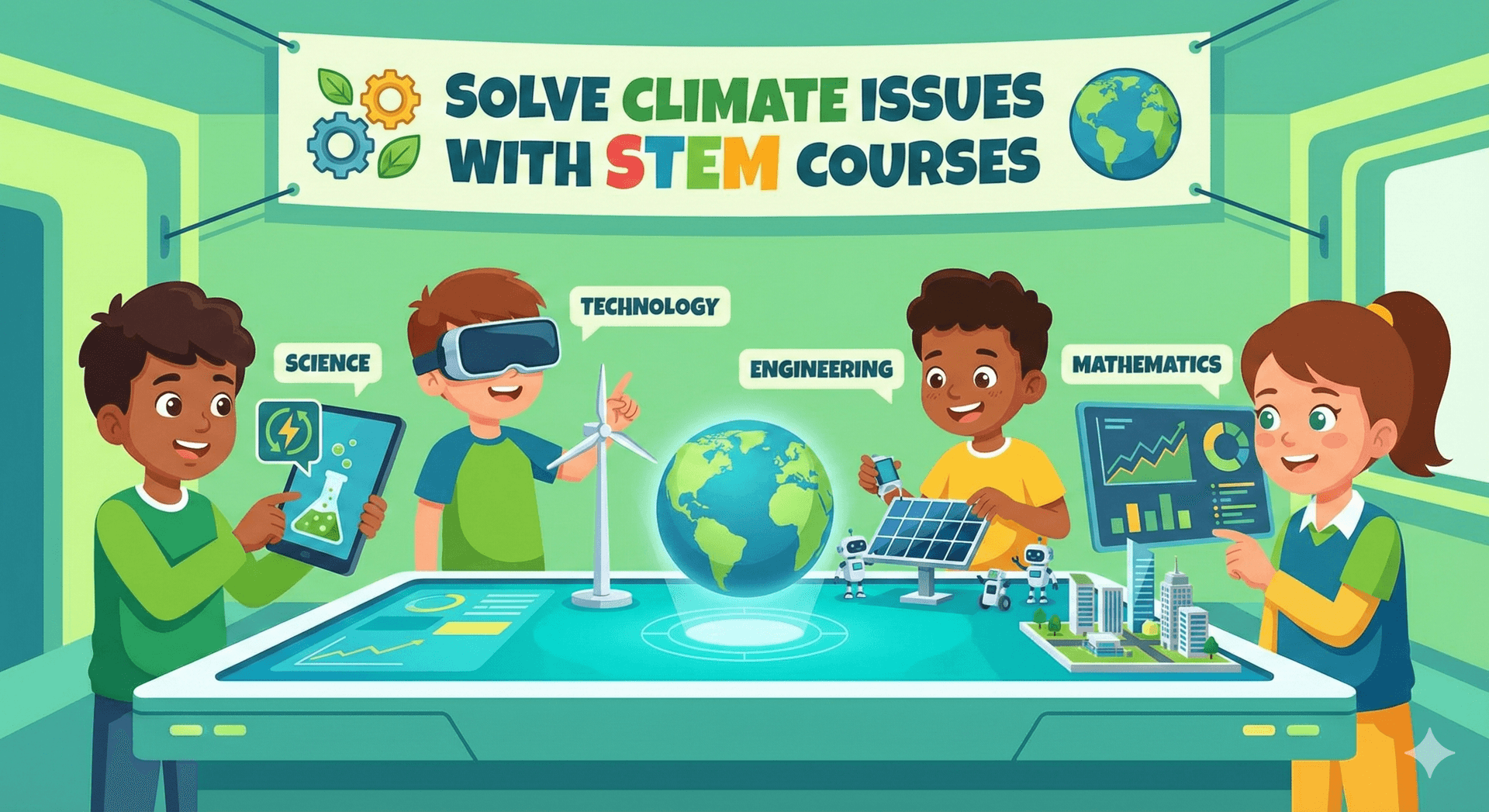

Did you know that 94% of Indian youth feel directly impacted by climate change? From rising temperatures in our cities to changing rainfall patterns in our villages, environmental issues are no longer just news headlines; they are our reality. But worrying isn't enough. We need real solutions, and the best place to start is in the classroom.
By using STEM (Science, Technology, Engineering, and Mathematics) education, some of the best schools in Pune can turn anxious students into active problem-solvers. This isn't about memorising definitions, it is about using data, tools, and logic to save our planet.
Also Read: From Skills to Success: Role of Value Added Programs
The Urgent Need for Green STEM in India
India ranks 26th out of 163 countries in the Children’s Climate Risk Index by UNICEF. This means Indian children are at high risk from environmental shocks. In cities like Delhi and Mumbai, air pollution often disrupts school days. In other regions, water scarcity is a daily battle.
Traditional environmental studies in schools often focus only on theory. Students learn that pollution is bad, but they rarely learn how to fix it. This is where STEM comes in. It replaces theory with action. Instead of just reading about garbage recycling, students use engineering to design better waste management systems. Instead of just looking at a dry river, they use mathematics to calculate rainfall deficits.
How STEM Solves Real-World Environmental Problems?
STEM helps us break big environmental problems into smaller, manageable parts. Each subject shows students how to become eco-warriors:
Science: Finding the Root Cause
Science is the base of everything. In a practical STEM class, students do not just look at plant pictures. They test soil pH to find out why crops do not grow well. They test water from local taps to check for pollution. By learning about the biology and chemistry of nature, students clearly see what is going wrong before they try to solve it.
Technology: Using Tools to Track Problems
Technology gives us tools to see things we cannot see with our eyes. Students can use simple sensors to measure the air quality in their classroom. They can use coding to make apps that help their community follow garbage collection trucks. Technology turns unclear guesses into clear and accurate data.
Engineering: Creating Sustainable Solutions
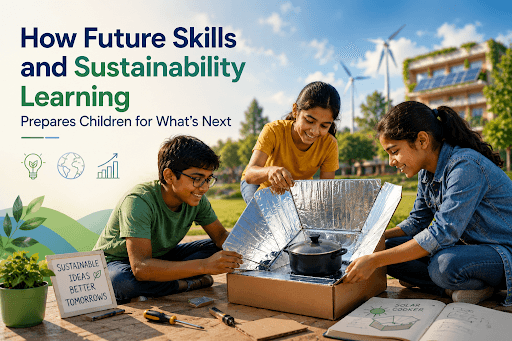
Engineering focuses on creating useful solutions. If a school makes too much plastic waste, engineering students design a composting unit. If a village does not have electricity, students learn to build simple solar-powered lamps. They see that human ideas and inventions can protect and heal the planet, not only harm it.
Mathematics: Understanding Data with Numbers
Math shows that our actions truly matter. Students work out their own carbon footprint. They measure how much water a dripping tap wastes in one week (often hundreds of liters). When they use numbers to measure waste, they see how big the problem really is. Math turns caring for the environment from just a feeling into a clear fact.
STEM-based Environmental Learning in Action
Research shows that some of the best CBSE schools in Pune that include outdoor and hands-on environmental activities see a positive shift in student attitudes and behaviour. One study cited by the National Institute of Environmental Studies found that about 90% of schools using activities like nature walks and tree planting saw better eco-friendly behaviour in students. When students measure, build, test, and improve, they remember concepts more clearly and feel more responsible for their choices.
In STEM-based environmental learning, students might:
- Measure local air quality or noise levels and represent the data in graphs.
- Design simple water filters or rainwater collection setups using low-cost materials.
- Build simple smart devices with sensors to reduce waste, such as automatic lights or water taps.
Real Indian STEM Projects for the Environment
Across India, students are using STEM projects to solve local environmental problems. In Rajasthan, students made "smart bins" with sensors that can separate biodegradable and non-biodegradable waste. These bins also send data so that garbage can be collected on time, helping improve recycling and reduce landfill waste.
In Andhra Pradesh, a school team built a smart irrigation system that checks soil moisture and weather data to give crops the right amount of water. This system saves water and helps farmers.
Some students also turned used plastic bottles into 3D-printing filaments. This reduced plastic waste and provided a useful material for making new items. In the hilly areas of Uttarakhand, student teams created early warning systems for disasters like landslides and floods using sensors and real-time monitoring.
These projects show that when Indian schools connect STEM learning with local environmental issues, students learn to become real problem solvers instead of just preparing for exams.
Also Read: Rising Strong: Building Resilience in the Classroom and Beyond
Major Skills Students Develop Through Eco-STEM Programs
Well-planned eco-STEM activities help children build many strong skills.
Critical thinking: Students learn to ask questions like “why” and “how” about pollution, waste, and climate change. They test their own ideas using real data.
Collaboration: When students work on projects such as making smart dustbins or growing school gardens, they practice teamwork, communication, and shared decision-making.
Data literacy: Students collect data (like water usage or temperature), make tables and graphs, and use their findings to suggest better environmental habits.
Responsibility and empathy: Research shows that when students understand how their actions affect nature, they start making more eco-friendly choices in their daily lives.
Global research on environmental education shows that these kinds of programs help students gain environmental knowledge, improve their attitudes, and make lasting changes in behavior. Combining classroom lessons with real-life projects turns eco-STEM into a powerful way to build lifelong green habits, not just short-term interest.
Practical Classroom Ideas for Indian Schools
Even with small budgets, Indian schools can start eco-STEM by using their surroundings as a “living lab.” Here are some simple, low-cost ideas:
Air and water investigations: Students can use basic tools or low-cost sensors to check air quality near roads or test water clarity. They can then compare results on different days and during different seasons.
Waste audits: Students can record how much and what kind of waste their classroom produces in a week. Then they can use math to calculate how much they can reduce or recycle each month.
School energy survey: Students can observe where fans, lights, and devices are used in the school. They can calculate daily energy use and suggest ways to save energy, such as using LED lights or turning off switches when not needed.
Local biodiversity mapping: Students can list the plants, birds, and insects around their school and note how these change over time. They can then connect this to topics like pollution, heat, and land-use changes.
Technology makes these activities even more exciting. About 70% of schools that use environmental technology now include virtual field trips, simulations, or multimedia lessons. These tools help students understand the bigger picture of climate and sustainability. Even simple tools like spreadsheets or free simulations can help students feel like real scientists.
Tiny Tots English School’s Eco-STEM Explorers Program

This is a great program for young learners in Pune called Tiny Tots English School’s Eco-STEM Explorers Program. It helps kids become “green innovators” by mixing environmental topics with fun science, technology, engineering, and math activities that fit their age.
The program is hands-on and teaches eco-literacy. Kids work on STEM projects that connect to real environmental issues.
In this program, students will:
- Explore simple machines and basic robots to create things like automatic plant watering systems or devices that save energy in their classrooms.
- Use simple tools to measure how much water and electricity the classroom uses, then think of ways to reduce waste.
- Take part in outdoor activities around the school to watch plants, insects, and changes in seasons, linking these observations to what they learn in science class.
Since the program starts in the early school years, it helps kids get used to learning by asking questions and solving problems. This early practice makes them ready to handle harder eco-STEM projects as they move to higher grades.
Conclusion
Teaching kids to care for the environment without STEM is like trying to build a house without tools. We can’t expect the next generation to fight climate change with just passion—they need skills. The facts show that learning by doing and solving problems helps students do better in school and become responsible citizens.
Tiny Tots English School in Pune shows this is possible today. Their Eco-STEM Explorers Program gives children the right tools: science to understand nature, technology to track changes, engineering to make things, and math to measure results. This way, kids don’t just learn about the future, they help create a better one. Since 90% of future jobs will need digital skills, teaching STEM with environmental care is the smartest way to prepare children.
To learn more about this and other schools nearby, see this list of the top schools in Pune.










 as a preferred source on