







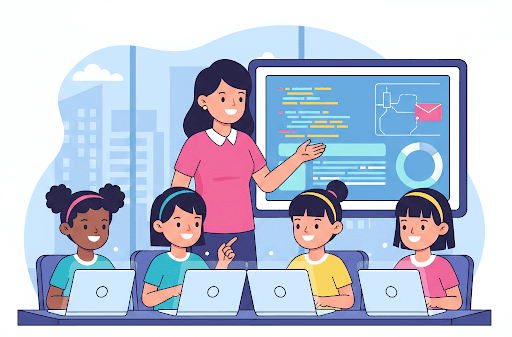

India currently has a huge 43% share of female STEM graduates, which is way higher than many developed nations like the US, the UK, and Germany. Despite this impressive academic achievement, the move of these qualified women into the professional workforce remains alarmingly low, with only about 27% actually entering STEM careers. This difference shows a big loss of talent and economic potential for a nation wanting to become a global technology superpower by the next decade.
Schools should boost girls' participation in coding and technology to promote social equality and meet economic demands. Advancing women's equality in India's workforce could add up to $770 billion to GDP by 2025 per McKinsey estimates. To make it happen, schools can act as the major place where teachers nurture these early interests through planned, organized, and exciting programs that teach real technical skills and increase interest of girls in this field.
Also Read: Tech Meets Text: Literacy Strategy with Raz Plus
The Reality of Women in India's Tech Landscape
The statistics surrounding women in India's technology sector reveal a complex narrative of high potential but limited execution in the workforce. While the overall Female Labour Force Participation Rate (LFPR) has seen a positive upward trend, reaching approximately 41.7% in 2023-24, the specific representation of women in core engineering and technology roles lags behind.
Industry reports indicate that while women are entering the workforce, they often face slowdown in middle management or drop out due to a lack of support systems. The current representation of women in the tech workforce stands at roughly 29%, which is an improvement but still far from equal opportunity.
This disparity highlights a structural issue within the educational ecosystem where girls perform exceptionally well in exams but fail to visualize themselves as creators, innovators, or leaders in the technology space.
The Leaky Pipeline Phenomenon
The disconnect between graduation rates and employment figures is often described by researchers as the leaky pipeline phenomenon. Girls in India show huge aptitude for mathematics and science at the school level, often outperforming boys in board examinations across various state and central boards. However, as they move towards higher education and professional selection, societal stereotypes and a lack of role models discourage them from pursuing hardcore programming or engineering careers.
Schools have the unique power to plug this leak by introducing coding not just as a subject, but as a creative tool for problem-solving. When girls learn to code early, they understand that technology is a flexible resource they can control, rather than just a complex tool they must passively operate.
Why Coding is a Game Changer for Girls?
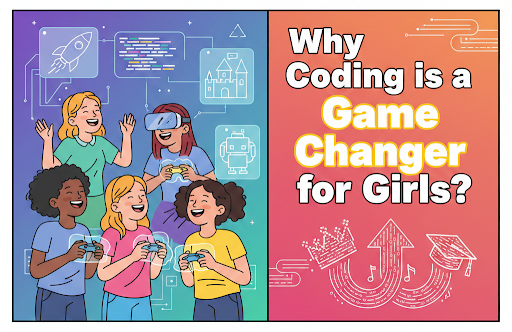
Introducing girls to coding and technology at a young age provides benefits that extend far beyond the ability to write scripts in Python or Java. It fundamentally rewires the brain to approach problems with a structured, logical, and strong mindset.
Solving Real-World Problems
One of the biggest advantages of bringing more girls into technology is the variation of perspective they bring to solving real-world problems. Most existing software applications, medical devices, and safety tools have historically been designed by men, often resulting in products that overlook the specific needs of most of the population.
When girls learn to code, they naturally tend to create solutions that address challenges they observe in their own communities, such as safety apps, health monitoring systems for women, or educational tools for children. Encouraging girls to code ensures that the future of technology is inclusive and that digital solutions effectively serve the entire population rather than just a select demographic.
Financial Independence and Career Flexibility
Technology careers are among the most lucrative and flexible professional paths available in the modern global economy. Proficiency in coding opens doors to high-paying roles in software development, data science, artificial intelligence, and cybersecurity, which are currently in high demand. For women in India, these careers often offer the flexibility of remote work, which can be a crucial factor in maintaining a career while balancing other life responsibilities.
By providing girls with these high-value skills early on, schools are effectively handing them a passport to financial independence and professional stability. This economic empowerment eventually passes down to their families and communities, creating a cycle of prosperity and progress.
Creating Confidence and Resilience
Learning to code is an iterative process that involves making mistakes, debugging errors, and constantly refining solutions until they work perfectly. This process teaches strength and the understanding that failure is merely a stepping stone to success, which is a crucial life skill. Girls who code learn to tackle complex problems by breaking them down into smaller, manageable parts, a method known as computational thinking.
This boost in confidence spills over into other academic subjects and areas of life, helping them manage challenges with a solution-oriented mindset. When a girl sees her code come to life and perform a task, it shatters the self-doubt that often stops women from entering male-dominated fields.
Also Read: Coding the Future: The Automation Advantage
KR Mangalam World School, Gurgaon (Sector 41): SheCode 2.0 Programme

While many institutions acknowledge the need for change, KR Mangalam World School, Gurgaon (Sector 41) is actively rewriting the narrative through its forward-thinking educational initiatives. The school has established a framework that specifically targets the inclusion of students in advanced technology, ensuring that girls are not just participants but leaders in the digital revolution.
The "SheCode 2.0" Initiative
At the heart of the school's commitment to gender parity in technology is the specialized "SheCode 2.0 program", a main component of their broader "Neoteric Learning" signature programme. This initiative is explicitly designed to break the stereotypes that often discourage girls from exploring computer science and engineering fields. SheCode 2.0 goes past basic computer literacy; it involves female students in the world of high-level programming, logic building, and digital innovation.
The program operates on the philosophy that girls must be creators of technology, not just consumers, and provides a dedicated platform where they can experiment without the pressure of competing in male-dominated environments initially.
By focusing on "SheCode 2.0", KR Mangalam World School, Gurgaon (Sector 41) ensures that its female students receive mentorship, encouragement, and the technical resources needed to excel. The program aligns with the school's "Engage. Learn. Innovate." motto, developing a curiosity-driven mindset that pushes girls to ask questions and build digital solutions.
The SheCode 2.0 initiative is a direct response to the global need for more women in tech, providing a safe and stimulating environment where girls can develop confidence in their technical abilities before stepping into the broader world.
The Neoteric Learning Ecosystem
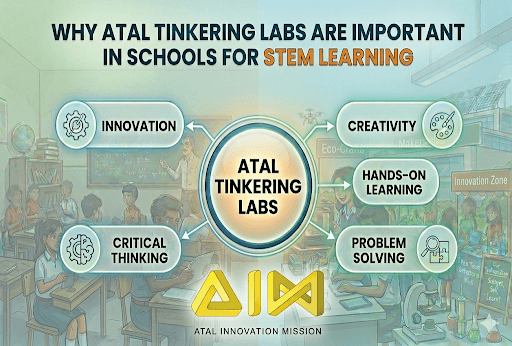
SheCode 2.0 does not operate in isolation but is supported by the school's comprehensive "Neoteric Learning" ecosystem, which integrates Art, Science, and Technology. This signature pedagogy includes an AI-integrated curriculum, ensuring that students are fluent in the language of artificial intelligence and machine learning from a young age. Girls in the SheCode 2.0 program also have access to the ATL (Atal Tinkering Lab), where they can apply their coding skills to physical robotics and engineering projects.
The ecosystem is further enriched by clubs like "Techbots", the school’s dedicated Coding and Gaming Club. These platforms allow students to merge creativity with technical skill, strengthening the idea that coding is a creative pursuit. For instance, a student might use Python skills learned in SheCode 2.0 to program a robot in the Techbots club, effectively closing the gap between software and hardware. This holistic approach ensures that girls develop a well-rounded technical profile that is highly attractive to future universities and employers.
Preparing for the Future
The impact of programs like SheCode 2.0 is amplified by the school’s "Future Readiness" signature programme. This initiative provides a structured 4-year career counseling program for all senior school students, including rigorous field training and internships. For girls excelling in the SheCode 2.0 program, this counseling helps map out clear pathways to top-tier engineering universities and technology firms.
The school arranges internships and interactions with industry experts, giving students a realistic view of the corporate world. By combining technical training with career guidance, KR Mangalam World School, Gurgaon (Sector 41) ensures that the skills learned in the classroom translate into real career success.
Conclusion
We must encourage girls to chase coding and technology right now because this effort will shape India's economic and social future for many decades ahead. The big gap between female graduates and their jobs in the workforce shows clearly that good marks in school alone do not work without proper push and firm support systems.
Schools need to lead the way and break all barriers by starting special programs that make technology easy to reach, fun to learn, and useful for girls every day. KR Mangalam World School in Gurgaon Sector 41 is a great model of this crucial change and shows how programs like SheCode 2.0 truly help train the next group of women leaders in technology.
Schools combine advanced technology right into class lessons and create a helpful setting so that Indian girls gain full skills to create, invent new things, and guide the world of the future.
To learn more about this and other schools nearby, see this list of the top schools in Gurgaon.






 as a preferred source on