








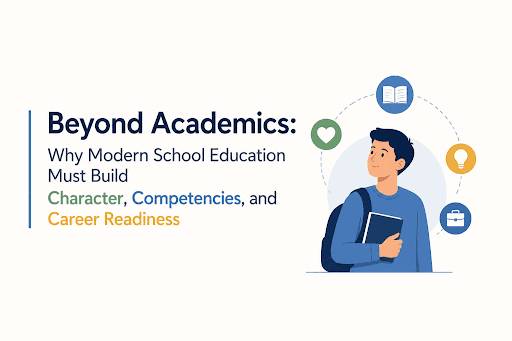
The landscape of Indian education is witnessing a remarkable transformation. Gone are the days when success was measured solely through report cards and percentage points. Today's schools are reimagining what it means to educate a child—blending academic rigour with creative expression, sports prowess, and character development. This shift reflects a deeper understanding: education isn't just about passing exams; it's about preparing young minds for an unpredictable, rapidly evolving world.
In Greater Noida West, GD Goenka International School (GGIS) stands as a testament to this educational renaissance, ranking #2 by Times of India while maintaining an impressive 89% academic average. In this article, we explore how modern schools are redefining excellence and why holistic development has become the cornerstone of quality education.
Also Read | How GGIS is empowering future leaders with a Holistic Approach
The Shift from Rote Learning to Holistic Education
Indian classrooms are finally breaking free from the monotony of memorisation. The National Education Policy 2020 has catalysed this change, pushing schools toward experiential learning, critical thinking, and skill-based education. But what does holistic education actually mean in practice?
Understanding the Holistic Approach
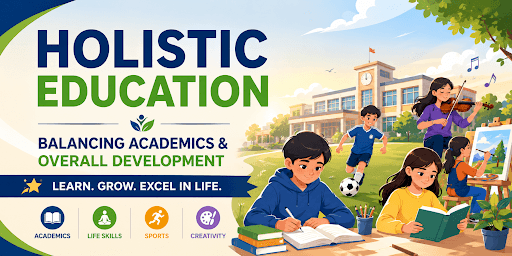
Holistic education recognises that children aren't uniform learning machines. One child might grasp mathematical concepts through visual aids, while another thrives in hands-on experiments. This approach integrates multiple intelligences—linguistic, logical, spatial, musical, kinesthetic—ensuring no child is left behind because they don't fit a conventional mould. Schools embracing this philosophy create diverse learning opportunities, from science labs and art studios to sports fields and music rooms.
The Teacher-Student Ratio Factor
Class size matters more than most parents realise. Research consistently shows that smaller classes—ideally maintaining ratios between 1:15 and 1:20—produce significantly better learning outcomes. When teachers manage fewer students, they can identify individual strengths, address specific weaknesses, and provide tailored support. A struggling student doesn't get lost in the crowd, and a gifted child receives the challenges they need to thrive. This personalised attention transforms education from a one-size-fits-all lecture into a responsive, adaptive journey.
Infrastructure as an Educational Tool
The physical environment shapes learning in profound ways. Air-conditioned classrooms aren't just about comfort—they protect children from NCR's notorious air pollution and noise, creating spaces conducive to concentration. Smart boards, digital libraries, and well-equipped laboratories transform abstract concepts into tangible experiences. When a biology lesson moves from textbook diagrams to microscope observations, or when physics theories come alive through practical demonstrations, learning becomes memorable and meaningful.
Beyond Textbooks: The Co-Curricular Advantage
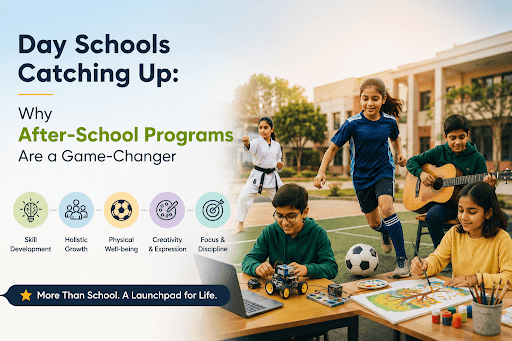
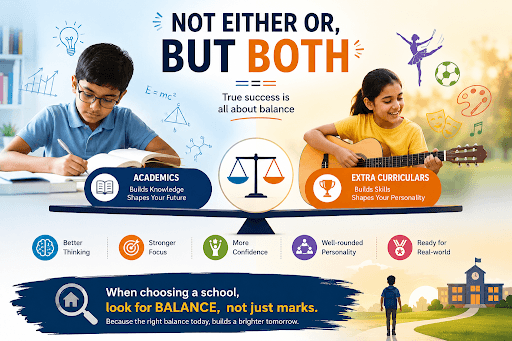
Academic excellence, while important, represents just one dimension of a child's potential. The hours spent outside traditional classrooms often prove equally transformative in shaping character, confidence, and capability.
Visual Arts and Creative Expression
Art education goes far beyond creating pretty pictures. When children engage with painting, clay modelling, or craft work, they develop fine motor skills, spatial reasoning, and problem-solving abilities. More importantly, art provides an emotional outlet—a way to express feelings that words cannot capture. Schools with dedicated art studios and regular creative sessions nurture this essential aspect of human development, producing individuals who think creatively and approach challenges with imagination.
Sports and Physical Development
The benefits of sports extend well beyond physical fitness. Team games teach cooperation, communication, and conflict resolution. Individual sports build discipline, perseverance, and goal-setting skills. When children learn to handle victory gracefully and defeat constructively, they develop emotional intelligence that serves them throughout life. Programs like PEC (Physical Education Card), developed through collaboration between UN-AIDS, CBSE, and the British Council, exemplify how physical education can be systematically integrated into daily school life.
Performing Arts and Confidence Building
Drama, music, and dance offer unique developmental opportunities. Performing in front of an audience requires courage—the kind that translates into confident public speaking and presentation skills later in life. These activities teach children to collaborate, to synchronise their efforts with others, and to create something beautiful together. The shy child who discovers their voice through theatre often becomes the articulate adult who leads with conviction.
Value-Based Education in Contemporary Times
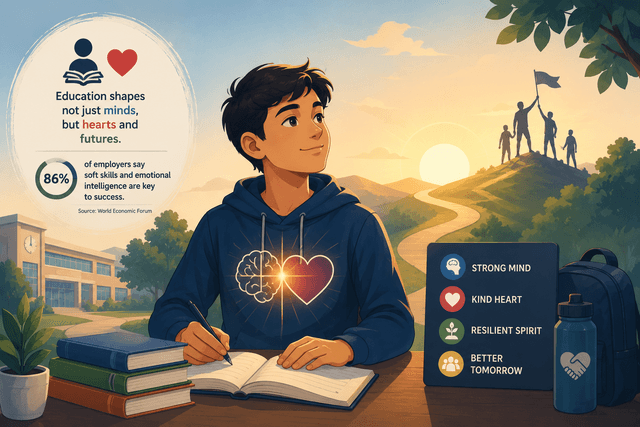
Modern education must do more than fill minds with information; it must shape character and cultivate values. In an increasingly interconnected world facing complex challenges—from climate change to social inequality—we need citizens who think beyond personal success to collective wellbeing.
Character Development in Daily Practice
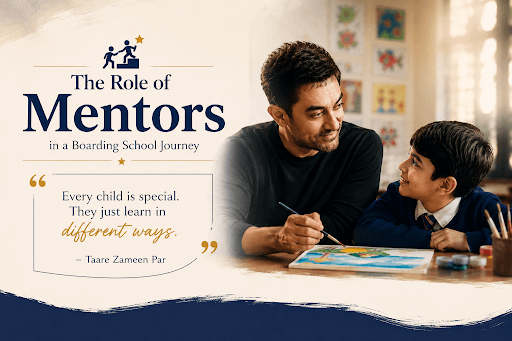
Value-based education isn't taught through lectures; it's absorbed through environment and example. When schools create cultures of respect, empathy, and responsibility, children internalise these values naturally. Morning assemblies, community service projects, environmental initiatives, and peer mentoring programs all contribute to moral development. The goal isn't creating rule-followers but developing individuals with internal compasses guiding their choices.
Preparing Global Citizens
Today's students will work in multicultural environments, collaborate across borders, and tackle global challenges. Schools must prepare them for this reality by fostering cultural awareness, environmental consciousness, and social responsibility. This means exposure to diverse perspectives, understanding of global issues, and opportunities to contribute meaningfully to their communities. A global citizen isn't someone who simply travels the world—it's someone who recognises their connection to humanity and acts accordingly.
Check Out | Role of Value-Added Programs at TACS, Bangalore
GD Goenka International School, Greater Noida West: Where Academic Rigour Meets Innovative Pedagogy
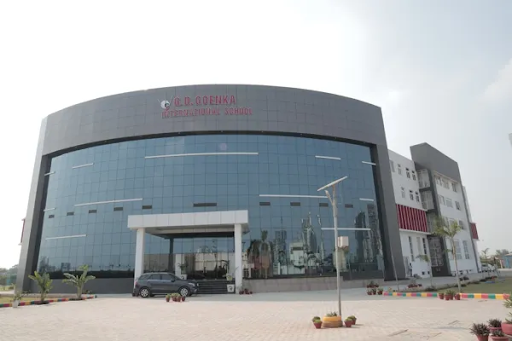
Nestled in Knowledge Park V, Greater Noida West, GD Goenka International School operates under the aegis of Abhilasha Education Society, part of the distinguished GD Goenka Group. Founded by industrialist Shri Anjani Kumar Goenka to honour his mother Gayatri Devi Goenka, the school sprawls across 15,000 square meters of thoughtfully designed educational space affiliated with CBSE.
The school's 89% average academic performance and #2 ranking by Times of India reflect a commitment to educational quality. With 62 air-conditioned classrooms of 48 square meters each and a carefully maintained 1:15 teacher-student ratio, every child receives individualised attention. The optimum class strength of 28 students ensures teachers can track each learner's progress, identifying those who need additional support and those ready for advanced challenges.
Six specialised laboratories spanning 1,200 square meters provide hands-on learning opportunities in physics, chemistry, biology, computer science, and mathematics. The school's innovative approach includes specially designed 'Concept' and 'Zion' rooms that encourage holistic and artistic development. Smart Class integration brings multimedia learning to every classroom, while the open shelves system eliminates the burden of heavy school bags.
GD Goenka International School's 200+ proficient faculty members guide students through a comprehensive co-curricular program. Sports facilities include basketball, cricket, volleyball, badminton, table tennis, lawn tennis, a shooting range, and an obstacle course. Visual arts studios offer painting, clay modelling, tie-dye, embroidery, and craft activities. The school's participation in the PEC Programme demonstrates its commitment to blending academics with physical education systematically.
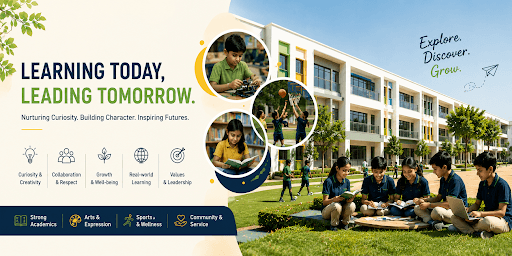
The school's mission focuses on creating confident, goal-oriented individuals who understand their potential and place in society. Its vision emphasises value-based education combined with innovation, developing aesthetically rich, intellectually aware young people capable of fulfilling their dreams. From pre-primary's multi-sensory learning approach to senior years' advanced academic preparation, GGIS maintains remedial teaching support during and after school hours, ensuring no child falls behind.
Ready to provide your child with an education that balances excellence with innovation? Visit GD Goenka International School, Greater Noida West, to experience a learning environment where every child's potential is recognised, nurtured, and celebrated. Schedule a campus tour today and discover how holistic education can transform your child's future.
For more information on this and other similar schools in the area, check out this list of the best schools in Greater Noida West
 as a preferred source on