







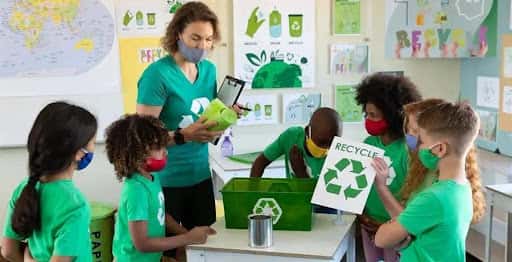

In an era driven by technology and digital screens, there’s a quiet revolution taking root in classrooms, one that’s bringing children back to nature. What if classrooms grew not just ideas but real plants? Across India, a new wave of schools is reimagining education by connecting students with the soil beneath their feet. Through school agriculture programs, children explore the science of sustainability, learning how ecosystems, food systems, and innovation work together.
At The Academic City School, Bangalore, one of the best boarding schools in India, this vision is alive. With a dual curriculum of CBSE and Cambridge, and a philosophy of holistic growth, the school’s agriculture initiative gives learners a rare chance to understand food systems, sustainability, and ecology through real experience.
In this article, we’ll unpack how a well-designed agriculture program nurtures scientific thinking, environmental stewardship, and lasting curiosity and show examples of practices that transform learners into green innovators.
Also Read | From Skills to Success: Role of Value Added Programs at TACS Bangalore
Why Agriculture Belongs in 21st-Century Classrooms
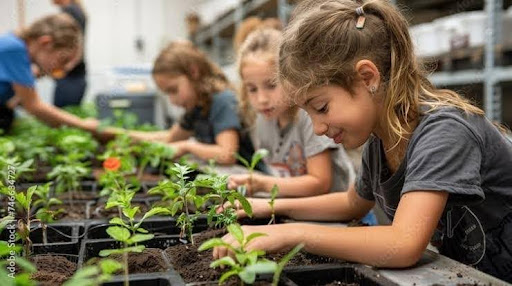
The concept of blending agriculture with education is rooted in experiential learning, the idea that knowledge is most powerful when applied. According to UNESCO (2021), early agricultural education enhances students’ environmental literacy by up to 40%, while the Food and Agriculture Organization (FAO) notes that schools with experiential learning gardens see a 25–30% increase in engagement in science subjects. Teaching agriculture as part of the school curriculum helps students:
- Understand sustainability: From seed to soil, they see how natural systems interconnect.
- Develop a sense of responsibility: Caring for plants and animals fosters patience, discipline, and compassion.
- Build problem-solving skills: Every planting cycle presents challenges that require observation and innovation.
- Connect science with life: Abstract topics like photosynthesis, soil nutrients, and weather patterns become tangible experiences.
The Rise of School Agriculture Programs in India
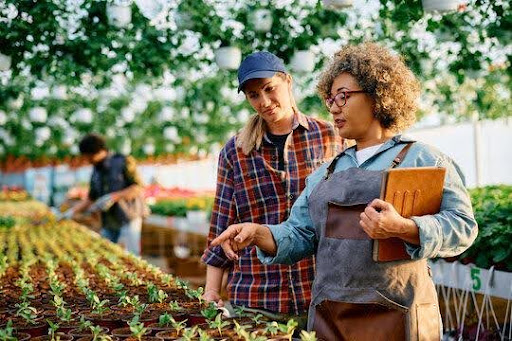
Schools across India are gradually recognizing that agriculture isn’t just a vocational subject; it's a multidisciplinary ecosystem that integrates science, technology, engineering, and mathematics (STEM).
A growing number of institutions now feature:
- Dedicated farming zones for seasonal crops and herbs.
- Polyhouses and greenhouses that allow year-round cultivation and scientific experimentation.
- Composting units to recycle organic waste into fertilizer.
- Small livestock or dairy units help children understand animal care and sustainable farming cycles.
- Farm-to-table initiatives, where produce from school gardens is used in canteens, connect food production to nutrition.
The Learning Potential of Agriculture

Agriculture offers more than just soil and seeds; it’s a living laboratory for learning across disciplines.
|
Subject |
How Agriculture Reinforces Learning |
Skills Developed |
|
Science |
Studying plant growth, soil pH, photosynthesis, and water cycles |
Observation, hypothesis testing |
|
Technology |
Using sensors, irrigation timers, and apps to monitor crops |
Digital literacy, data tracking |
|
Engineering |
Designing irrigation systems, compost bins, and farm layouts |
Design thinking, innovation |
|
Mathematics |
Measuring yield, tracking growth rates, analyzing patterns |
Logical reasoning, numeracy |
|
Environmental Studies |
Understanding ecosystems, biodiversity, and conservation |
Ecological awareness, ethics |
Key Objectives of a Modern School Agriculture Program
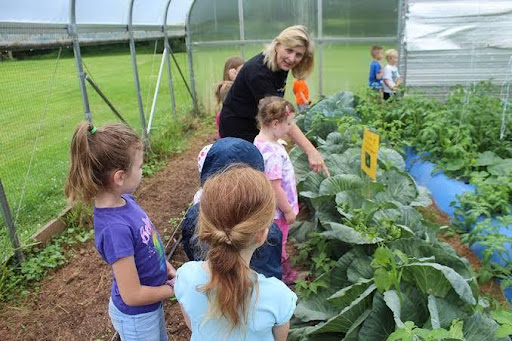
Such programs are designed to go far beyond planting seeds. They aim to:
- Promote Sustainability Literacy: Students understand where food comes from and how natural resources are managed.
- Encourage Scientific Thinking: Each crop cycle becomes a living experiment in observation, hypothesis, and data collection.
- Build Environmental Empathy: Caring for soil, plants, and animals cultivates patience, compassion, and responsibility.
- Bridge Urban–Rural Gaps: Children appreciate farming not as distant labor but as essential innovation.
- Enhance Life Skills: From teamwork to project management, the farm becomes a dynamic classroom for real-world skills.
From Classrooms to Green Labs
In forward-looking campuses, agriculture is no longer an extracurricular activity; it's an integrated subject woven into the rhythm of school life.
Through these activities, they learn that innovation doesn’t always require a computer screen; it can sprout from the ground beneath their feet. Children begin their journey by preparing soil beds, planting seeds, and observing growth cycles. Over time, they progress to exploring sustainable farming techniques such as:
- Drip irrigation to conserve water.
- Organic composting to reduce waste.
- Hydroponic setups to study plant growth without soil.
- Pollinator gardens that encourage biodiversity and environmental stewardship.
Agriculture as a Bridge Between Tradition and Technology
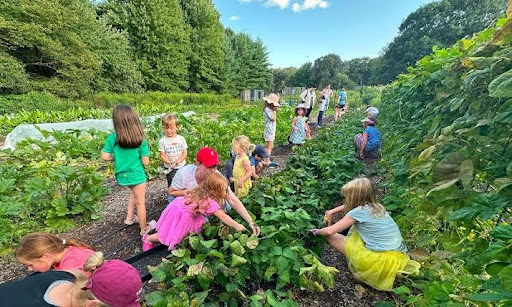
One of the most exciting aspects of school agriculture programs is their ability to blend ancient wisdom with modern science.
- Traditional practices like crop rotation and natural fertilization teach sustainability principles that predate modern environmentalism.
- New technologies like soil sensors, drones, and solar-powered irrigation systems give students a taste of how agri-tech can drive global change.
Real-World Relevance: Preparing for Tomorrow’s Challenges
Agriculture-focused learning helps students develop critical skills for addressing some of humanity’s most pressing problems, from climate change to food security.
By engaging in school farming projects, children learn to:
- Conserve natural resources and reduce waste.
- Reimagine urban spaces through rooftop and vertical farming.
- Analyze global issues like hunger and sustainability with a local perspective.
- Understand careers in agri-technology, environmental engineering, and sustainable business.
Community, Collaboration, and Character
A strong agricultural curriculum also creates community within schools and beyond. Students collaborate across age groups, teachers partner with local farmers, and parents get involved in harvest days or eco-fairs. This shared experience fosters a sense of belonging and collective pride.
It also strengthens the school’s connection to its ecosystem, both natural and social. When students see how their work impacts the environment and their community, they realize that learning is not just for grades, but for life.
Check Out | Modern World Technologies Are Fruitful To Agriculture And Rural India
The Academic City School, Bangalore: Growing the Innovators of Tomorrow
The Academic City School, Bangalore, is a CBSE and Cambridge-affiliated institution known for its holistic, innovation-driven learning ecosystem. Established with the vision of nurturing curiosity through hands-on education, this one of the best boarding schools in Karnataka is academic excellence with practical exploration to prepare students for a sustainable future. Its expansive campus features modern classrooms, research labs, a polyhouse for scientific agriculture, and experiential learning spaces that connect theory with real-world practice.
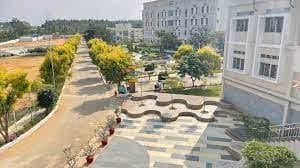
The school’s pioneering Agriculture Program seamlessly integrates farming with STEM-based learning and environmental ethics, enabling students to understand the science of sustainability while developing empathy and leadership. From cultivating crops in managed plots to experimenting with hydroponics and organic composting, every activity helps learners connect innovation with responsibility.
By merging scientific inquiry with ecological awareness, the school ensures that education extends beyond the classroom. Here, children don’t just study the environment, they engage with it, care for it, and innovate within it. In nurturing the soil, they nurture their spirit, growing into future-ready thinkers who will lead with creativity, compassion, and respect for the planet.
For more information on this and other similar schools, check out this list of the best boarding schools in India.











 as a preferred source on