







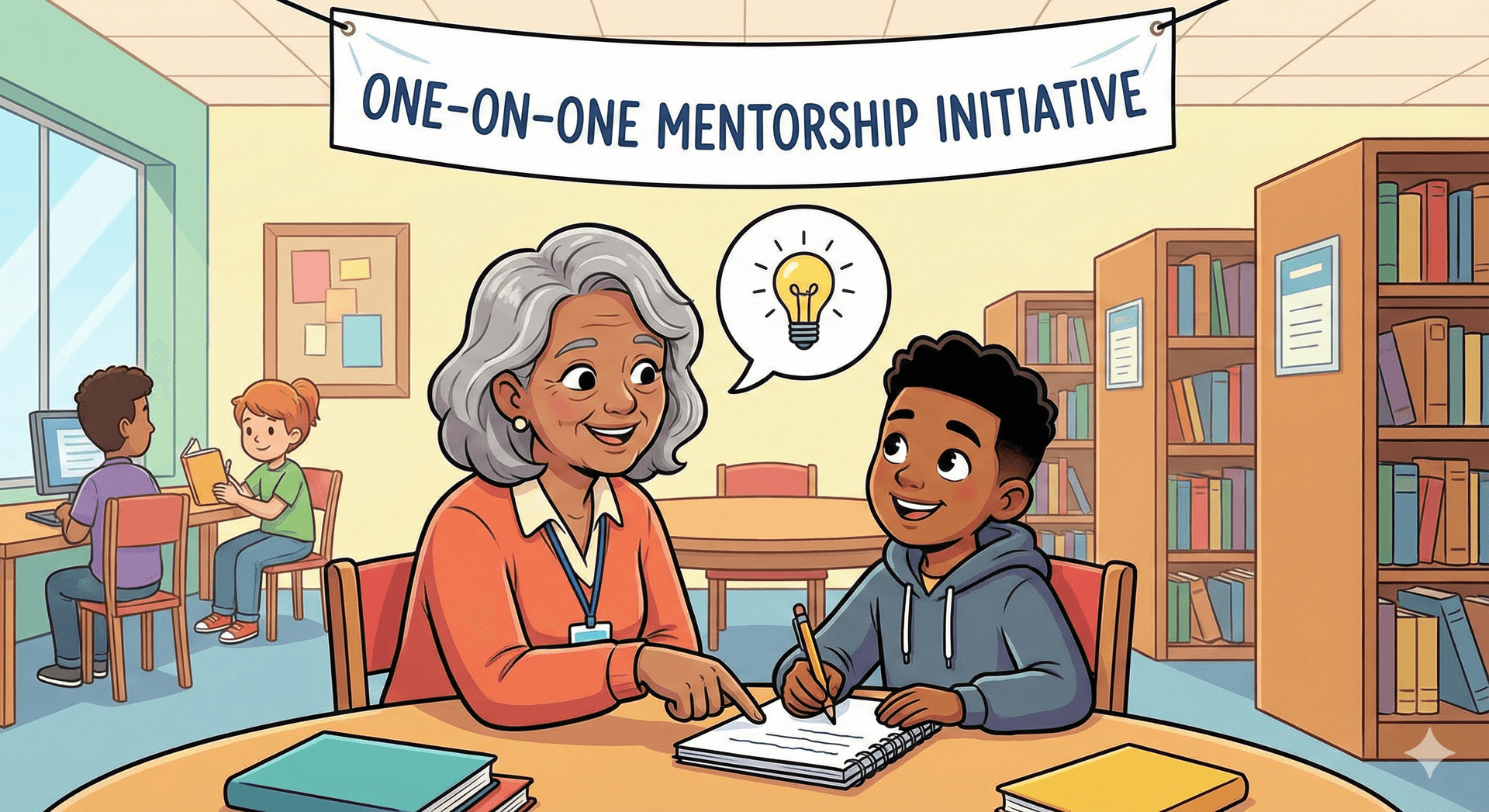

Indian classrooms often have rows of packed desks. A single teacher faces many students in this setup. Education turns into a one-size-fits-all system that targets the average student. This method ignores a major fact that every child learns in a different way and has unique talents. Therefore, some of the best boarding schools in India have started structured one-to-one mentoring programs to go beyond rote learning.
These programs ensure holistic development for every student. Mentoring offers more than extra help, it connects a student's current skills to their full potential. Mentors increase specific strengths and fix weaknesses with care.
Also Read: From Board to Brain: Role of Chess in Strategic Learning
Indian Classrooms Face A Big Problem With Invisible Students
India's education system does not lack talent, it lacks personal attention for each child. Mass-produced education lets students with special needs slip away. Gifted learners and those who need more help both suffer in this way.
Standard Teaching Does Not Work For Every Student
Standardized curricula assume that every student in Grade 7 reads at the same level, understands math concepts at the same speed, and manages emotional stress in the same way. This is biologically and psychologically impossible. Some students may grasp complex scientific ideas quickly but struggle with social anxiety. Others might be incredible artists or athletes but find algebra challenging.
When a teacher must cover a lengthy syllabus within a limited time, they naturally target their instruction to the middle of the class. Students who are ahead get bored and disengaged, while students who fall behind feel overwhelmed and labeled as weak. This system fails to identify individual sparks of brilliance and allows manageable learning gaps to widen into permanent deficits.
High Student-Teacher Ratios Problem
Numbers create the core problem of no personal focus. While the Right to Education Act sets specific pupil-teacher ratios (PTR), the reality on the ground, especially in many populated regions, is different. Classes frequently exceed 40 or even 50 students per teacher.
Data proves that bigger classes mean less time per student. Individual attention drops fast as numbers rise. In a 45-minute class with 45 kids, teachers get just one minute each. This leaves no time for real teaching. Teachers cannot spot a child's exact academic or emotional blocks. They miss quiet kids with low self-esteem while handling classroom noise.
Personal Mentors Change Lives For The Better
One-to-one mentoring changes focus from teaching groups to growing people. Mentors guide, listen, and support like trusted adults outside the family. Trust and personal understanding make this bond powerful. Indian schools value math and science most. Kids strong in writing, speaking, sports, or leading feel ignored.
A dedicated mentor takes the time to observe these non-academic strengths. They move beyond report cards to see what actually excites the student. By noticing these strengths, the mentor creates the student’s self-confidence.
Research suggests that when students use their strengths, they are more engaged in learning and report higher levels of well-being. A mentor helps a student see that being smart looks different for everyone. Here are some more benefits of dedicated one-on-one mentoring:
Mentors help kids fix weak spots safely
High-stakes exams and family pressure make kids fear failure in India. They hide problems instead of seeking help from peers or teachers. Mentoring creates a safe place without judgment. Because the relationship is one-to-one and confidential, a student can openly admit, "I don't understand this concept," or "I feel anxious about this situation."
The mentor can then provide targeted solutions like specific study strategies, emotional regulation techniques, or simply reassurance, without the student fearing public embarrassment. This removes the stigma of struggle and reframes failure as a necessary step in the learning process.
Facts Prove Mentoring Helps Kids A Lot
Mentoring success comes from real studies, not just stories. Worldwide research shows mentored kids attend school more. They cause fewer problems too.
Mentoring changes how kids think about themselves. Mentored students gain self-efficacy, or belief in their success. This belief predicts future wins better than IQ scores. Mentors give steady support. This creates toughness for India's tough school pressures.
Also Read: Education Beyond Four Walls: The Flexible Learning Advantage
How Schools Can Carry Out Effective Mentorship Initiatives?
Schools cannot just pair teachers with kids at random. They need plans and training for success.
Active Listening and Trust Creation
Active listening forms the top mentor skill. Too often, adults rush to give advice to teenagers without fully understanding the problem. Good mentors ask open questions with patience. They listen to understand, not just answer. Trust powers mentoring. Kids share real issues only with trust.
Setting of Holistic Goals
Mentoring should move ahead of academic goal setting ("You need an A in Math"). It must involve holistic goal setting that includes social and emotional development. A mentor helps a student set realistic, attainable goals based on their personal profile. This might include a goal to speak up once in class per week (for a shy student) or to organize a study schedule (for a disorganized student).
Sehwag International School: A Case Study in Individual Attention

Many schools see the need for personal care but don’t really take action in this regard. Sehwag International School (SIS), one of the best CBSE Boarding Schools in India,has combined this into the very fabric of its educational philosophy through a powerful One-to-One Mentoring initiative. Recognizing that their mission of "360° development" is impossible in a standard assembly-line education model, SIS uses mentoring as the main tool to ensure no student is left behind.
Making Mentoring Part of School Life
SIS links academic success, sports skills, and good character together. Their famous Sehwag Sports Academy trains top athletes, while academics grow strong thinkers. High personal support is required to balance such intense demands.
SIS trains teachers to see each student as a unique person with their own dreams and problems, not just as a roll-number. The mentoring program fits their “Power of 7 values” framework, like resilience, self-control, and responsibility, so students can imbibe these values in them.
How SIS Helps Strengths Grow and Challenges Fade?

SIS mentoring shines because it hits both goals of improving talents and fixing weak spots.
For a cricket star who struggles to manage academic time, the mentor creates a custom schedule that fits training and studies. They teach how to balance tasks without pushing for grades alone.
For a smart student who avoids friends, the mentor offers a safe spot to talk about social fears and suggests small steps to connect with others. SIS gives this personal space so students thrive by reaching their own potential, while not squeezing into a set societal mold.
Conclusion
India must shift from standardised mass instruction to personalised learning right now, because this change creates capable and resilient future citizens. Data clearly shows that students thrive when teachers see and value them as unique individuals, not just as points on a report card. Teachers and schools can reduce class sizes over the long term as an infrastructural goal, but they can start structured one-to-one mentoring programs immediately as an actionable solution.
Schools that focus on special one-on-one mentoring develop close relationships with their students. Like Sehwag International School, proving that investing time to understand each child's unique strengths and weaknesses opens up their potential in ways a general school curriculum never could.
To learn more about this and other schools nearby, see this list of the top boarding schools in India.








 as a preferred source on