







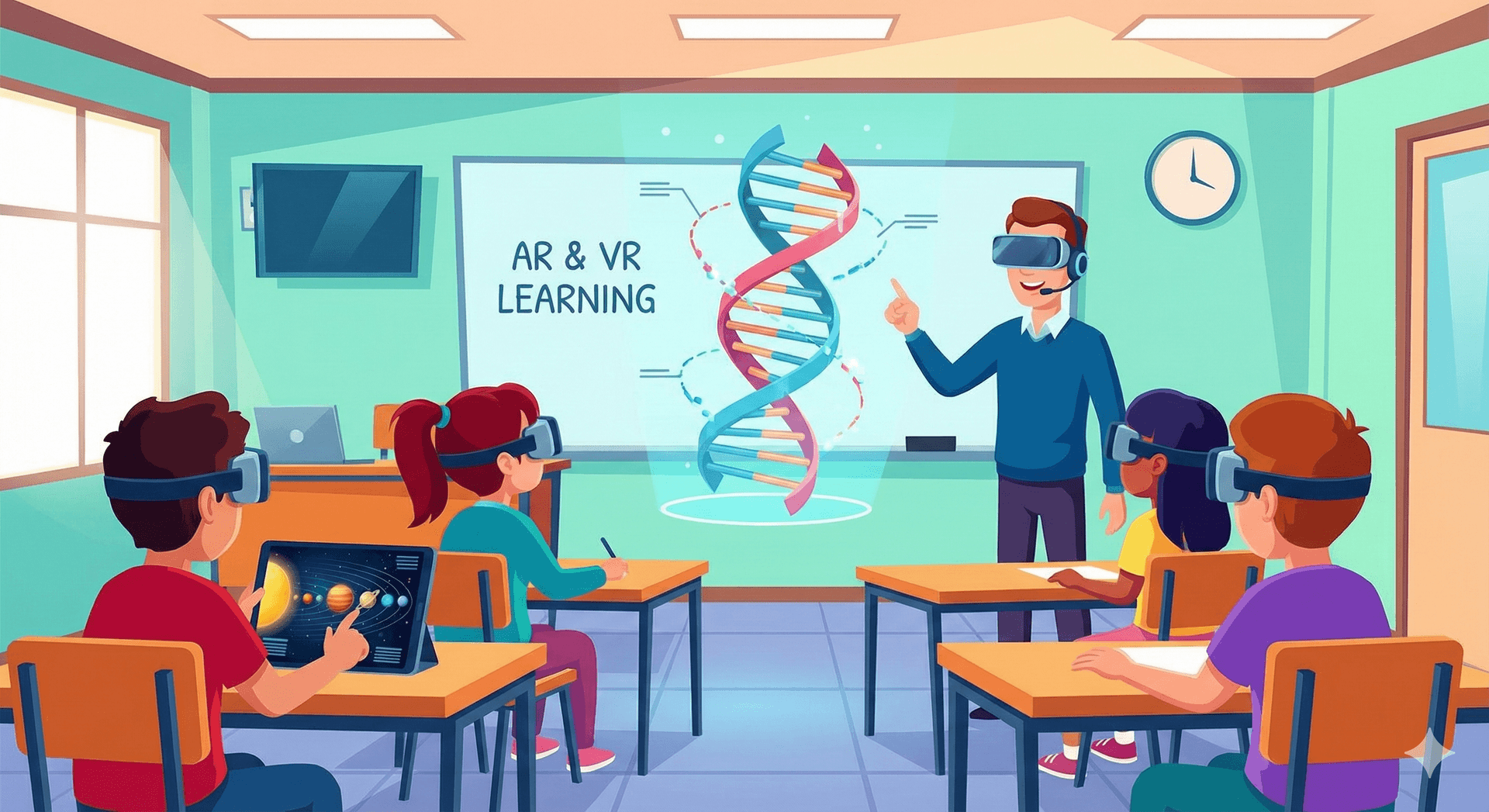

The world outside is moving fast with new technology, but many schools still use flat textbooks and teachers lecturing for 45 minutes, seems like a one way discussion. This old way does not grab the attention of kids who grow up with digital screens. It also fails to show tough concepts that children cannot understand easily. Some of the good schools in Ghaziabad have started using Augmented Reality (AR) and Virtual Reality (VR) tools right away to get students ready for the future. Teachers and students see these tools as more than fun; they turn quiet listeners into excited explorers who discover things on their own.
Also Read: Values That Last a Lifetime: The Virtues Behind True Education
Problems with the Old Way of Learning
Teachers have used the same teaching style in India for many years, where one person talks at the front and kids write notes. This style shares basic facts well, but it falls short with tough subjects that need more than words.
Why Just Reading Does Not Work?
A sixth grader looks at a picture of the human heart in a biology book and sees a flat 2-D drawing. The child memorises names like aorta or ventricle without knowing how blood really flows through them. Books stay still and cannot show motion, layers, or how things happen step by step.
Kids who cannot picture an idea often just repeat facts to pass tests. They learn only on the surface and forget everything soon after exams end. Everyone needs better ways to grasp how things truly work, not just their names.
What Are AR and VR?
People should learn the simple differences between these two amazing tools before exploring their strong points.
Augmented Reality (AR): It Adds to Your Real World
AR keeps the real world in view and layers new digital things on top of it. Imagine wearing magic glasses that show extra info when you look at something through your phone or tablet screen with an AR app. A flat map from your geography book suddenly grows 3D mountains and flowing rivers as you view it with AR.
Virtual Reality (VR): It Takes You into a Whole New World
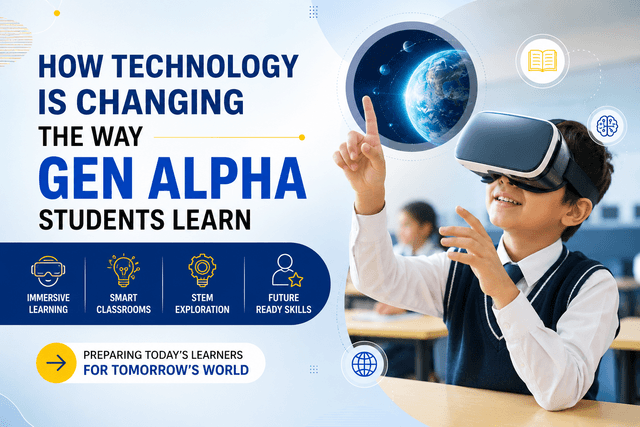
VR changes everything because it hides the real world from your eyes. A student puts on a special headset and steps into another place completely. The child leaves the classroom in Mumbai or Delhi behind and stands on Mars, walks inside an ancient Egyptian pyramid, or shrinks small to journey through a plant cell. This pulls you right into the action with your full senses.
Why Learning by Doing Works Best?
Indian schools gain the biggest advantage from AR and VR by shifting students from passive learning to active experiencing. This change deeply improves how well students learn and remember lessons.
Students Remember and Stay Engaged More
Research clearly shows that people remember things much better when they do them instead of just hearing or reading. Studies indicate retention rates for lecture-based learning stay as low as 5-10%, while simulations and active participation raise retention to over 75%. Students remember mixing dangerous chemicals in a safe virtual lab because they actually do it, rather than just hearing about it from the teacher.
Understand Concepts in Detail
Science and math contain many concepts that stay invisible to the naked eye. Teachers now show an atom's structure or explain complex geometry with ease using AR. They project a 3D model of a DNA strand right into the classroom center. Students walk around it, zoom in close, and check it from every angle. This makes abstract and confusing ideas into clear and solid visuals everyone understands.
Take Safe and Affordable Digital Field Trips
Field trips help learning a lot, but they often cost too much or create big logistical problems for Indian schools. VR fixes this issue completely. A rural school with few resources lets students tour the Louvre Museum in Paris or walk through the Amazon rainforest, all without leaving the classroom building. This gives every Indian student access to amazing world experiences, no matter where they live.
Also Read: Grow Talent with Starmakers Platform
Seeing AR/VR in Action at Sapphire International School
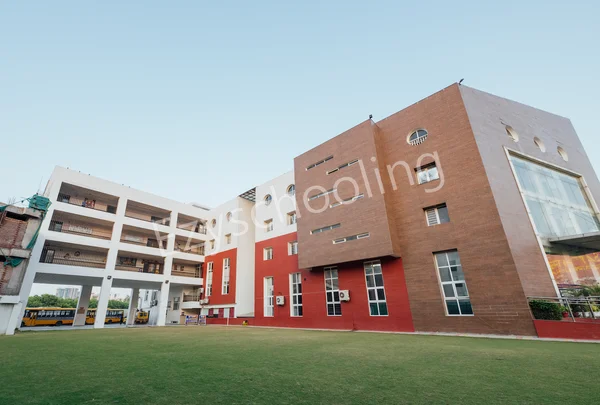
We do not need to wait for the future to see these benefits. Some smart schools in India already show how powerful this technology becomes when teachers mix it into lessons the right way. Sapphire International School (SIS), one of the good CBSE schools in Ghaziabad, gives a great example of this change in education.
What Makes Genie AR Special at SIS?
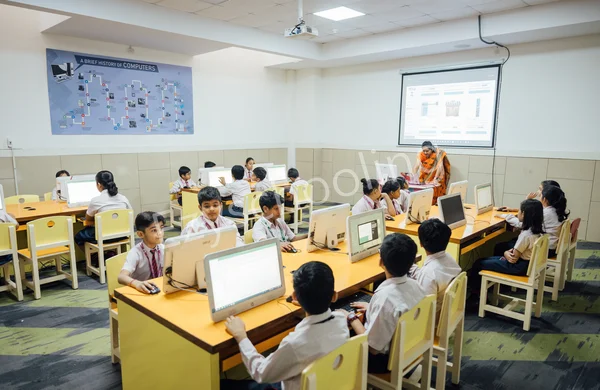
SIS goes past normal smart classes as teachers put special high-tech tools right into their lessons. Their best idea uses Genie, an advanced Augmented Reality tool. At SIS, students and teachers use technology as a main part of every lesson.
When an SIS student learns a hard topic, they do more than read the textbook. They pick up the Genie AR tool to make the lesson come alive. For example, in a physics class about mechanics, students see forces and motion in 3D on their desks. In biology, the AR tool shows an interactive layered model of the digestive system, so they understand how organs connect and work.
Genie AR Does More Than Look Fun
Sapphire International School uses the Genie AR tool for bigger goals in STEAM classes (Science, Technology, Engineering, Arts, and Math). Students touch and move 3D objects to see hard systems clearly. This helps them think deeply about ideas.
Students at SIS do not just memorise facts with this method. They create a strong understanding of how the world works. The school picks these AR tools to help all kinds of learners. A student who finds reading tough can do great when they touch and see the subject with Genie. SIS shows that AR works well in real classrooms right now.
Conclusion
Indian schools must use AR and VR tools because they increase student engagement, improve memory retention, and help students grasp hard concepts easily. These technologies give every student rich experiences in a safe and affordable way, which levels the playing field for all.
Sapphire International School proves this works well with their successful use of the Genie AR tool, so it is not science fiction at all. It represents a necessary change in classrooms everywhere. Indian students will only prepare well for tomorrow's challenges when schools adopt these tools.
To learn more about this and other schools nearby, see this list of the top schools in Noida.








 as a preferred source on