







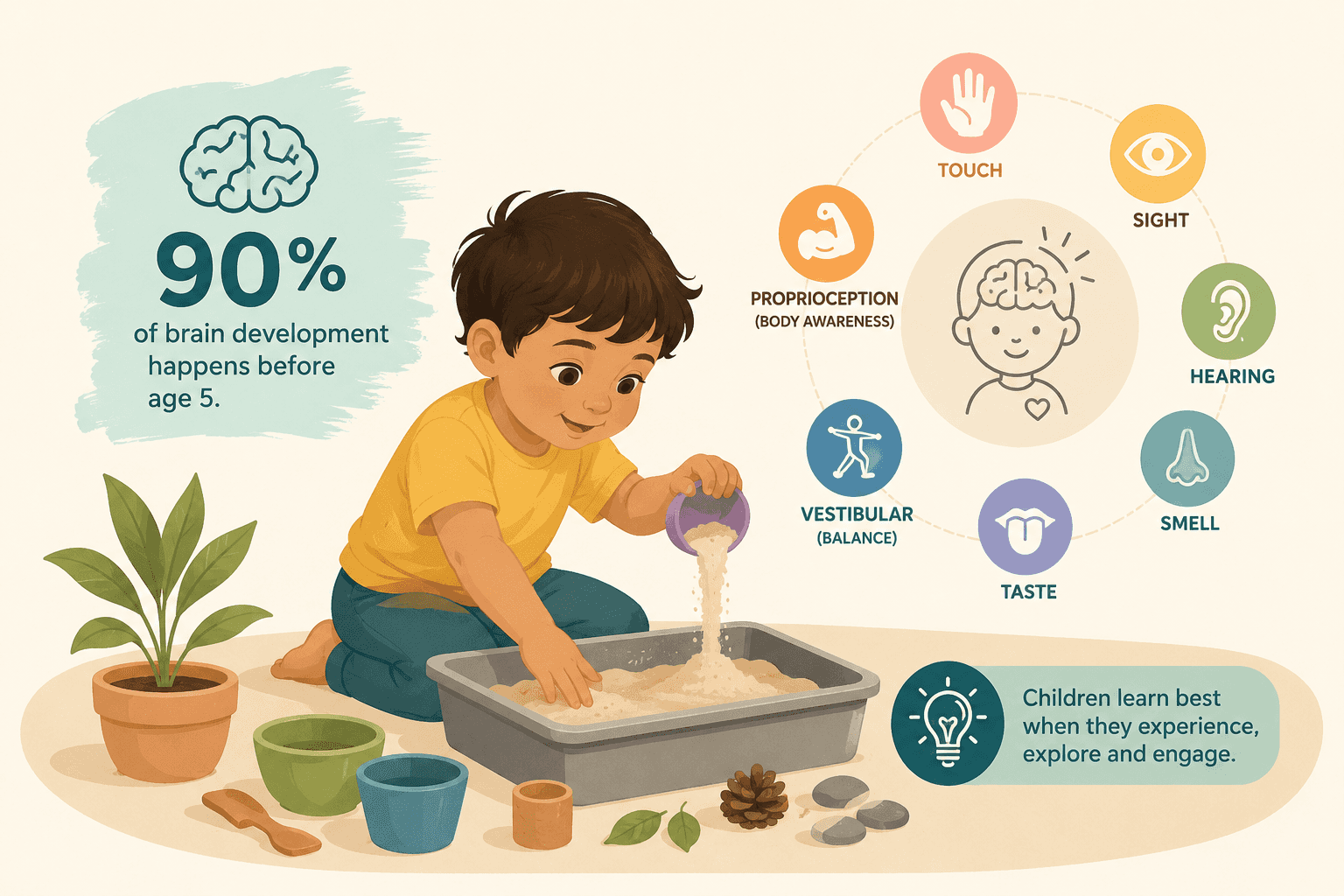

Have you ever wondered why a child can spend twenty minutes pouring water from one bowl into another without getting bored? Or why a cardboard box often becomes more exciting than the expensive toy packed inside it? As adults, we tend to see these moments as simple play. Sometimes, we even interrupt them, assuming there are more meaningful ways for children to spend their time. Yet, for a young child, these ordinary moments are filled with learning.
The first few years of life are remarkable. Nearly 90% of brain development happens before the age of five, and during this time, a child's brain forms over 1 million new neural connections every second. These connections are built through everyday experiences.
This growing understanding has also changed the way many early years classrooms are being designed. Rather than expecting children to learn while sitting at a desk, some schools are creating spaces that encourage movement, exploration, and hands-on discovery. Naavu School, one of the best schools in Bengaluru, is one such example, with dedicated learning environments built around experiential learning from the early years.
Also Read | Why Multi‑Sensory Learning Matters in Schools
What Sensory Play Actually Means
Any activity that encourages children to explore the world through one or more of their senses can be considered sensory play. It could involve touching different textures, listening to sounds, noticing colours in nature, smelling herbs while helping in the kitchen, balancing on stepping stones, or even feeling the difference between warm and cool water.
Young children don't separate learning into subjects the way adults do. They don't think, "I'm learning science now," or "This is a language activity." Instead, they make sense of everything through experiences.
A few common forms of sensory play include:
- Pouring and splashing water between containers
- Digging in sand, soil, or mud
- Rolling and shaping playdough or clay
- Walking barefoot on grass, gravel, or leaves
- Climbing, balancing, and crawling through obstacles
- Mixing, smelling, and tasting ingredients while cooking
The 7 Senses Engaged in Sensory Play
When we think about the senses, most of us immediately picture five. These include:
- touch
- taste
- smell
- sight, and
- hearing
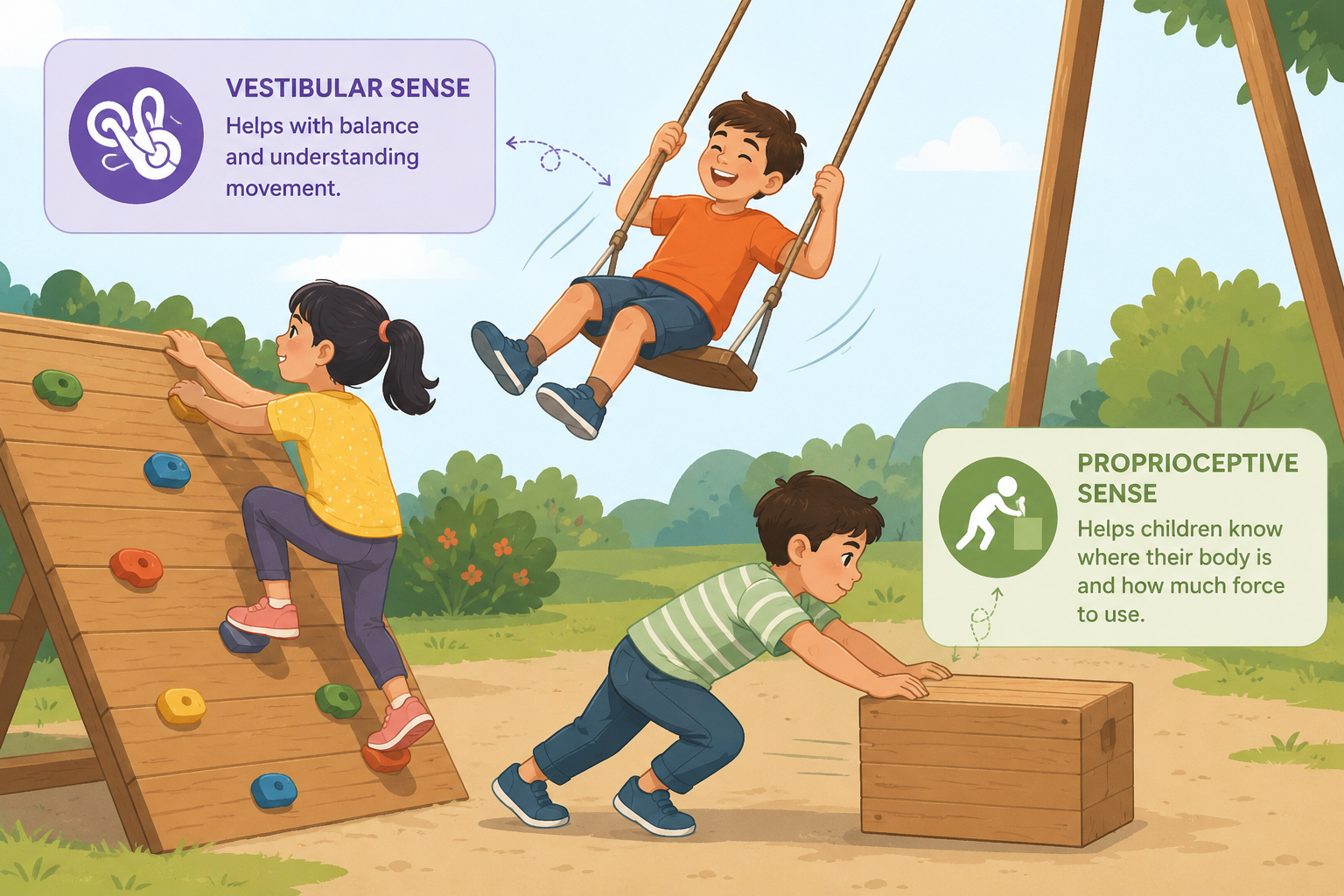
However, child development experts actually focus on seven distinct sensory systems. The two lesser-known senses play a massive role in how a growing child moves.
- The vestibular sense, located in the inner ear, helps children maintain balance and understand movement. Activities like swinging, spinning, climbing, or rolling down a grassy hill strengthen this system.
- The proprioceptive sense helps children understand where their body is in space. It develops through actions such as pushing, pulling, lifting, jumping, and climbing, allowing children to move with greater coordination and control.
How Helpful is Sensory Play Really?
Parents have heard the phrase "children learn through play" so often that it can start to sound like a slogan. Research, however, paints a much clearer picture. Over the past few decades, developmental scientists have found that sensory-rich experiences play an important role in how children build language, movement, attention, and problem-solving skills during the early years.
Researchers have also found that these activities strengthen fine motor control and encourage richer conversations between children and adults. A simple activity like baking, gardening, or sorting leaves naturally introduces new words, invites questions, and gives children opportunities to observe, compare, and explain what they notice. Over time, these small interactions support language development alongside curiosity and independent thinking.
Bringing Sensory Play into Everyday Life
Many parents would love to encourage more sensory play, but fitting it into everyday life isn't always easy. After a long day, muddy shoes, spilled water, paint-stained clothes, and a house that needs cleaning all over again can make the neater option feel far more practical.
The challenges go beyond the mess. Many families now live in apartments with limited outdoor space, and children's schedules are often packed with school, hobby classes, and screen time. There is also a growing pressure to make every minute feel productive. Worksheets, educational apps, and structured activities can seem like a better use of time than letting a child spend twenty minutes playing with water or collecting leaves.
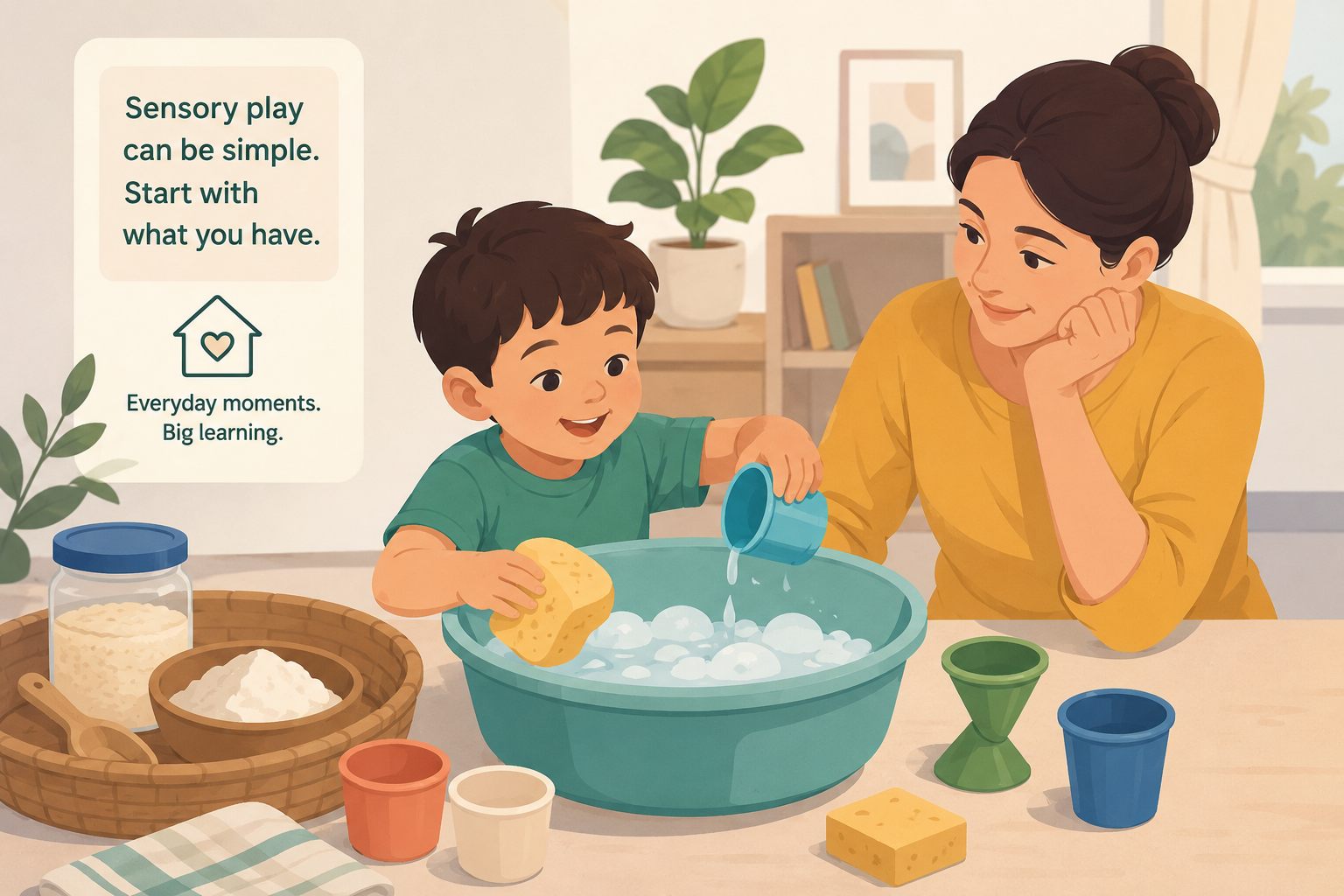
The good news is that sensory play doesn't have to be elaborate. It can easily become part of everyday routines using things most families already have at home. These ideas need nothing more than what most homes already have.
- A rice or dal bin with small cups and spoons for scooping
- Homemade playdough using flour, salt, oil, and a few drops of colour
- A barefoot texture walk across grass, sand, and cool tile
- Small toys frozen in ice cubes, melted out with warm water
- Letting a child knead dough or peel vegetables during cooking
- A basin of soapy water with cups, funnels, and a sponge
Check Out | The 10 Hours Your Child Loses Every Week (And How to Get Them Back)
How Naavu School Brings Sensory Learning to Life
One of the best IB schools in Bengaluru, Naavu School stands out as a forward-thinking educational institution, known mostly for their early and middle education. The school takes its name from the Kannada word "Naavu," which translates to "We" in English, reflecting a deep commitment to community and shared purpose.
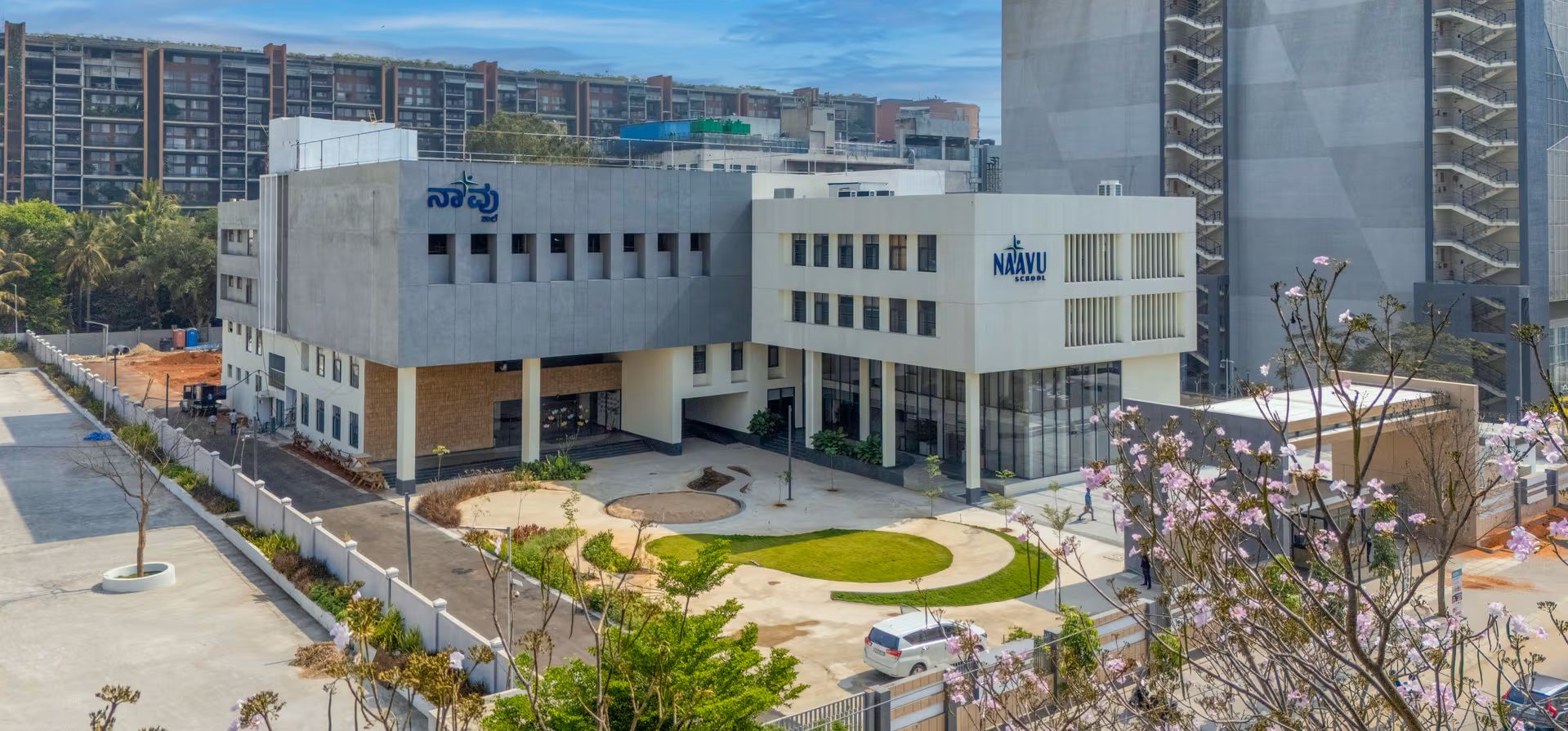
The school physically integrates its stance on sensory play right into its campus architecture. Naavu believes that some parts of a school must remain intentionally undefined. Children need these open outdoor spaces to build things and test new ideas. They need room to slowly figure out how the real world works. The educators reject passive instruction in favor of active and lived experiences.
The Sensorial Playscape at Naavu serves as a perfect example of this educational philosophy. Here, children climb, balance, and interact with natural materials as part of the regular school day. The school describes this space as one where coordination, confidence, and spatial awareness grow through movement.
The Sensorial Playscape sits alongside two other signature spaces on campus. The Greenhouse lets children grow plants and watch ecological cycles firsthand. They learn cause and effect through soil, water, and living systems, not through a textbook diagram. The LEGO Brick Lab gives children a place to explore design thinking through building. They test their own ideas with their hands, one brick at a time.
Movement and wellbeing are built into the school day through dedicated outdoor areas. The idea stays consistent: a child's body and mind develop together, not on separate timetables. Like Naavu, schools that build their spaces around this idea are not chasing a trend. They are paying attention to what the research has said for years.
For more information on this and other schools, check out this list of the best schools in Bengaluru.
 as a preferred source on