







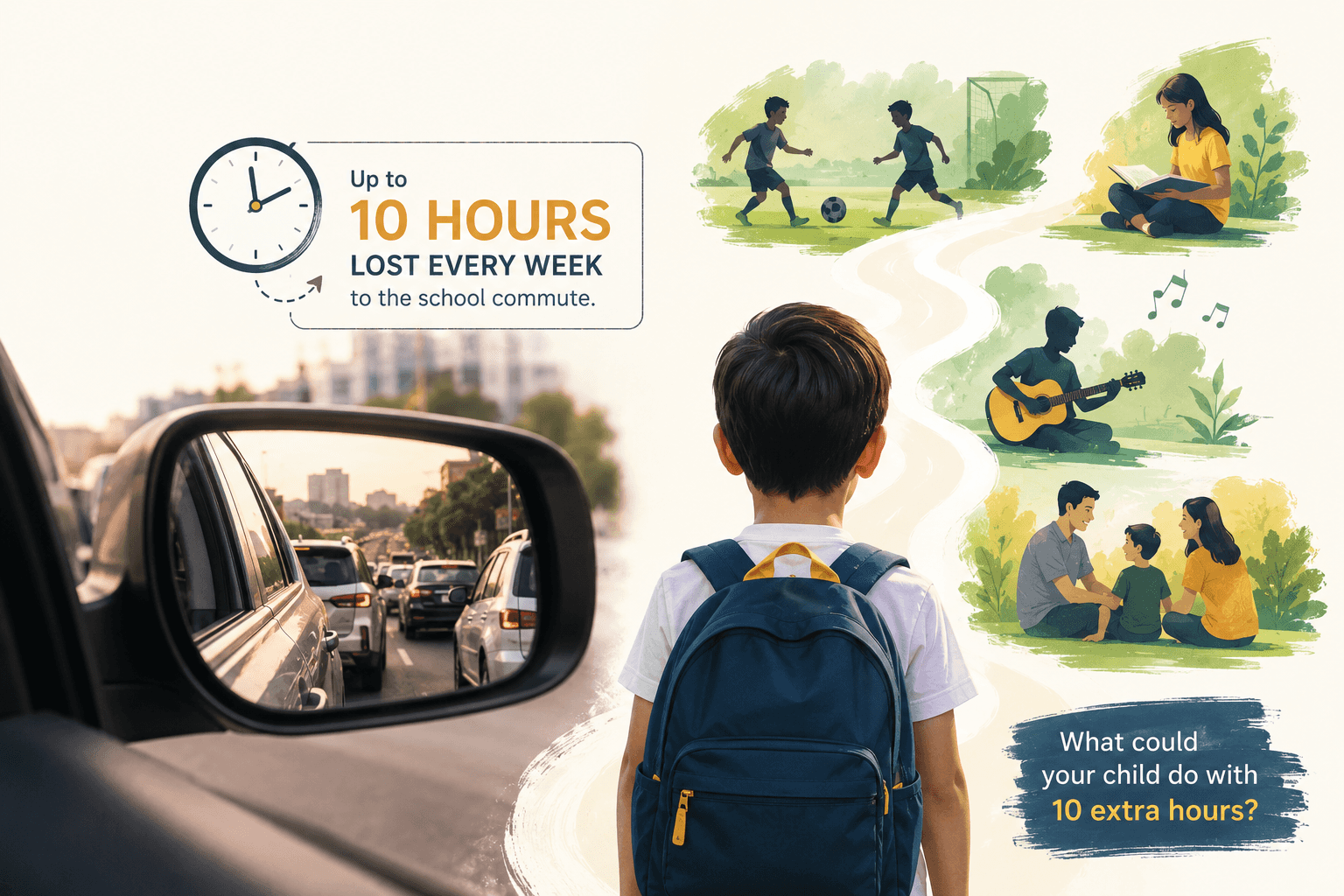

"It's only an hour," many parents tell themselves when they think about the journey between home and school. But is it really just an hour? By the end of a school week, that can add up to ten hours or more on the road.
In Hyderabad, commuters lose close to 123 hours every year to congestion; that's nearly 5 working days, gone, according to the TomTom Traffic Index 2025. During peak hours, vehicles crawl at roughly 16 kilometres an hour. Covering just 10 kilometres can take over half an hour. For a school-going child, that commute happens twice a day, 5 or 6 days a week.
Those minutes add up fast for growing children. They eat into sleep, into study time, into the family moments parents work hard to protect. DRS International School in Hyderabad, one of the top residential schools in India, has spent years building its weekly boarding programme around exactly this problem, giving families a structured middle path between full-time boarding and the daily grind of a long school commute.
Also Read | How the Right School Shapes a Child's Future
What School Brochures Don’t Talk About
India ranks as the 5th most traffic-congested country in the world and 2nd in Asia, with the average congestion level nationally sits at 37.4%. Hyderabad alone ranks among the 15 most congested cities in Asia. During rush hour, speeds on many stretches drop to around 15 to 16 kilometres an hour, well below what most parents picture when they imagine a quick school drop.
As a result, a round trip that should take 40 minutes on paper can easily stretch to 90 minutes in real traffic, especially for families living in the outer suburbs, where many large school campuses are located. Multiply that across five or six days a week, and a child can lose close to eight or ten hours weekly, just sitting in a vehicle.
That extra time has to come from somewhere, and that usually comes from sleep, or from the small pocket of free time a child would otherwise spend on a hobby or a book. Sometimes it comes from doing nothing at all. And doing nothing, for a growing child, is not wasted time but necessary.
The Cons of Missing Out on The Extra Time
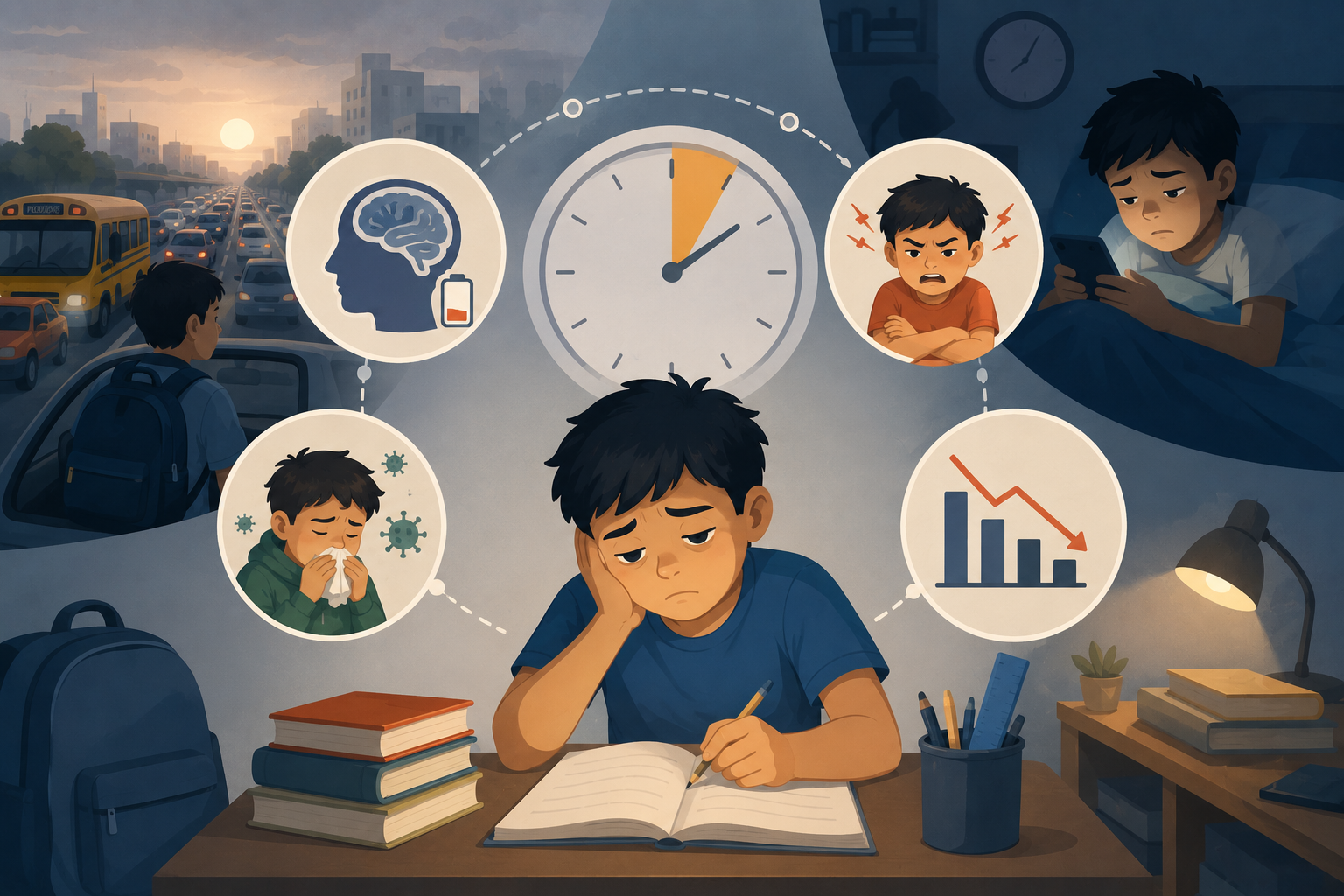
School-age children need close to 10 hours of sleep a night. That sleep supports memory, mood, and physical growth. Most urban Indian children fall well short of that number.
The effects of compromised show up quickly, the most common examples being:
- Slower recall and weaker concentration in class
- More irritability and mood swings at home
- Lower resistance to seasonal illness
- A measurable dip in academic performance over time
The tricky part is that parents rarely connect these changes to the school commute.
A child who struggles to focus is often assumed to be distracted. Poor test scores usually lead to extra tuition. Mood swings are blamed on growing up. Sometimes all of those explanations are true. But constant fatigue quietly sits in the background, making every part of the day a little harder than it needs to be.
Finding the Middle Ground
Dual-income households feel this pressure intensely. Both parents manage demanding careers and long working hours. They want to provide the best possible education for their children. However, the logistics of urban schooling make this very difficult. Coordinating daily travel becomes a complex puzzle. Evening homework turns into a second job for tired parents.
The weekend finally arrives after a long 5 days. Saturday morning usually starts with catching up on missed sleep. Then comes the rush to finish leftover school projects. Sunday evening brings the dreaded realization of Monday morning.
This exhausting cycle requires a practical circuit breaker. Weekly boarding offers a very compelling solution. It removes the daily travel burden completely. It gives children their mornings and evenings back. During the regular work week, students live on campus. They return to their own homes on Friday evenings. This effectively separates academic pressure from family life.
What Does Weekly Boarding Actually Look Like?
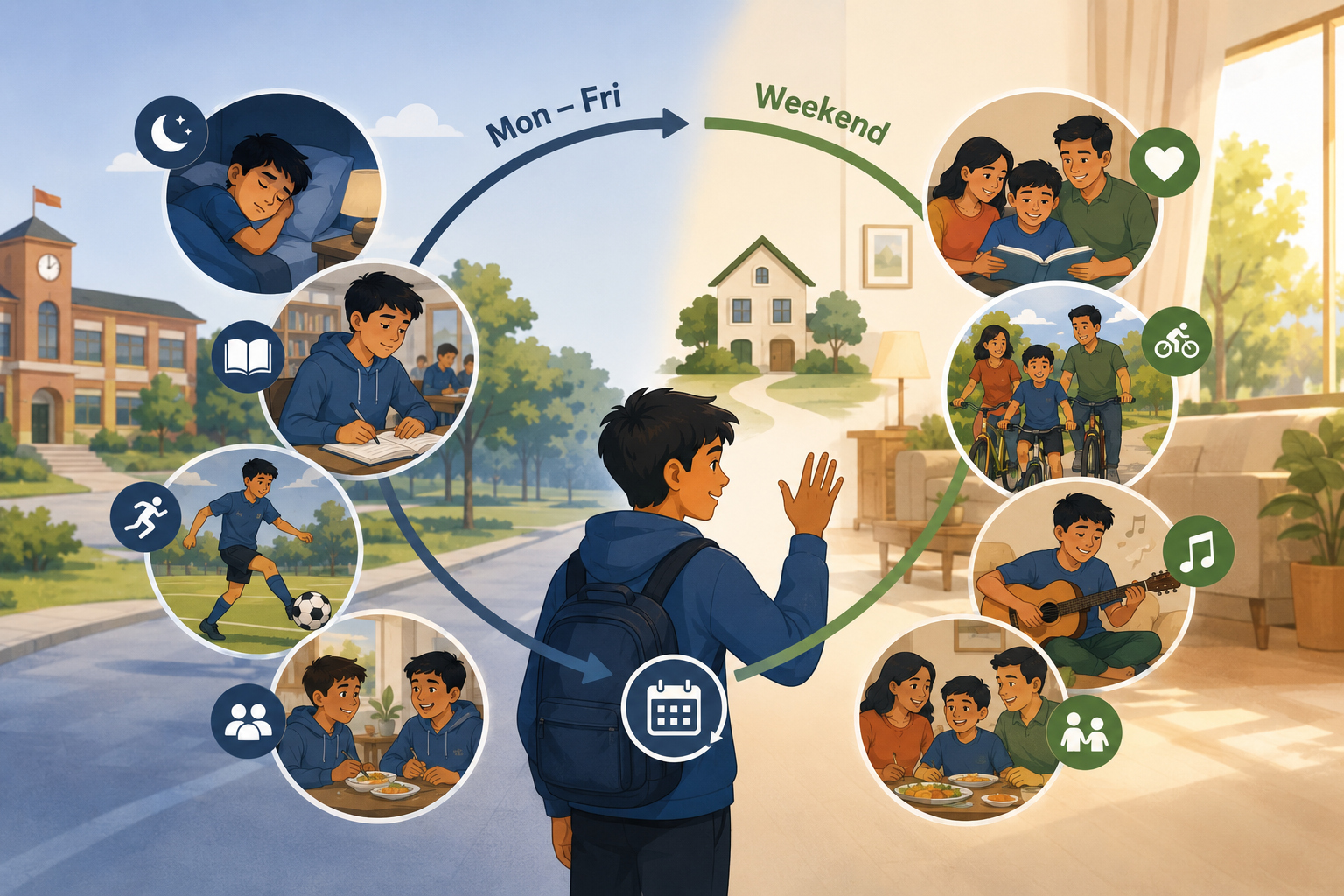
Under a weekly boarding setup, students live on campus from Monday through Friday or Saturday. Meals, study hours, and bedtimes follow a fixed, supervised schedule, run by house parents and resident staff rather than by whoever has the energy left after a long drive home.
Then, once classes wrap up for the week, students go home. The whole weekend belongs to the family, before students head back to campus on Sunday evening or Monday morning.
Here’s how this model practically changes daily life for a growing child:
- More Consistent Sleep: Fixed bedtimes replace the late-night homework sessions caused by long commutes and later dinners. Better sleep helps them stay attentive in class and recover from busy school days.
- Supervised Study Time: Doubts get cleared by a teacher on the spot, not postponed to the next tuition class or left half-understood. Students have direct access to the teachers, which eliminates the need for private tuitions.
- No Commute Fatigue on Weekdays: Skipping the commute saves roughly ten hours a week. Hours once lost to traffic go into sport, art, reading, or simply resting. They might also end up discovering new hobbies and interests.
- A Steadier Daily Routine: Meals, activities, and sleep follow a set schedule, not whatever fits around traffic. Such routines help children build consistent discipline.
- Family Time on Weekends: Perhaps the biggest difference is that weekends become less about recovering from the week and more about spending meaningful time together. Parents can focus on conversations, outings, and shared experiences instead of rushing through unfinished homework or preparing for another hectic Monday.
- Early Independence: Living away from home during the week teaches children to organise their belongings, manage their time, and become more responsible in everyday situations. These are life skills that continue to benefit them well beyond school.
- Stronger Peer Relationships: Sharing meals, activities, and everyday experiences allows students to build friendships that often become much deeper than those formed during classroom hours alone.
Check Out | What Are the Biggest Challenges of Sending Your Girl Child to a Boarding School?
How DRS International School Makes Weekly Boarding Work
Established in 2003, Hyderabad’s DRS International School has grown into a premier boarding school in South India, offering a rich blend of CBSE, IB, and Cambridge curricula. The school’s vision centres on building a community of progressive, lifelong learners who combine strong academics with genuine international mindedness.
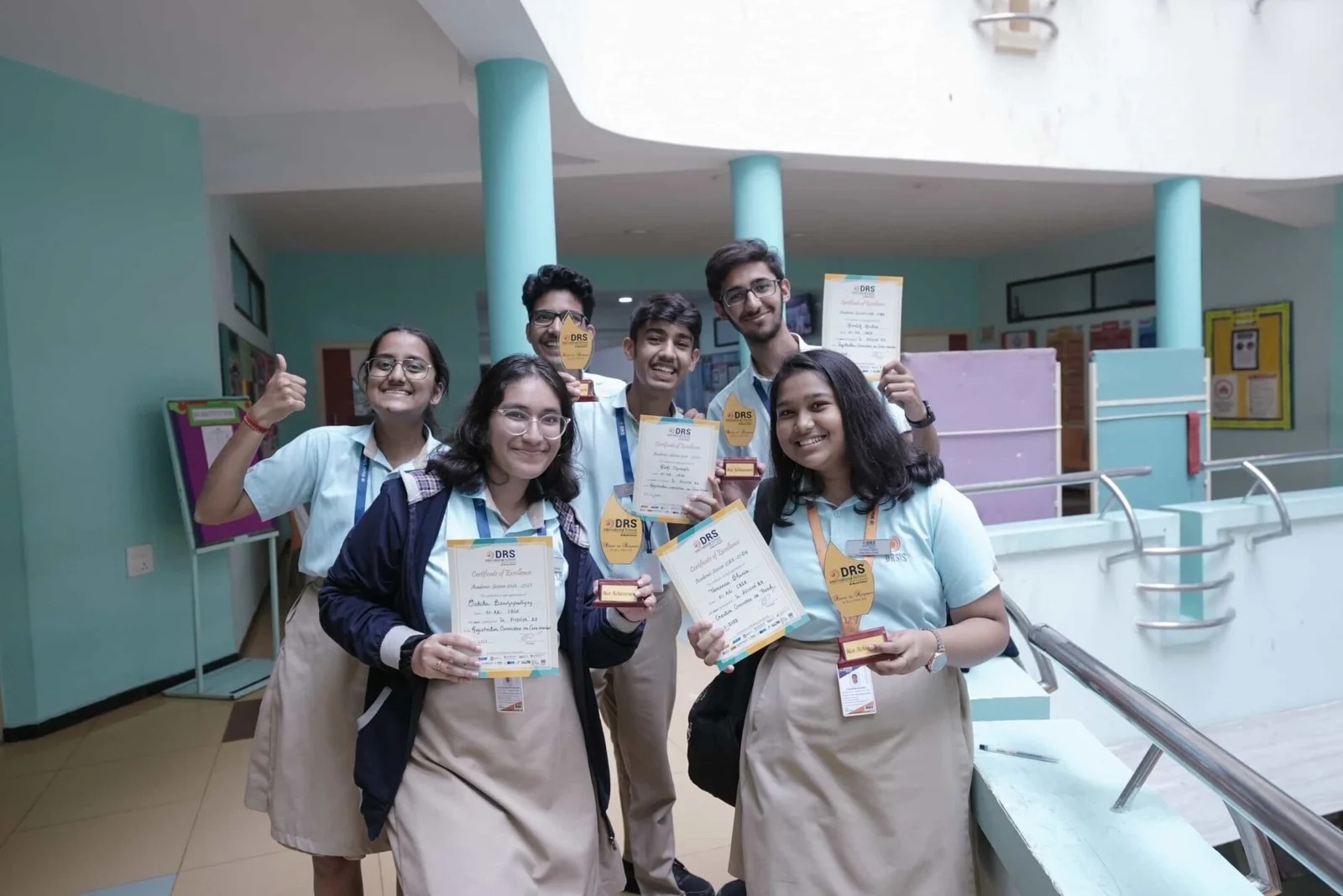
On weekly boarding specifically, the school takes a fairly practical view. Its residential wing offers both full boarding and weekly boarding. Students live on campus through the week and return home every weekend. It's built for children who want structure and independence on weekdays, while keeping weekends firmly with family.
Academically, the boarding day is split into three distinct blocks:
- Mornings are reserved for self-directed study.
- Evenings bring guided sessions, with resident teachers on hand for doubts and revision.
- Board exam batches get an additional night study window for focused, quiet preparation.
Beyond academics, DRS International School places huge importance on co-scholastic opportunities. Their post-school hours feature highly structured sports and performing arts programs. Students are constantly challenged to grow their talents through various intra-group activities. The dynamic school culture truly thrives on this creativity and collaboration. It helps students discover new passions and hobbies safely outside the classroom.
The leadership team also sees weekly boarding as a massive catalyst for personality development. Students live in a diverse and close-knit community during the week. This setup fosters independence, leadership, and a deep sense of cultural understanding. Students enjoy a disciplined yet nurturing freedom. This environment makes personal growth and exploration a top priority for everyone involved.
The residential community itself is genuinely mixed. Boarders come not just from across India, but from countries including the USA, Singapore, Australia, Germany, Nigeria, and the UAE. That gives weekly boarders daily exposure to different cultures and perspectives, something a typical day-school commute simply can't offer.
For more information on this and similar other boarding schools, check out this list of the best boarding schools in India.










 as a preferred source on