







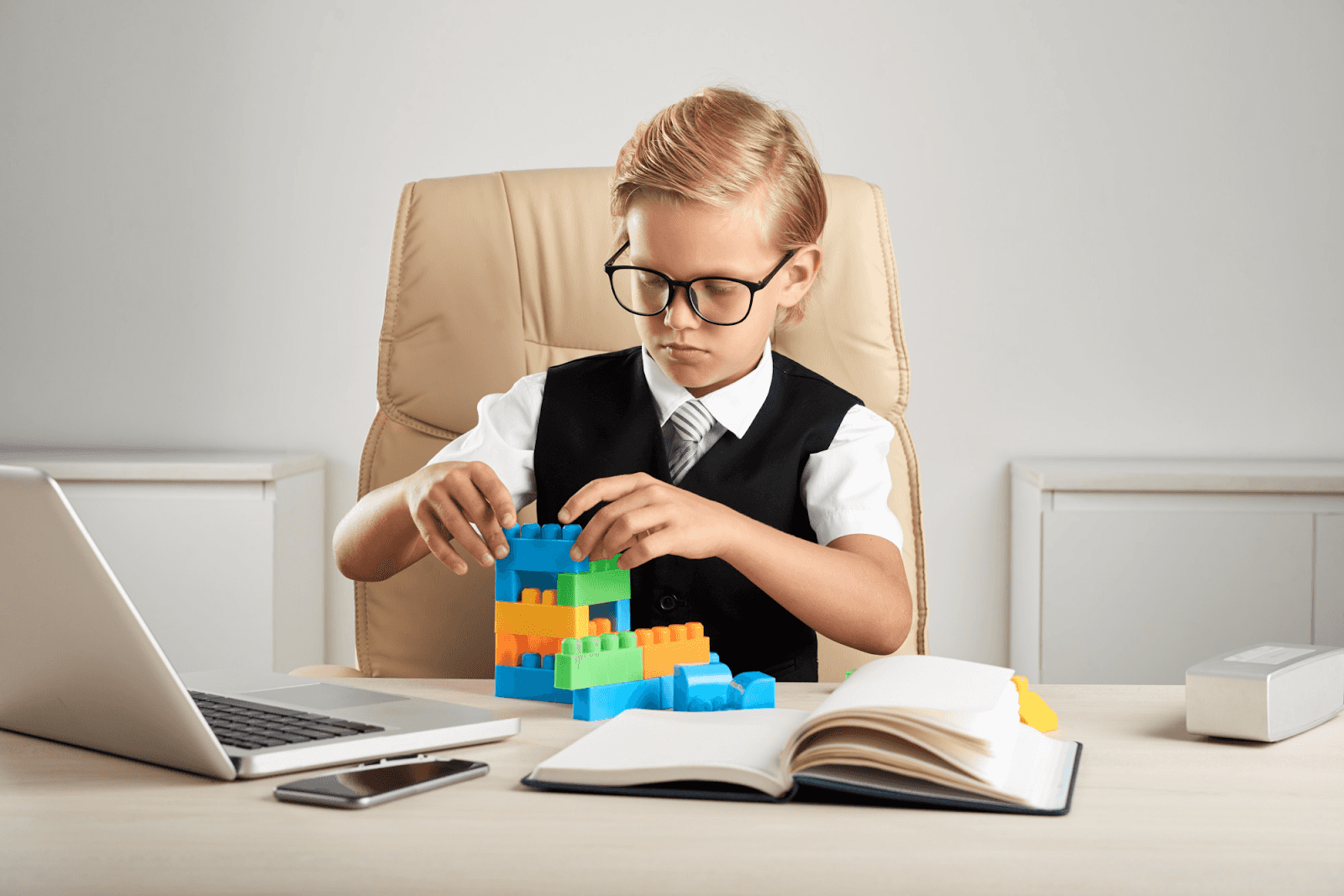

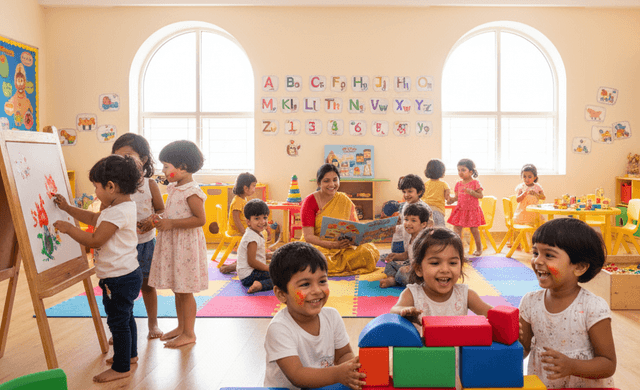
Picture a classroom filled with children's laughter, the gentle hum of creative activity, and the purposeful chaos of discovery. This isn't merely playtime, it's a carefully orchestrated symphony of learning where every sound contributes to a child's educational development. Just as a symphony brings together different instruments to create beautiful music, play-based learning combines various activities to create rich, meaningful educational experiences.
In this article, we explore how play-based learning functions like a "Learning Orchestra," where different play activities serve as instruments that harmonise to create comprehensive child development. We examine the science behind this approach and showcase how one of the best schools in Pune, Tiny Tots English School, masterfully conducts this educational symphony.
Also Read | Healthy Eating for Growing Minds
The Science Behind Play-Based Learning
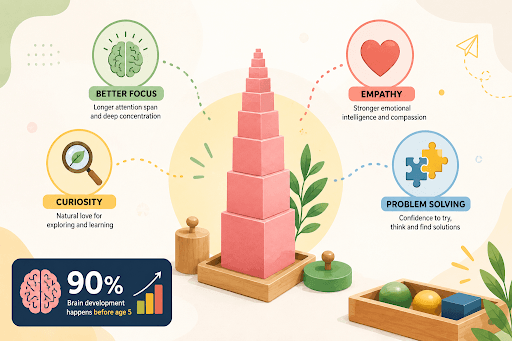
Modern neuroscience provides compelling evidence about the impact of play on brain development. When children engage in play, their brains form neural pathways that enhance cognitive flexibility, emotional regulation, and social competence. Research demonstrates that children in play-based learning environments show improved problem-solving abilities, better academic performance, and stronger social skills compared to traditional learning methods.
Play activates multiple brain regions simultaneously, creating interconnected learning experiences that mirror real-world complexity. This neurological foundation explains why the "Learning Orchestra" metaphor resonates so powerfully in early childhood education.
The "Rhythm Section": Music & Movement

Music and movement activities form the foundational beat of any learning orchestra, establishing patterns that support mathematical and linguistic development.
When children participate in clapping songs or rhythmic activities, they unconsciously absorb mathematical concepts. A simple nursery rhyme teaches counting, sequencing, and pattern recognition, all fundamental math skills. Children who clap to "Twinkle, Twinkle, Little Star" are practising the same pattern recognition they'll later use for multiplication tables.
Movement activities strengthen gross motor skills while building spatial awareness. Dancing, marching, and coordinated movement games help children understand concepts like direction, distance, and timing. These physical experiences create the foundation for later academic skills, including handwriting and geometric thinking.
The "String Section": Storytelling & Pretend Play
Storytelling and imaginative play create the emotional depth of our learning orchestra, developing empathy, critical thinking, and communication skills.
When children retell stories from different characters' perspectives, they develop empathy and critical thinking simultaneously. A child explaining why the wolf felt hungry in "Little Red Riding Hood" learns to consider multiple viewpoints, a skill essential for both social relationships and academic analysis.
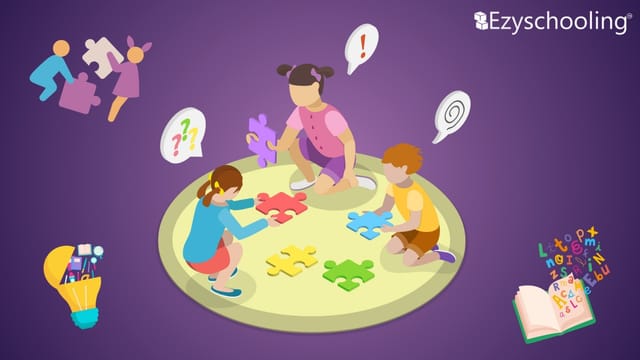
Pretend play scenarios require children to create logical sequences, negotiate roles, and communicate effectively. These activities develop:
-
Advanced vocabulary through role-playing different characters
-
Logical thinking by creating coherent storylines
-
Social skills through collaborative play scenarios
-
Problem-solving abilities when conflicts arise
The "Wind Section": Art & Sensory Play
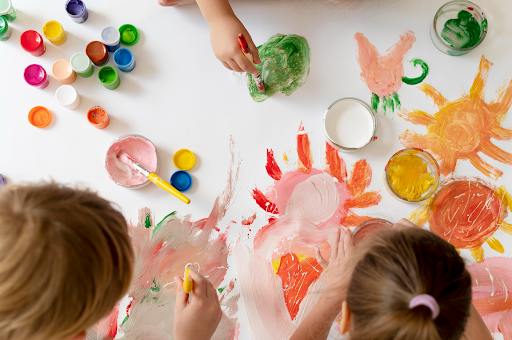
Creative and sensory activities add colour and texture to the learning experience, developing fine motor skills and scientific understanding.
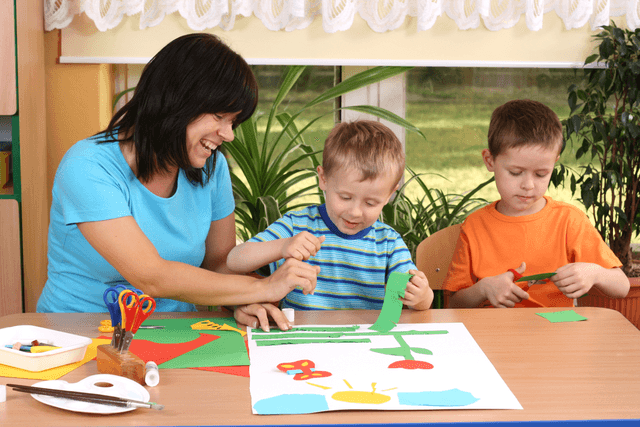
Art activities serve multiple developmental purposes beyond creative expression. When children mix blue and yellow paint to create green, they conduct their first chemistry experiment. This hands-on exploration teaches cause-and-effect relationships while developing the finger strength and coordination needed for writing.
Sensory play activities like water tables, sand boxes, and texture bins introduce scientific concepts naturally. Children learn about volume, density, and states of matter through play rather than abstract instruction. These concrete experiences create the foundation for later abstract scientific thinking.
The "Conductor": Integrated Thematic Learning
Effective play-based education requires skilled orchestration to create cohesive learning experiences rather than random activities.
Thematic units serve as the conductor's score, bringing harmony to diverse learning activities. An ocean theme might include counting seashells for mathematics, painting underwater scenes for art, singing sea shanties for music, and learning about marine science. This integrated approach helps children see connections between different knowledge areas.
Teachers in play-based environments function as conductors, observing children's interests and guiding activities to maximise learning potential. They know when to step in with gentle guidance and when to allow natural exploration to continue. This delicate balance requires extensive training and a deep understanding of child development principles.
Check Out | Games Enhance Eduaction
Tiny Tots English School, Pune: Master Conductors of Play-Based Learning
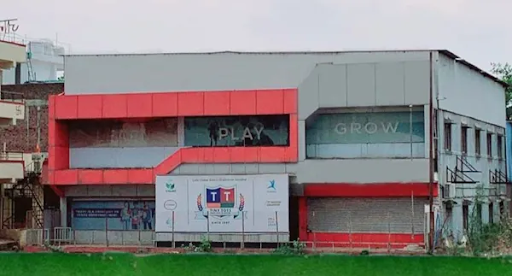
Established in 1997 in Charholi Budruk, Pune, Tiny Tots English School follows the CBSE curriculum while serving students from kindergarten through secondary levels. The school has positioned itself among the premier educational institutions by implementing comprehensive play-based learning approaches that mirror orchestrated musical harmony.
The school's kindergarten and pre-primary programs exemplify the "Learning Orchestra" concept through carefully designed thematic units. Students engage with integrated experiences where single themes incorporate multiple learning areas. Ocean exploration might include mathematical shell counting, artistic sea creature painting, musical ocean songs, and scientific marine life study.
One of the best CBSE schools in Pune, Tiny Tots' facilities support orchestrated learning with dedicated spaces for music, art, outdoor play, and storytelling. Small class sizes allow educators to function as skilled conductors, ensuring each child's unique learning style contributes to the overall educational symphony while maintaining individualised attention.
Through innovative teaching methodologies and experienced educators, Tiny Tots English School demonstrates how play-based learning creates well-rounded students prepared for academic success and lifelong learning. The school's approach proves that when different learning elements work together like orchestral instruments, children develop comprehensively across academic, social, and emotional domains.
For more information on this and other such schools in the area, check out this list of the best schools in Pune.


 as a preferred source on