








The early years of a child’s life are a time of rapid brain development, boundless energy, and emotional growth. What children eat during these years doesn’t just affect their health, it shapes how they learn, concentrate, and interact with the world around them. A balanced, nutrient-rich diet can mean the difference between an engaged, curious learner and one who struggles with focus and fatigue.
More schools are now recognizing that good nutrition is as important as good teaching. They are moving beyond occasional “health days” to building everyday habits that help children develop a positive relationship with food. This shift transforms mealtime from a routine break into a vital part of the learning process, one that supports both academic and personal growth.
Tiny Tots English School, one of the best schools in Pune, stands out for the way it integrates healthy eating into its holistic education model. From carefully planned meals to wellness workshops and parent engagement, the school ensures that healthy habits begin early and last a lifetime.
In this article, we explore why balanced meals are essential for young learners, how schools can make nutrition part of daily life, and how Tiny Tots is setting an example by creating a culture of wellness inside and outside the classroom.
Also Read: Growing with Purpose: Social & Eco-Conscious LearningWhy Balanced Meals Make a Big Difference for Kids
Proper nutrition is like giving your child the right toolkit, not just for school, but for everyday life. Balanced meals provide steady energy, help the brain focus, and keep moods more stable, which means kids can learn better and play harder without sudden crashes. Over time, these healthy eating habits lay the foundation for strong immunity, better growth, and the ability to take on daily challenges with confidence and enthusiasm.
-
Supports Learning & Focus
Nutrients such as complex carbs, lean proteins, healthy fats, iron, and vitamins are the building blocks of brain power. Good meals help kids pay attention longer, remember better, and bounce back from frustration faster. -
Keeps Energy Stable
Whole grains, fruits, and veggies release energy more slowly and evenly than sugary snacks. This helps students stay active, engaged, and less prone to meltdowns or hyper spikes, especially during school hours. -
Boosts Immunity & Growth
A nutrient-rich diet strengthens the body’s defenses and supports proper development of bones, muscles, and organs. This means fewer sicknesses, and more consistent learning and fun. -
Cultivates Healthy Habits for Life
Children who learn to love wholesome food early on tend to carry that habit forward, making mindful choices that support their health into adulthood.
Building Healthy Routines in School
When healthy meals become a natural part of the school day, children absorb those habits almost without realizing it. The goal isn’t to force “healthy” choices, but to make them feel normal, enjoyable, and something they look forward to. By weaving nutrition into the rhythm of the day, schools help students develop habits that will stick with them for life.
-
Structured Mealtimes: When breakfast, lunch, and snack breaks happen at the same time every day, kids learn to recognize when they’re truly hungry instead of eating out of boredom. It also helps prevent overeating because their bodies get used to a steady routine. Plus, sharing these moments with classmates turns meals into social, happy parts of the day.
-
Inviting, Balanced Choices: Nutritious food doesn’t have to be dull. A plate with colorful veggies, whole grains, and a bit of protein can be just as appealing as a packaged snack, sometimes more so. Schools that make balanced meals look and taste good show children that healthy eating is both normal and enjoyable, not something they “have to” do.
-
Hands-On Food Learning: When children help prepare their own snacks, whether it’s tossing together a fruit salad, planting a few herbs in the garden, or watching a cooking demo, they develop a natural curiosity about food. It shifts their thinking from “What is this?” to “I made this!” which makes them far more willing to try new flavors.
-
Mindful Eating: Teaching children to slow down, chew properly, and notice the taste and texture of food changes the way they approach meals. Instead of rushing through lunch, they learn to enjoy the process, recognize when they’re full, and develop a calmer, more positive relationship with eating.
-
Gentle Limit on Sugary Snacks: When sweets and packaged treats are kept for special occasions rather than daily consumption, kids start seeing them as an occasional fun extra instead of a normal staple. This subtle shift encourages them to reach for healthier everyday options without making it feel like a strict rule.
Wellness Beyond the Plate
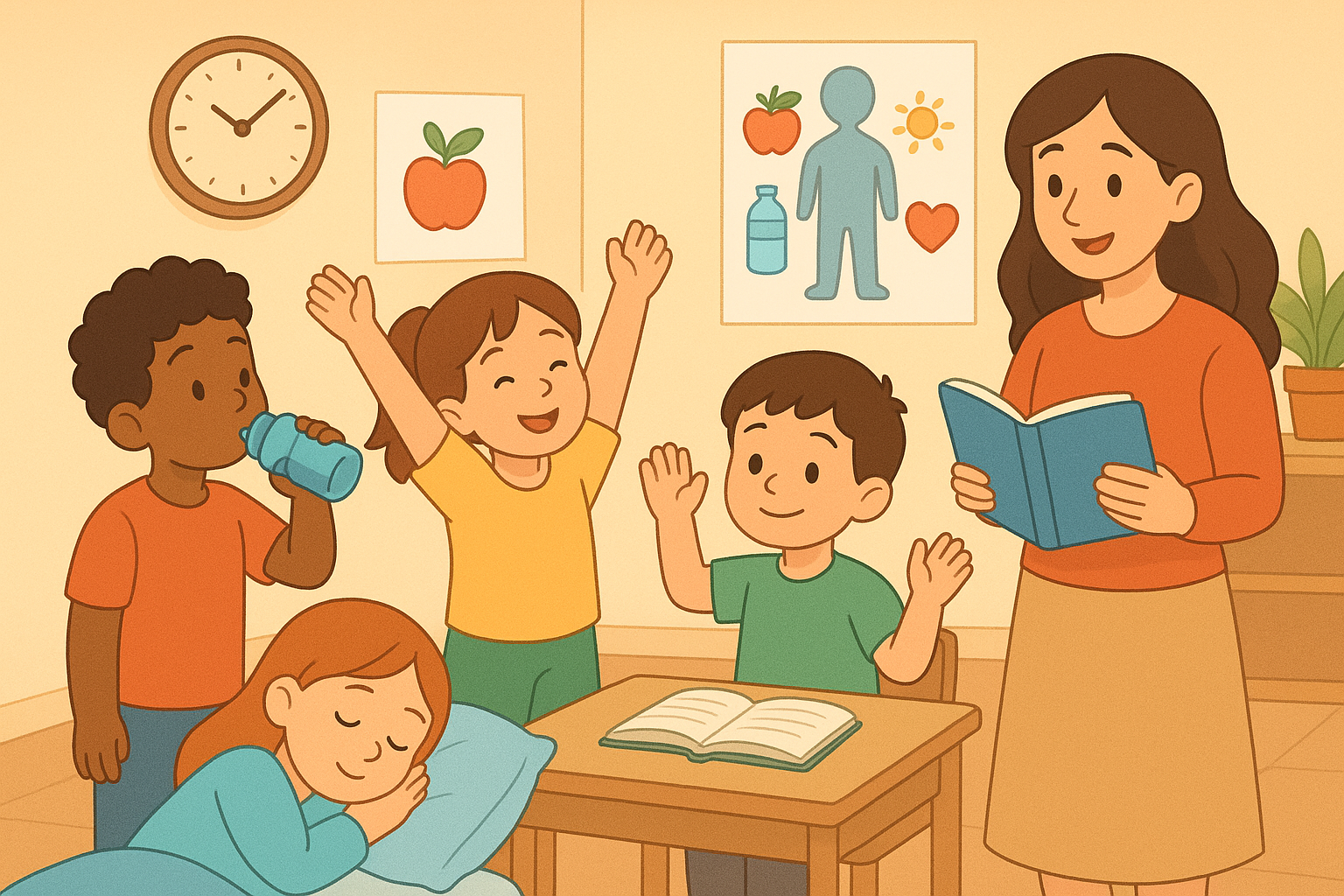
Healthy eating is just one piece of the wellness puzzle. For children to truly thrive, they need a balance of good food, hydration, physical activity, rest, and emotional support. Schools that take this bigger-picture approach help students build healthy routines that support both their minds and bodies every single day.
-
Hydration Habits: Making water breaks a regular part of the school day keeps kids refreshed, improves concentration, and supports healthy digestion. Something as simple as sipping water between classes or after playtime helps prevent tiredness and headaches. Over time, it becomes a natural habit they carry outside school too.
-
Active Breaks: A quick stretch, a few jumping jacks, or a short playground run after snack time can do wonders for energy and focus. These small movement breaks don’t just burn off restlessness, they help students return to class feeling alert and ready to learn. It’s an easy win for both body and brain.
-
Sleep & Routine Awareness: Good nutrition works best when paired with good rest. Schools that gently remind families about bedtime routines help reinforce the connection between sleep and overall well-being. When kids arrive well-rested, they’re more likely to eat well, participate actively, and manage their emotions better.
-
Emotional Check-Ins: How a child eats can sometimes reflect how they’re feeling. A sudden loss of appetite or unusual eating patterns might be a sign of stress, anxiety, or even illness. Teachers who keep a watchful, caring eye can catch these signals early, opening the door for support and understanding.
Tiny Tots School: A Place Where Healthy Meets Holistic

Founded with a vision to nurture the whole child, Tiny Tots School, Pune, is more than just a place of learning, it’s a community where healthy habits take root alongside academic growth. The school follows a child-centric approach, offering classes from early years through higher grades, and is known for its commitment to blending academics, wellness, and life skills in everyday learning.
One of the best CBSE schools in Pune, Tiny Tots School, is proving that healthy habits, once rooted in early years, can grow into a lifelong strength, ensuring students are not just ready for exams, but for a vibrant, well-balanced life ahead.
At Tiny Tots School in Pimpri-Chinchwad, Pune, healthy eating is woven into the school’s heart, not treated as an add-on but as a core part of growing happy, curious learners. From teaching good habits to actual meals, the school goes the extra mile.
-
Fresh & Balanced Meals Every Day
From colorful plates to thoughtfully planned snacks, Tiny Tots ensures kids get the fuel they need to stay active and engaged. -
Fun Nutrition Workshops
Through story-based food lessons, hands-on salad making, and gardening activities, students learn what goes into their food, and why it matters. -
Parent Workshops & Meal Tips
Healthy habits flourish when classrooms and home environments are in sync. Regular parent resources and discussions keep everyone on the same page. -
Clean Practices & Food Safety
The school’s focus on hygiene, both in food prep and eating space, gives parents peace of mind and ensures every meal is both safe and nourishing.
The school also emphasizes overall wellness beyond meals, regular hydration reminders, active play breaks, and emotional well-being check-ins form a supportive ecosystem where every child feels cared for. This thoughtful approach not only fuels growing bodies but also nurtures attentive minds, setting students up for success inside and outside the classroom.
For more information on this and other similar schools in the area, check out this list of the best schools in Pune.

 as a preferred source on