








As the world grows more complex and deeply interconnected, education must evolve beyond national boundaries to equip individuals for the realities of a global future. International partnerships and exchange programs in schools offer students invaluable exposure to diverse cultures, global perspectives, and collaborative learning. These initiatives not only enrich academic experiences but also nurture adaptability, leadership, and a deeper understanding of the world, preparing students to thrive in a globally competitive future.
KIIT World School stands out as best Schools in Gurgaon that actively embraces this vision through meaningful international tie-ups, student exchange programs, and cross-cultural learning experiences. By fostering global exposure and leadership skills, the school is shaping students into confident, future-ready global citizens.
In this article, we’ll explore the growing importance of global collaborations in education and how schools like KIIT World School are bringing the world into their classrooms, broadening minds and building bridges to a brighter future.
Also read | Ensuring Global Standards in EducationThe Importance of Global Exposure in School Education

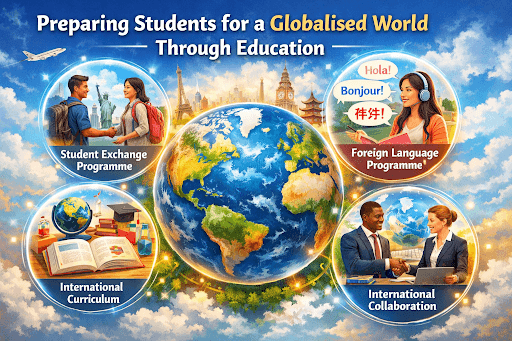
Global exposure in school education means more than just learning about different countries; it’s about weaving international knowledge, cultural exchange, and global perspectives into every student's learning journey.
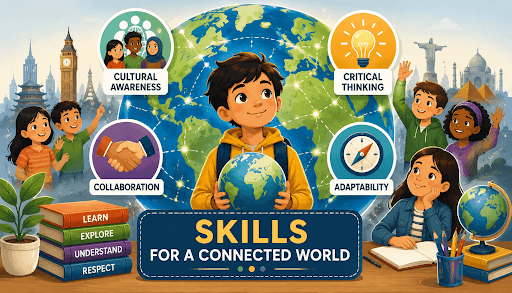
Integrating international elements into school life nurtures empathy, open-mindedness, and respect for differences. It sharpens communication, critical thinking, and problem-solving skills while offering access to enriched resources and cross-border opportunities. These experiences shape emotionally intelligent, globally aware students who are prepared for a multicultural world. In today’s competitive job market, global competence isn’t just beneficial—it’s essential. Early exposure ensures students don’t just succeed academically but grow into confident, future-ready global citizens.
Global exposure in school education is not just a luxury but a necessity in today’s world. Schools must actively adopt global teaching practices to equip students for the challenges and opportunities of the 21st century.
Networking Without Borders: Building Global Connections Through International Programs

Participating in international partnership programs offers numerous benefits that contribute to personal and professional growth:
- Enhanced Global Awareness: Engaging with diverse cultures and perspectives deepens understanding of global issues, fostering empathy and a broader worldview.
- Improved Adaptability: Immersion in new environments challenges individuals to navigate unfamiliar situations, enhancing flexibility and problem-solving skills.
- Expanded Professional Network: Collaborating with international peers and professionals builds a global network, opening doors to cross-border opportunities and collaborations.
- Leadership Development: Exposure to different leadership styles and practices cultivates versatile leadership qualities suitable for various cultural contexts.
- Career Advancement: International experience is highly valued by employers, providing a competitive edge in the global job market.
Engaging in international partnerships not only enriches individuals personally but also equips them with essential skills to thrive in a globally interconnected world.
How Global Partnerships in Schools Benefit Students

With global partnerships, students step into a classroom that spans continents, gaining skills, stories, and chances that shape who they become tomorrow. Here's how global partnerships can shape a brighter future for students:
- Boost Career Prospects: Collaborating with international institutions exposes students to global work cultures, boosting employability and making resumes stand out.
- Broaden Worldview: Interaction with students from different countries helps develop cultural sensitivity, empathy, and a global mindset.
- Access to Diverse Learning Methods: Exposure to different teaching styles and curricula enhances adaptability and critical thinking.
- Opportunities for Exchange Programs: Students get a chance to participate in study-abroad programs, building networks and gaining real-world experience.
- Pathway to Higher Education Abroad: Global partnerships often ease the admission process to foreign universities through collaborations and recognitions.
Bridging Borders: How Schools Foster Cross-Cultural Learning

When we think of cross-cultural learning, student exchange programs and international tie-ups usually steal the spotlight—and for good reason. But there’s a whole world of global learning happening right inside classrooms, in ways that are just as powerful.
Let’s dive into some often-overlooked but deeply impactful ways schools are helping students connect across cultures and become global citizens—no passport required.
Global Issues, Local Classrooms
Imagine discussing climate change not just as a science topic, but as a lived reality in different corners of the world. When students explore global issues like migration, inequality, or sustainability, and tie them back to how they impact different countries, cultures, and communities, learning suddenly becomes personal. It teaches them to care, not just to know.
Languages That Speak Volumes
Learning a new language is more than memorizing grammar rules or vocabulary—it’s like unlocking a new world. Schools that offer foreign languages often mix in music, films, and even food from the culture. You might start out conjugating verbs, but before long, you’re vibing to French rap or understanding why Korean dramas are a global hit.
World Stories, One Classroom
Reading a novel from Nigeria, a folk tale from Japan, or a poem from Chile lets students travel the world without moving an inch. Literature from different cultures isn’t just diverse—it’s deeply human. It shows us that while our backgrounds may differ, our feelings, struggles, and dreams often don’t.
Art and Music Without Borders
Cross-cultural learning isn’t limited to textbooks. Schools are increasingly connecting students through art, music, and dance. Think joint music videos with students in another country, or collaborative murals that reflect different cultures. These projects let students express, connect, and celebrate differences—all without saying a word.
heck Out | Cultivating a Passion for Learning - The KIIT World School Approach
From Gurgaon to the Globe: KIIT School’s International Edge
Established in 2002, KIIT World School is one of the best CBSE-affiliated schools in Gurgaon, known for its academic excellence and forward-thinking approach. With a strong emphasis on innovation, global exposure, and holistic development, the school prepares students to thrive in a rapidly changing world.

Recognizing the need to nurture global citizens who can lead in diverse environments, KIIT School, Gurgaon, has embraced internationalization at its core. Through its robust international partnership programs, the institution is providing students with opportunities that go far beyond conventional learning models.
The vision at KIIT is clear—to cultivate a learning ecosystem where global exposure and cross-border collaboration are integral to academic growth. The school has established academic tie-ups with esteemed institutions and universities across countries like the USA, UK, Germany, Japan, and Australia. These partnerships allow for a variety of collaborative ventures, including student exchange programs, faculty development initiatives, global internships, international conferences, and dual-degree opportunities.
One of the standout features of these international programs is the cultural immersion experience. Students not only gain academic insights but also develop cultural intelligence by interacting with peers from diverse backgrounds. Whether it’s through joint research initiatives or participation in global Model United Nations, KIIT ensures that its students are prepared to thrive in a multicultural world. The curriculum is designed to complement international exposure, integrating global case studies, bilingual projects, and real-time collaboration with foreign students through virtual learning platforms.
At the heart of it all, KIIT School, Gurgaon, believes in empowering students with a broadened worldview. By encouraging global collaborations, the institution is instilling values of inclusivity, adaptability, and forward thinking. The international partnership programs are not just a step toward academic excellence—they are a leap into a future where students from KIIT can confidently take their place on the global stage as informed, empathetic, and capable leaders.
For more information on this and other such schools in the area, check out this list of the best schools in Gurgaon.








 as a preferred source on