









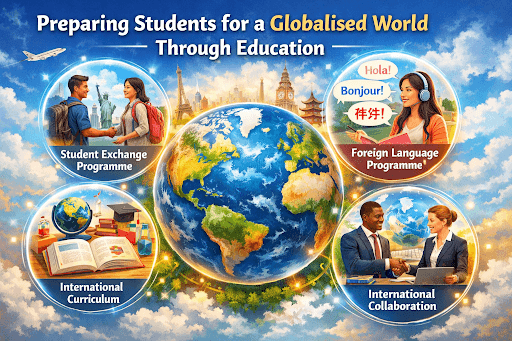
When we talk about “global education,” the image often is of students in foreign lands, international curricula, or foreign language immersion. But what if true global exposure isn’t about ignoring one’s roots but about blending local values and universal perspectives?
It isn’t just about sending kids abroad or filling classrooms with flags; it’s about instilling empathy, curiosity, cross-cultural thinking, and the ability to engage with global challenges. In a time when borders are porous and ideas traverse continents instantly, students need both a deep local grounding and a global compass.
That’s the philosophy behind “Indian Values, Global Outlook” as pursued by one of the best schools in Delhi, JM International School. The approach blends strong moral grounding with cross-cultural exposure, ensuring students grow into confident individuals who respect their roots while embracing the world.
In this article, we’ll explore why global exposure in education matters, what a global dimension in schooling means, key elements of a global curriculum, and how schools like JM International School, Delhi, are applying this fusion to prepare students for the future.
Also Read | Why Interactive Teaching Is the Future: Inside JMIS’s Upvan Learning Programme
Why Global Exposure in Education Matters

Global exposure is more than just an add-on; it is central to preparing children for the future. According to a UNESCO 2022 study, over 70% of future careers will require intercultural communication, adaptability, and the ability to work across borders. It provides tangible benefits that equip students for the 21st-century workplace and life.
Here’s what students gain:
- Awareness of global issues: From sustainability to technology, they learn to view problems as shared human challenges.
- Cultural empathy: Exposure to different traditions nurtures tolerance and respect.
- Career adaptability: Students equipped with global mindsets are better prepared for workplaces that thrive on diversity.
- Confidence to lead: Global learning gives children the courage to engage with perspectives beyond their own.
- Rooted identity: As they learn about the world, they strengthen their pride in local culture and values.
The Concept of Global Dimension in Education: Definition and Importance

The Global Dimension is an overarching conceptual framework that permeates the entire curriculum and ethos of a school, ensuring that learning is continuously informed by international and global matters.
Definition
The Global Dimension in Education is defined as incorporating issues such as sustainable development, social justice, and interdependence at both the local and global levels into teaching and learning. It is not just a subject but a perspective that links local actions to global outcomes, preparing pupils to live and thrive in a globalized society.
Importance
The core purpose is to equip students with the knowledge, skills, and attitudes to:
- Understand Interdependence: Recognize that economies, environments, and societies across the world are interconnected, meaning their local choices impact distant communities.
- Develop Global Citizenship: Instill a sense of responsibility and agency to act for a more just, secure, and sustainable world.
- Critically Examine Values: Encourage students to evaluate their own values and attitudes against global standards, fostering a mindset that values diversity and human rights.
Key Elements of a Global Curriculum
A truly effective global curriculum seamlessly integrates international themes across all subjects from Science (discussing global pandemics) to History (examining different national narratives). This curriculum is built around eight interconnected core concepts:
|
Core Element |
Focus Area |
|
Global Citizenship |
Understanding rights, responsibilities, and one's role in the global community. |
|
Interdependence |
Analyzing the connections between people, places, and environments worldwide (e.g., global supply chains). |
|
Diversity |
Appreciating cultural, social, and religious differences and combating discrimination. |
|
Social Justice |
Exploring issues of fairness, equity, and access to resources within and between societies. |
|
Sustainable Development |
Learning about the global climate crisis and responsible resource use to ensure future prosperity. |
|
Values and Perceptions |
Critically examining media portrayals, stereotypes, and different worldviews. |
|
Human Rights |
Understanding and advocating for fundamental rights for all people, regardless of location. |
|
Conflict Resolution |
Developing skills to analyze the root causes of conflicts and promote peaceful solutions. |
Balancing Indian Values with Global Perspectives

While global perspectives expand horizons, Indian values provide moral values. This balance is critical:
- Ethics & empathy: Values like respect, integrity, and compassion ensure global knowledge is applied responsibly.
- Cultural confidence: Students can embrace diversity without losing pride in their heritage.
- Spiritual resilience: Rootedness in traditions provides inner strength in uncertain times.
- Responsible leadership: Global perspectives help them lead, but values ensure they lead ethically.
Check Out | Transforming Education with Indian Cultural Values
JM International School: Shaping Global Citizens with Indian Roots
JM International School, Sector 6, Dwarka, New Delhi, is a co-educational institution offering classes from Nursery to Grade XII. Widely recognized as one of the best CBSE schools in Delhi, JIMS is known for its innovative pedagogy, global collaborations, and value-based education.
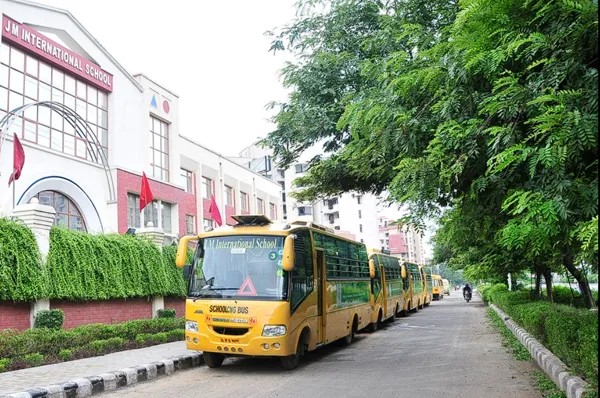
JM International School integrates cross-cultural learning, global partnerships, and inquiry-based pedagogy to equip students with both academic excellence and international competencies. With programs like Generation Global (Tony Blair Faith Foundation), collaborations with schools in the UK, Japan, Finland, and Australia, and recognition through the British Council International School Award, JMIS sets benchmarks in global education.
Equally, it emphasizes Indian traditions and values, ensuring learners remain rooted in their culture while embracing the world. Through interdisciplinary projects and reflective learning, students grow into empathetic leaders, responsible citizens, and confident global thinkers—rooted in values, yet ready for the world.
For more information on this and other such schools in the area, check out this list of the best schools in Delhi.









 as a preferred source on