









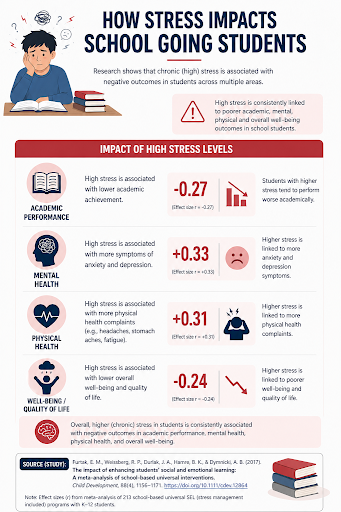
Next sem exams, weekly tests, daily worksheets, monthly competitions- if you actually list out a student’s week like this, it sounds exhausting even to read, let alone live through. And that’s before you add friend group drama, parents asking about marks at dinner, and that one subject that’s just refusing to make sense. Stress isn’t some rare thing that happens before board exams anymore; for a lot of kids, it’s just Tuesday. What’s changed, though, is that more schools are finally noticing this instead of brushing it off as “kids being dramatic.” Some of the top CBSE schools in Gurgaon have actually started building real support into the school day for this exact reason, KR Mangalam World School being one of them. But before we get into what schools are doing, let’s talk about the basics first: what’s actually causing this stress, and what a student can genuinely do about it- no vague “just relax” advice, just things that actually work.
Also Read: Important CBSE Updates for the Academic Session 2026-2027
7 Tips That Actually Help Students Manage Stress
Do Your Hardest Subject First
Most students save the subject they hate for later, “when they’ll have more energy.” Wrong move; your willpower is at its highest right after you sit down, not three hours in. Tackle the subject that stresses you out most in your first study slot; everything after that genuinely feels easier. Go and pick up those maths questions you’ve been avoiding from the last week!
Use a Real Timetable
Write down exactly what you’re studying and when, even if it’s just on a sticky note stuck to your desk. A plan on paper removes that constant background anxiety of “wait, did I forget something,” because it’s all right there in front of you. For better stress management, it’s better to have an entire weekly study plan in advance to stay on track the whole week.
The 25-Minute Rule
Study in short, focused blocks of 25 minutes, then take a proper 5-minute break, walk around, stretch, and drink some water. Sitting still for three hours straight doesn’t mean three hours of learning; it usually just means less retention and more restlessness. Also, during those 5 minutes, relax your eyes instead of scrolling; it’ll leave you even more tired.
Prioritise Rest & Sleep
Pulling an all-nighter before an exam feels productive, but it's actually ruining your memory recall the next day. Your brain needs sleep actually to file away everything you studied; skip it, and half of what you crammed just doesn't stick. Six to seven hours minimum, especially the night before a test, no exceptions.
Cut Caffeine & Sugar Spikes
A lot of students load up on chai, coffee, or energy drinks before exams thinking it'll sharpen focus. Caffeine and sugar spike your heart rate, and a racing heart is literally the physical feeling of panic, so you end up feeling more anxious, not less. Stick to water and a proper meal before a stressful day; your body stays calmer, and your focus lasts longer.
Talk Out Loud
Explaining a concept out loud, even to nobody, forces your brain to actually organise the information instead of just recognising it on a page. If you can explain a topic clearly to your wall, you know it. If you fumble halfway through, that's exactly the gap to fix, and you find it before the exam, not during it.
Stop Checking What Others Have Finished
Every group chat has one person announcing they've completed the entire syllabus twice already. Mute it during exam weeks if you have to. Comparing your real progress to someone else's curated announcement isn't even a fair comparison; it's just adding panic that has nothing to do with your actual preparation.
Also Read: Best Yoga Poses for School Students to Practise Every Day
Mind Sync at K.R. Mangalam: A Structured Answer to Stress

K.R. Mangalam World School, Gurugram has built a programme called Mind Sync, and honestly, it's the most thought-out mindfulness setup for students. It's a proper curriculum for classes I to VIII built around meditation, breathwork, visualisation, journaling, and yoga, all aimed at helping kids manage stress, focus better, and build some discipline along the way. Not a random once-a-month activity, an actual timetabled thing kids go through regularly.
The sessions are run by teachers who are actually trained and certified for this, not just handed a YouTube video and told to wing it. That distinction matters more than people think; a badly run breathing exercise can feel pointless to a ten-year-old; a well-run one actually sticks.
They've also gone beyond just classroom sessions. There are school assemblies built around themes like empathy and gratitude, plus workshops and counselling sessions done in collaboration with the Brahma Kumaris, including sessions with BK Shivani on things like parenting, digital detox, and emotional wellness. So it's not just the kids being handled here; parents get pulled into the conversation too.
It's an excellent example of how some of the top schools in Gurgaon, Sec 41, are starting to treat a child's mental wellbeing with the same seriousness as their academics, building it into daily school life instead of hoping kids figure it out on their own. But whichever school your child is in, the real lesson here stays the same: managing stress works a lot better as a habit than as something remembered right before an exam.
For more information regarding this and other schools in the nearby area













 as a preferred source on