







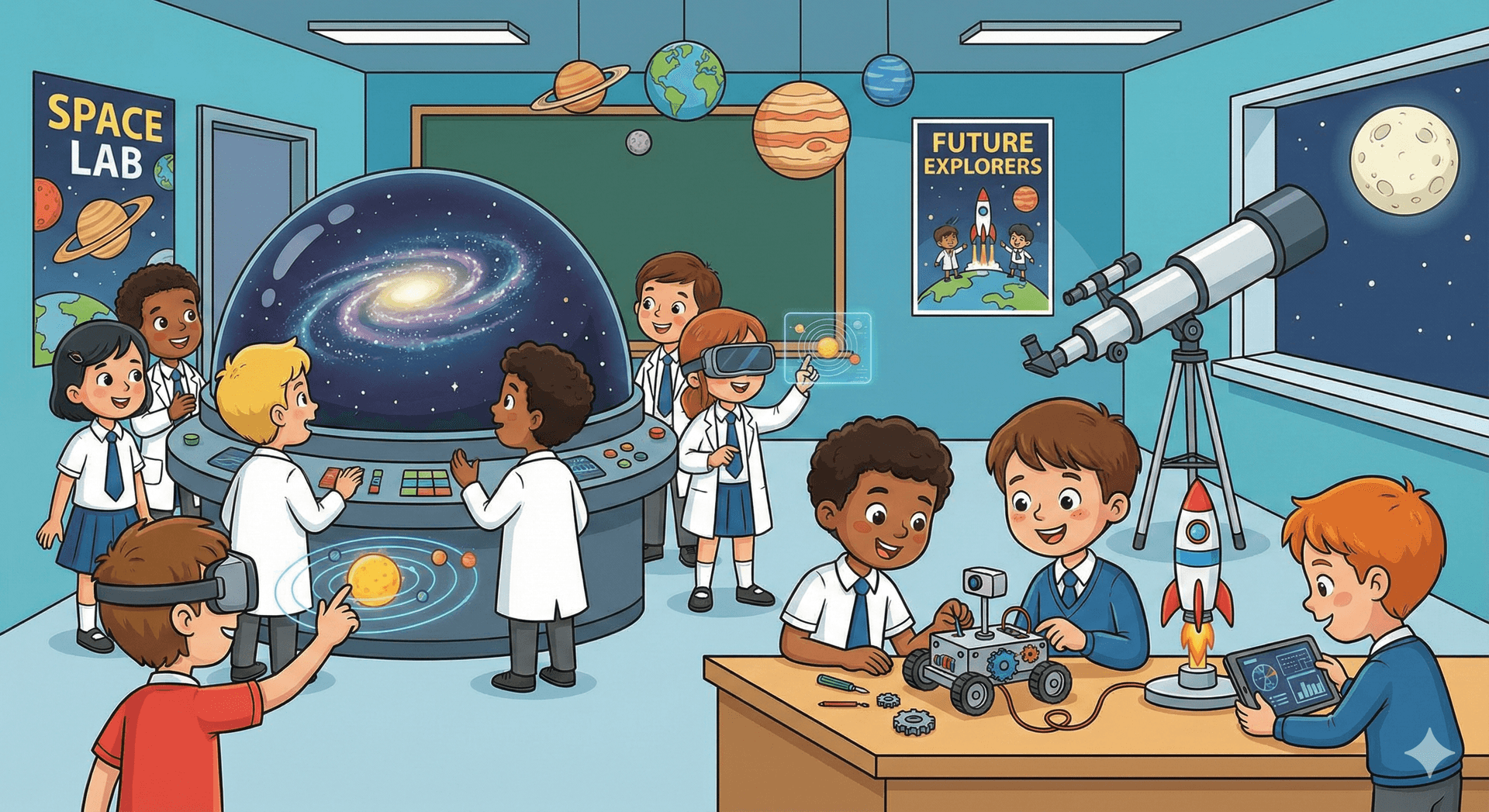

India launches satellites like Chandrayaan-3 and Aditya-L1, which reach the moon and study the sun. Yet, only 57.1% of secondary schools have integrated science labs as per UDISE+ 2024-25 data. Students need hands-on labs like Space Labs and Robotics Labs to explore space science and satellite technology. These labs use tools such as satellite models, telescopes, and DIY kits. They turn book learning into real action. Such labs in some of the best schools in Gurgaon build skills for India's growing space sector, which employs over 18,000 people at ISRO alone.
Also Read: The Innovative Human Library
Why Indian Schools Lack Space and Satellite Exploration Tools?
Most Indian schools focus on teaching theory rather than practice. According to UDISE+ 2024-25 data, India has 290,950 secondary schools, but only 166,209 schools have science labs. This means 42.9% of schools do not have labs. Rural areas face this problem the most, with very few schools having tools like rovers or drone kits.
NEP 2020 encourages learning by doing, but many schools do not have robotics or space equipment. Schools do not use hands-on tools much because they are expensive and teachers are not trained to use them. Students learn about satellites by reading, but they never get to build one, which reduces their curiosity.
Data Show Poor STEM Readiness
About 63% of middle school students find basic math and science hard. Haryana is one of the few states that built STEM labs with AI and robotics tools, helping 20,000 students. ISRO and its partners build these labs, which cost Rs 12.5 lakh each, but the labs are in only a few schools. BPCL and ISRO plan to set up labs for 50,000 tribal students in 19 states, but the work is moving slowly.
Also Read: Values That Last a Lifetime: The Virtues Behind True Education
Why Focus on Space and Technology?
India grows fast as a global leader in space technology. ISRO, our national space agency, succeeds in big feats like Moon and Mars missions. The Indian space sector is growing quickly and will reach $13 billion by 2025. This boom creates huge demand for skilled workers. India needs engineers, data scientists, technicians, and researchers, not just astronauts.
Job markets in all sectors have changed today since the introduction of AI in the market. Employers seek people with 21st-century skills like these:
- Critical thinking: Analyse problems and find solutions
- Creativity: Think of new ideas
- Collaboration: Work well in teams
- Communication: Share ideas clearly
Innovative labs in some of the best CBSE schools in Gurgaon build these skills best. Students team up to build rockets or other space materials or plan virtual space missions. They start to think critically to beat challenges, create cool designs, talk with teammates, and work together to win.
Benefits of Space Labs and Hands-On Satellite Tools
Space Labs let students build satellite models. Students simulate missions in these labs. These labs create interest in astronomy and robotics. Hands-on tools boost problem-solving by 72.2%. Students apply theory to experiments. In Atal Tinkering Labs (ATLs), 82% of students grasp STEM better. They do this through projects like coding rovers.
Improved Learning and Skills
Students in Haryana's 50 STEM labs use tablets for space simulations. This raises their engagement. ISRO's YUVIKA program gives hands-on rocket models and drone demos to selected kids. Robotics kits teach satellite orbits and AI. These match NEP 2020 goals. A review of 64 studies shows hands-on STEM lifts academic scores a lot.
Prepares for Jobs and Innovation
India needs space experts as its sector grows. Labs train kids for ISRO jobs or startups. Schools with ATLs see higher science interest. Tribal space labs mentor kids with scientists. They unlock STEM careers for underserved kids.
Challenges in Setting Up Labs
Schools face high costs to build Space Labs and Robotics Labs. ISRO sets up advanced space science labs. Each costs Rs 12.5 lakh. These labs include tools like satellite models and drones. Basic astro labs cost Rs 2.5-3 lakh. They include teacher training. Full STEM labs have 3D printers and AI kits. Schools pay Rs 3-10 lakh for them. They also pay Rs 50,000-2 lakhs for electrical setups. Many government schools lack money for this. Jharkhand built 480 high school labs with a total costing of Rs 34.8 crore in total.
Financial Hurdles
Private schools spend Rs 10 lakh on furniture, telescopes, and rovers. Atal Tinkering Labs get Rs 10 lakh grants at first. But maintenance costs add up over five years. Rural schools skip labs because of these costs. This widens the science lab gap. In 290,950 secondary schools, 42.9% lack labs. CSR funds from HDFC or BPCL help some schools. But they cover only a few places.
Teacher Training Shortages
Teachers often lack the skills to use space tools. Haryana trained 150 educators. These labs serve 20,000 students. NEP 2020 calls for hands-on learning. Yet most teachers skip robotics or satellite lessons. ISRO labs offer mentorship. But programs lag across India. Untrained staff store equipment. They do not use it. This wastes money.
Skill Gaps in Practice
Only 57.1% of schools have labs. Fewer training of teachers on drones or simulations. Programs like YUVIKA reach only some kids. They leave most behind. Schools need video guides and sessions. UP's astro labs use these to fix gaps.
Satya School, Gurugram: A Pioneer in Space Education

Satya School in Gurgaon runs the city's only Space Lab for young kids. The school launched this lab on campus in 2025. It has real-life models of stars, planets, and galaxies. Kids explore space through fun hands-on activities. These build their love for space science.
The lab gives kids tools like satellite kits and real setups. The school sits on a 5-acre campus. It links with science labs and spots for robotics and coding. Teachers get regular training in STEM to lead these fun sessions.
Kids build skills on space trips, not just book lessons. The lab works with IB and CBSE classes. It helps full growth along with sports areas. Students grow bold with satellite tech for future ideas. Parents love this special feature of Satya School, Gurgaon.
India needs more labs like ISRO's and Satya's where hands-on space tools change dreamers into real doers. More funds can decrease the gap of 42.9% Indian schools not having such hi-tech space and science labs.
Conclusion
The need for new kinds of labs in Indian schools is very clear. To help our students grow and keep India strong in science and technology, we must use teaching methods that are more than just old-fashioned lessons. Labs that teach space science, robotics, and other new technologies are important for our future.
These labs turn students from just listening to lessons into people who create, solve problems, and invent things. This prepares them to handle future challenges. Schools like Satya School in Gurugram are leading the way. They show that learning by doing can make students excited to explore and give them the skills to build a better future for themselves and for our country.
To learn more about this and other schools nearby, see this list of the top schools in Gurgaon.









 as a preferred source on