





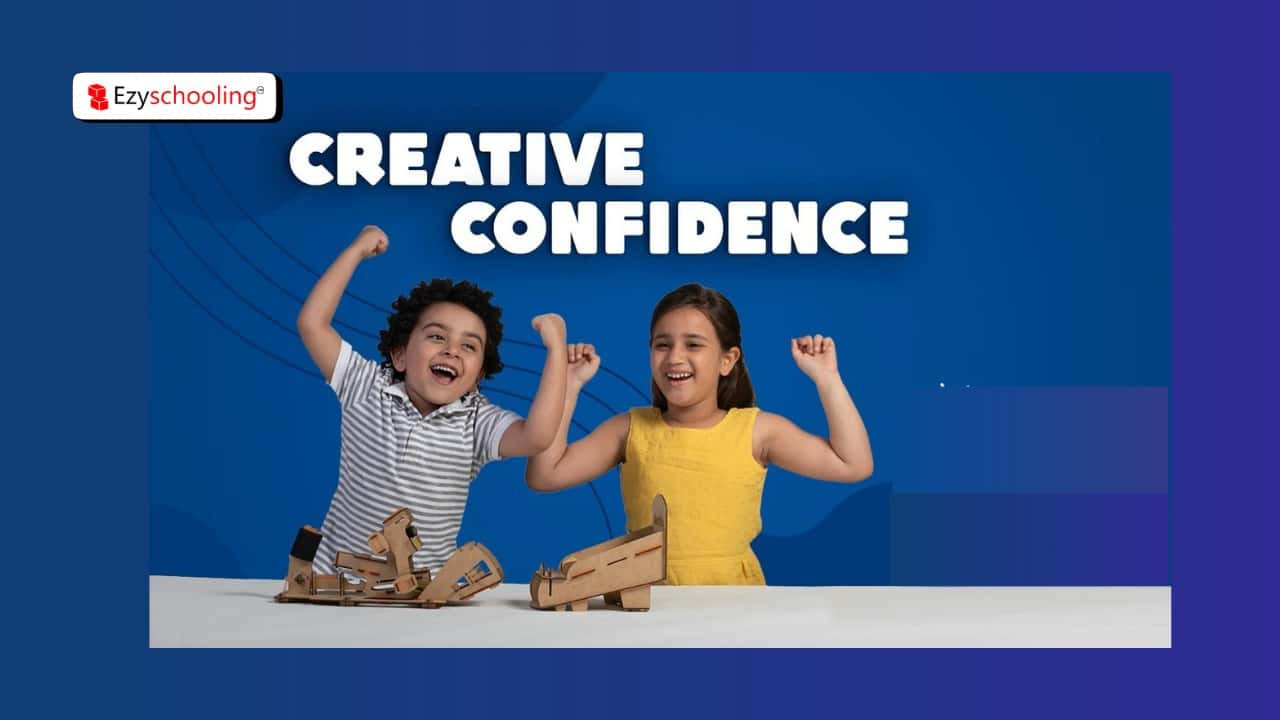

Have you ever wondered how creativity shapes your child’s future? In an era where problem-solving, innovation, and adaptability define success, nurturing creativity in children is no longer an option—it’s a necessity. Studies show that children engaged in creative activities are 45% more likely to excel in problem-solving and are better equipped to handle complex challenges later in life.
K.R. Mangalam World School, Ghaziabad, recognizes the importance of fostering creativity and has designed its curriculum to encourage students to think outside the box. In this article, we will explore how nurturing creativity in children can transform their lives and how K.R. Mangalam World School, one of the best schools in Ghaziabad, is leading the charge in raising creative, future-ready individuals.
Also Read | Merging Academics and Creativity for Holistic Growth
What Exactly is Creativity?
Creativity is the ability to imagine, innovate, and approach challenges with unique solutions. It’s not limited to art or music but extends to critical thinking, problem-solving, and transforming ordinary situations into extraordinary opportunities.
For children, creativity fosters self-expression, confidence, and resilience, teaching them that mistakes are stepping stones to growth. Research shows creative children are better problem-solvers, more adaptable, and emotionally intelligent.
Every child has creative potential, and nurturing it requires an environment where they can explore and experiment freely. Collaboration on projects further enhances skills like communication, adaptability, and teamwork—essential for navigating today’s complex world.
How to Nurture Creativity in Children?
Engaging in art and creative activities can significantly lower anxiety and stress in children. These activities are not only enjoyable but also provide a therapeutic way for children to express their emotions and process their feelings constructively.
Here are a few tips to help your child’s natural curiosity flow:
- Encourage Storytelling and Imagination: Storytelling is a gateway to creativity. Inspire your child to weave their own stories, whether through drawing, acting, or writing. Role-playing or creating fictional characters enhances their imagination and develops their communication and problem-solving skills.
- Create Time and Space for Creativity: Set up a dedicated area in your home where your child can explore art and creativity without interruptions. Ensure they have enough unstructured time to engage in imaginative activities, giving them the freedom to express themselves and experiment at their own pace.
- Avoid Giving Instructions: Instead of guiding every step, simply provide the art supplies and let your child decide how to use them. If they want to paint the grass red or the sky green, let them—it’s not about creating a perfect piece of art but allowing their thoughts to flow freely. If your child asks for help, share ideas as suggestions, not rules.
- Avoid Questioning: When looking at your child’s artwork, resist the urge to ask, “What is this?” Young minds don’t always create with the intent to represent something specific. Instead, describe how you interpret the artwork and invite your child to share their perspective. This approach encourages open dialogue and helps them feel proud of their work, regardless of its resemblance to reality.
- Collaborate on Family Projects: Work together as a family on creative endeavours, such as making DIY decorations, building a small project, or crafting gifts. Collaborative efforts encourage teamwork and provide a safe space for children to share and refine their ideas.
- Limit Passive Screen Time: Minimize screen time to ensure children actively engage in creative play rather than passively consuming content. Replace screen time with hands-on activities like crafts, puzzles, or interactive storytelling.
- Find Art in the Surroundings: Encourage your child to draw inspiration from their environment. Observe a flower together and talk about the symmetry of its petals or gather fallen leaves from the park for a creative project. By connecting art to their surroundings, children can experiment more freely, unlocking deeper layers of imagination and creativity.
- Celebrate the Process, Not the Outcome: Shift the focus from creating something “perfect” to enjoying the process of creativity. Praise your child’s effort, imagination, and unique ideas rather than the final result. This fosters confidence and a lifelong love for exploration without the fear of failure.
Check Out | Fostering Artistic Expression: Nurturing Creative Minds for Tomorrow
K.R. Mangalam World School, Ghaziabad: Nurturing Creativity
Established in 2011, K.R. Mangalam World School in Vaishali, Ghaziabad, is a co-educational institution affiliated with the Central Board of Secondary Education (CBSE). The school offers classes from Pre-Nursery to XII, providing a comprehensive educational experience.

A cornerstone of K.R. Mangalam World School's philosophy is the nurturing of creativity among its students. The school integrates creative arts into its curriculum, offering programs in music, dance, theatre, and visual arts. These activities encourage students to explore their artistic talents and develop innovative thinking. The school's commitment to creativity is evident in its state-of-the-art facilities, including well-equipped art studios and performance spaces, providing students with the resources to express themselves artistically.
One of the best schools in Vaishali, K.R. Mangalam World School also focuses on holistic development by incorporating sports and physical education into its curriculum. The school boasts extensive sports facilities, including playgrounds and courts for various games, promoting physical fitness and teamwork among students. Regular participation in sports activities helps students build discipline and resilience, essential traits for personal development.
For more information on this and similar schools in the area, check out this list of the best schools in Ghaziabad.









 as a preferred source on