







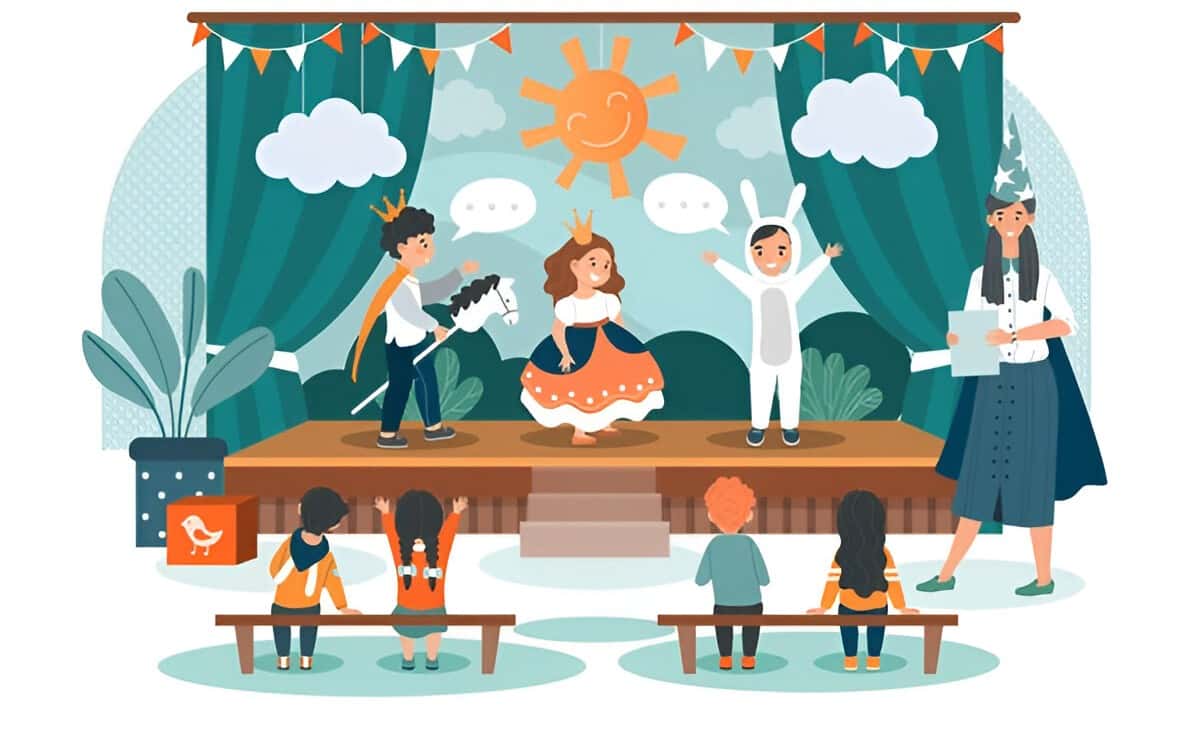

Education is constantly evolving, and innovative teaching methods are crucial in shaping well-rounded, confident, and capable individuals. One such approach gaining prominence is theatre-based learning, which integrates drama, storytelling, and performance into the educational experience.
One such institution leading the way in theatre-based education is JM International School, one of the best schools in Delhi. Through its Theatre-in-Education (TIE) program, the school encourages students to explore learning through drama, storytelling, and role-playing.
In this article, we explore the benefits of theatre-based learning, its connection to academic excellence, and how it equips students with real-world skills that extend far beyond the classroom
Read More | Why Personality Development is as Important as Academics at JMIS
Theatre-Based Learning: A Holistic Educational Approach
Theatre has long been recognised as a powerful medium for self-expression and storytelling. When integrated into education, it becomes an effective tool for engagement, experiential learning, and skill-building. Theatre-based learning does not simply involve acting; it incorporates role-playing, improvisation, creative writing, and interactive storytelling to create immersive educational experiences.
By engaging multiple senses and forms of intelligence, theatre-based learning transforms passive learners into active participants in their education, making complex concepts easier to understand and retain. This approach helps cultivate self-expression, teamwork, and problem-solving abilities, making education an engaging and immersive experience.
Benefits of Theatre-Based Learning

Let us discuss some of the benefits of theatre-based learning for children:
- Enhancing Communication and Public Speaking Skills: Through performance, students learn to articulate their thoughts clearly, project confidence, and engage an audience. These skills prove invaluable in academic presentations, interviews, and professional environments where public speaking is a necessity.
- Boosting Creativity and Imagination: Theatre encourages students to think outside the box, develop original ideas, and express themselves creatively. Whether through writing scripts, improvising dialogue, or interpreting characters, students hone their imaginative thinking, which is essential for innovation in any field.
- Strengthening Emotional Intelligence and Empathy: Stepping into different roles allows students to experience perspectives beyond their own, fostering empathy and emotional awareness. Understanding characters’ motivations, struggles, and emotions helps students relate better to people in real life, promoting compassion and inclusivity.
- Encouraging Collaboration and Teamwork: Theatre is inherently a collaborative art form. Students must work together to create and perform, developing essential skills such as teamwork and leadership skills. Learning to listen, compromise, and coordinate with others prepares students for cooperative work environments in the future.
- Improving Memory and Concentration: Memorizing scripts, cues, and stage movements enhances cognitive abilities such as memory retention and focus. These benefits translate into academic performance, helping students absorb and recall information more effectively in subjects like literature, history, and even science.
- Making Learning More Engaging and Interactive: Theatre-based learning turns education into an interactive and engaging experience. Role-playing historical figures, enacting science concepts, or dramatizing literary texts bring lessons to life and increase student engagement and interest in learning.
- Building Confidence and Overcoming Stage Fear: Performing in front of an audience helps students conquer their fears, develop self-assurance, and embrace challenges with confidence. These qualities extend into real-world situations, enabling students to navigate social interactions, leadership roles, and future careers with ease.
- Bridging the Gap Between Theory and Practice: Theatre-based education is an effective way to apply theoretical knowledge in a practical setting. Whether through reenacting historical events, dramatizing literature, or role-playing scientific discoveries, students gain a deeper and more personal understanding of academic subjects.
Theatre and Academic Excellence
Many studies have shown a positive correlation between theatre education and academic achievement. Students who engage in theatre-based learning demonstrate:
- Stronger reading comprehension and language skills due to exposure to scripts, storytelling, and dialogue.
- Improved problem-solving abilities as they think critically about character motivations and dramatic conflicts.
- Higher engagement in subjects like history, literature, and social sciences through role-playing and reenactment.
- Greater resilience and adaptability, skills necessary for academic and personal growth.
Theatre-based learning also enhances interdisciplinary connections, making it easier for students to see the relationships between subjects and apply knowledge in creative ways.
Real-World Applications of Theatre Skills
Theatre-based learning equips students with essential skills that extend beyond school into their future careers and everyday lives. Here’s how:
- Career Readiness and Professional Success: The confidence, creativity, and communication skills gained through theatre are highly valued in the workplace. Professions in business, law, marketing, journalism, and leadership roles all require strong presentation and interpersonal skills, which theatre naturally cultivates.
- Problem-Solving and Adaptability: Improvisation in theatre teaches students how to think quickly, adapt to unexpected situations, and develop creative solutions—all of which are essential for navigating real-world challenges.
- Strengthening Social and Emotional Well-Being: Theatre fosters self-expression, reduces anxiety, and builds a sense of community. Engaging in performance-based activities can help students develop emotional resilience, deal with stress, and improve their overall mental well-being.
- Leadership and Influence: Performing in front of others, directing plays, and working in teams encourage students to take on leadership roles, influencing and inspiring those around them. These leadership qualities are critical in both professional and personal life.
Check Out | Art, Music, and More: Nurturing Creativity
JM International School: Pioneering Theatre-in-Education
Established in 2006, JM International School (JMIS) in Sector 6, Dwarka, Delhi, has rapidly gained recognition for its innovative teaching methodologies and commitment to holistic education. The school maintains a favorable student-teacher ratio of 21:1, catering to learners from Pre-School (Nursery) to Class XII.

JM International School, one of the best schools in South West Delhi, has successfully integrated Theatre-in-Education (TIE) into its curriculum. Through its Katha Theatre-in-Education program, students engage in experiential learning that fosters creativity, confidence, and intellectual growth. The school believes that storytelling and dramatization make learning more impactful and meaningful.
JMIS has been ranked No. 1 in India for 'Innovative Teaching' and 'Academic Reputation' by Education Today and is among the top three schools in West Delhi, according to the Times of India School Survey. Notably, JMIS has received the International School Award from the British Council for outstanding development of international dimensions in its curriculum for multiple consecutive terms.
For more information on this and other such schools in the area, check out this list of the best schools in Delhi.







 as a preferred source on