


JS
Jhalak SahuVerified User
Parent · Reviewed 12 Jan 2025
Very good school to study

| Class | Session | Application Date | Status | Action |
|---|---|---|---|---|
Nursery | 2027-2028 | Last Date Dec 31, 2026 | Ongoing | |
LKG | 2027-2028 | Last Date Dec 31, 2026 | Ongoing | |
UKG | 2027-2028 | Last Date Dec 31, 2026 | Ongoing | |
Class 1 | 2027-2028 | Last Date Dec 31, 2026 | Ongoing | |
Class 2 | 2027-2028 | Last Date Dec 31, 2026 | Ongoing | |
Class 3 | 2027-2028 | Last Date Dec 31, 2026 | Ongoing | |
Class 4 | 2027-2028 | Last Date Dec 31, 2026 | Ongoing | |
Class 5 | 2027-2028 | Last Date Dec 31, 2026 | Ongoing | |
Class 6 | 2027-2028 | Last Date Dec 31, 2026 | Ongoing | |
Class 7 | 2027-2028 | Last Date Dec 31, 2026 | Ongoing | |
Class 8 | 2027-2028 | Last Date Dec 31, 2026 | Ongoing | |
Class 9 | 2027-2028 | Last Date Dec 31, 2026 | Ongoing | |
Class 10 | 2027-2028 | Last Date Dec 31, 2026 | Ongoing | |
Class 11 | 2027-2028 | Last Date Dec 31, 2026 | Ongoing | |
Class 12 | 2027-2028 | Application Date Not Disclosed | Beginning Soon |

Board
ICSE
Gender
Boys
Classes
Nursery - 12 Class
Academic Session
April to March
Medium
English
Student Teacher Ratio
20:1
Day/Boarding
Full Boarding
| Class | Annual | One-time admission | Total cost for first year |
|---|---|---|---|
| Pre-school | |||
| Not Available | Not Available | Not Available | |
| Not Available | Not Available | Not Available | |
| Not Available | Not Available | Not Available | |
| Primary | |||
| ₹97,790 | ₹95,000 | ₹1,92,790 | |
| ₹97,790 | ₹95,000 | ₹1,92,790 | |
| ₹2,44,194 | ₹95,000 | ₹3,39,194 | |
| ₹2,41,194 | ₹95,000 | ₹3,36,194 | |
| ₹2,41,194 | ₹95,000 | ₹3,36,194 | |
| Middle school | |||
| ₹2,42,894 | ₹95,000 | ₹3,37,894 | |
| ₹2,42,694 | ₹95,000 | ₹3,37,694 | |
| ₹2,42,694 | ₹95,000 | ₹3,37,694 | |
| Secondary | |||
| ₹2,42,694 | ₹95,000 | ₹3,37,694 | |
| ₹2,50,104 | ₹95,000 | ₹3,45,104 | |
| Senior secondary | |||
| ₹2,53,524 | ₹95,000 | ₹3,48,524 | |
| Not Available | Not Available | Not Available | |
Pre-school
Primary
Middle school
Secondary
Senior secondary
Estimated annual fee
₹97,790
Annual and activity charges
One-time admission fee
₹95,000
Admission fee and one-time charges
Total cost for first year
₹1,92,790
Total cost including one-time fees
| Fee Type | Payment Frequency | Fee Amount |
|---|---|---|
| Security Fees | Onetime | Amount: ₹45,000 |
| Composite Fees | Annually | Amount: ₹96,790 |
| Admission Fees | Onetime | Amount: ₹50,000 |
| Other Fees | Annually | Amount: ₹1,000 |
Security Fees
Frequency: Onetime
₹45,000
Composite Fees
Frequency: Annually
₹96,790
Admission Fees
Frequency: Onetime
₹50,000
Other Fees
Frequency: Annually
₹1,000
Photos
Connect with Abhishek
6,000+
Parents helped
5+ years
Experience
4.9 ★
Ratings

Abhishek
Senior Admission Counsellor
Offline
What you get, free:
"Taking care of entire PAN India boarding school admission with over 5 years of experience."
Fill in your details to view phone number
Download the syllabus for the entrance exam.
Access past entrance papers for preparation.
La Martiniere College
Very good school to study
Very wonderful and big schoolz
My son cried the first week but now he’s okay. Hostel is fine.
Vive La Martiniere! Horse riding, old traditions, strong house system. Best days of my life.
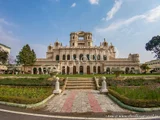
The Constantia architecture is majestic. Unmatched heritage at extremely low fees compared to modern private schools. Admission is highly political locally.
La Martiniere College, Lucknow, Lucknow
La Martiniere College, Lucknow, Lucknow, Uttar Pradesh - 226019
La Martiniere College, Lucknow, is a boys' day-cum-residential educational institution located at Martin Purva, Lucknow, Uttar Pradesh. Established in 1845 under the Will of Major General Claude Martin, the College has a history spanning over 180 years. It follows the curriculum prescribed by the Council for the Indian School Certificate Examinations (CISCE), preparing students for the Indian Certificate of Secondary Education (ICSE) examination in Class 10 and the Indian School Certificate (ISC) examination in Class 12.
The College operates two academic campuses. The Junior School Campus accommodates the preparatory and junior sections, while the historic Constantia Campus houses the middle and senior sections, along with residential facilities for boarders. The institution offers day-schooling, day-boarding and full residential arrangements, with boarding facilities available from Class 3 onwards.
Spread across an estate of over 700+ acres, the College provides opportunities for academic learning, competitive sports, creative activities, leadership and community participation. Its residential system is organised around Houses, supervised by Housemasters and supported by a Prefect System. Students also have access to a wide range of sporting facilities, including swimming pools, cricket grounds, archery, equestrian sports, tennis, football and other activities.
The College's educational environment combines its longstanding institutional traditions with opportunities for students to develop academic discipline, independence, teamwork and personal responsibility.
La Martiniere College offers a combination of established academic traditions, extensive sports infrastructure and residential education. Some of its notable features include:
Established heritage: Founded in 1845 under the Will of Major General Claude Martin, the College has a history of more than 180 years.
CISCE curriculum: Students prepare for the ICSE examination in Class 10 and the ISC examination in Class 12.
Separate academic campuses: The Junior School Campus caters to younger students, while Constantia accommodates the middle and senior sections.
Day and residential options: Families can choose day schooling or day-boarding, while full boarding is available from Class 3 onwards.
Extensive sports infrastructure: Students have access to facilities for archery, equestrian sports, swimming, cricket, football, rugby, shooting, tennis, badminton and several other sports.
Structured boarding system: Five age-based dormitories, Housemasters, dormitory superintendents and a Prefect System support students' residential routines.
Competitive sporting opportunities: The College hosts tournaments in different sports and participates in competitions through its CISCE and School Games Federation affiliation.
Co-curricular participation: Activities such as debates, elocution, dramatics, quizzes, essay competitions and Model United Nations provide opportunities beyond classroom learning.
Historic campus: Constantia combines heritage architecture with academic spaces, laboratories, a library, an auditorium, sports facilities and residential accommodation.
Student involvement: Boarders participate in House activities, maintain their living spaces and take part in supervised activities that encourage responsibility and cooperation.
La Martiniere College follows the CISCE curriculum. Students are prepared for the ICSE examination at the end of Class 10 and the ISC examination at the end of Class 12.
The College has separate academic arrangements for its preparatory, junior, middle and senior sections, allowing students to progress through different stages of school education.
The Junior School Campus accommodates the preparatory and junior sections. It is designed to provide younger pupils with an age-appropriate learning environment, with dedicated academic blocks, gardens and play areas.
The campus has facilities suited to younger students, including spaces for classroom learning, outdoor activities and sports. Security and the layout of the Junior School Campus are designed with the needs of younger pupils in mind.
Students are also encouraged to participate in age-appropriate co-curricular activities, including classroom competitions, elocution, creative activities, physical education and school celebrations.
The middle and senior sections operate from the Constantia Campus. Students follow the CISCE academic framework and prepare for the ICSE and ISC examinations.
The campus includes classrooms, science laboratories, computer laboratories, a library, a gymnasium and an auditorium. These facilities support academic instruction and activities beyond regular classroom teaching.
Students also participate in debates, quizzes, essay competitions, elocution, dramatics and other co-curricular programmes conducted during the school day.
The College prepares students for two stages of CISCE board examinations:
ICSE – Class 10: The Indian Certificate of Secondary Education examination.
ISC – Class 12: The Indian School Certificate examination.
The senior school provides an academic pathway leading to the ISC examination, allowing students to continue their school education through Class 12.
The College provides a Career Counselling and Guidance facility as part of its wider student-support and academic development initiatives.
Career guidance is particularly relevant during the senior school years, when students begin considering higher education and future career options. It forms part of the College's broader academic support environment.
La Martiniere College announces admissions through separate admission notices and policies for different entry categories and classes. Admissions are offered for day scholars, day boarders, and resident scholars, subject to the classes and seats specified in the relevant admission notification.
The College's admission arrangements include the following categories:
The College follows separate admission procedures for different categories. The availability of entry classes and eligibility requirements may therefore differ between day scholars, day boarders and resident scholars.
It provides an online admission application facility. Parents can follow this application process:
Visit the official website.
Open the Admissions section: Check the latest admission notice and prospectus for your preferred class.
Register online: Access the application portal through the link provided in the relevant admission notice.
Fill out the application: Enter the student's and parents' details, upload the required photographs and documents, and pay the prescribed charges.
Submit the form: Review all details before submission and follow the College's subsequent admission instructions.
The online application process asks parents to provide the following information and documents:
Applicant's photograph.
Father's or guardian's photograph.
Mother's photograph.
Applicant's date of birth, as recorded on the Municipal Corporation Birth Certificate or Baptism Certificate.
Applicant's nationality, religion, denomination, and mother tongue.
Residential and correspondence addresses.
Details of the parents' educational qualifications and occupations.
Details of other children in the family, wherever applicable.
Parents should ensure that the information entered in the application matches the relevant supporting records.
The College has a prescribed withdrawal procedure for students.
Withdrawal application: Parents are required to submit a withdrawal application through the prescribed College process.
Admission fee: The admission fee is non-refundable.
Caution money: Refundable according to the applicable rules.
Composite fee: The annual recurring composite fee is non-refundable.
Outstanding dues: Applicable accounts and dues are to be settled according to the College's fee regulations.
Parents should account for these conditions while planning a student's admission and possible withdrawal.
La Martiniere College provides residential education at its Constantia Campus. Boarding is available for pupils from Class 3 onwards and forms an important part of the College's institutional life.
The residential system is designed to help students develop independence, discipline, personal responsibility and cooperation through structured daily routines and shared living arrangements.
Resident scholars are accommodated in five dormitories according to their age groups. Students are also allotted Houses under the supervision of Housemasters, who are senior members of the academic staff.
The boarding arrangements include:
Age-based dormitories: Students are accommodated in five dormitories according to their age.
House system: Each pupil is allotted a House under the supervision of a Housemaster.
Shared Houserooms: An average of 30 boys share a common Houseroom, where they keep their daily belongings and personal necessities.
Dormitory supervision: Dormitory Superintendents oversee students' daily needs, personal hygiene, laundry, uniforms and sleeping arrangements.
Prefect System: Housemasters, Masters on Duty, College Wardens and prefects contribute to the supervision and discipline of resident scholars.
Students are also encouraged to maintain their House rooms. The College promotes self-monitoring, and corporal punishment is strictly prohibited.
The boarding programme follows a structured daily routine. Students are expected to maintain discipline, follow House rules and participate in supervised activities.
The College provides several services to support daily residential needs:
Laundry is collected and returned twice a week.
Additional ironing facilities are available in each House room.
Facilities for footwear repairs, darning, and haircuts are provided on campus.
Modern and hygienic toilet facilities are maintained.
Separate bathing and lavatory facilities are provided for different age groups.
Students can use the College's sports and recreational facilities under supervision.
The use of mobile phones is restricted according to College rules, and additional telephones are provided in residential facilities.
The College follows a regulated system for parents' visits and students' leave from campus.
Parents can visit resident scholars during the prescribed visiting hours, generally on Sundays.
Month-end and overnight exeats are organised according to the College calendar.
Students must be accompanied by parents or authorised local guardians when leaving the campus.
Special exeats may be granted in emergencies with the Principal's permission.
Medical exeats are handled according to the professional decision of the Hospital Matron and the prescribed approval process.
These arrangements are intended to maintain a supervised residential environment and ensure that students' movements are properly recorded.
The College has two academic campuses with facilities designed for different age groups.
Constantia Campus
The historic Constantia Campus accommodates the middle and senior sections, residential facilities and several academic and recreational spaces.
Its facilities include:
Classrooms and academic blocks.
Science laboratories.
Computer laboratories.
College library and Information Centre.
College auditorium at Spence Hall.
Gymnasium.
Dining hall for resident scholars.
College chapel.
Swimming facilities.
Extensive playfields and sports grounds.
Boarding dormitories and House rooms.
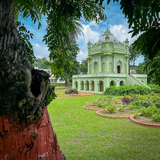
Landscaped gardens and formal lawns.
Junior School Campus
The Junior School Campus consists of three academic blocks for the preparatory and junior sections. It includes gardens, swings and age-appropriate facilities for younger pupils, with a focus on providing a protected learning environment.
The College also has an air-conditioned canteen for students during the school day.
The College's pastoral arrangements are closely connected with its House system, residential supervision and established disciplinary structure.
Housemasters are senior members of the academic staff and directly supervise the Houses. They work alongside Masters on Duty, College Wardens and the Prefect System to maintain discipline and provide oversight of residential life.
Dormitory Superintendents take care of students' daily requirements, including personal hygiene, laundry, uniforms and sleeping arrangements.
The system encourages students to develop self-discipline and responsibility for their shared living spaces.
The College places importance on regular attendance, punctuality, appropriate conduct and participation in school activities.
Its rules address matters such as bullying, violence, misuse of the internet, cyberbullying, substance use and other forms of misconduct.
Students are expected to follow the College's code of conduct and participate in co-curricular activities conducted during school hours.
The residential system also encourages self-monitoring, while corporal punishment is strictly prohibited.
The College provides opportunities for students to participate in spiritual and religious activities.
Chapel services are conducted before the morning Assembly, with presentations on universal values. Students from different faith backgrounds are permitted to observe their religious practices.
A chapel, mosque, and temple are maintained on the campus for the use of the College community.
The College provides dining arrangements for resident scholars at the Constantia Campus. Food preparation and meal services are supervised by designated staff.
The boarding dining arrangements include:
Food supervision: A Steward supervises the kitchen staff responsible for preparing meals.
Dining arrangements: A Housekeeper oversees meal service and dining hall etiquette.
Student participation: A Food Committee, which includes student representatives, meets to prepare weekly menus.
Drinking water: Refrigerated drinking water is provided to resident scholars.
The College has an on-campus hospital and infirmary to provide medical support to students.
The College Hospital operates round the clock with qualified personnel. Its medical arrangements include:
An on-campus hospital for medical assistance.
An infirmary equipped to deal with common illnesses.
A consultant physician available on call.
Medical supervision by the Hospital Matron.
Arrangements for rapid hospitalisation in emergencies.
Sports form a major part of student life at La Martiniere College. The College provides competitive-level sports facilities, qualified instructors, and coaches to guide students in different games.
It is affiliated with the School Games Federation through CISCE and hosts tournaments in various sports throughout the year.
Some of the major sports and facilities available include:
Archery: A dedicated two-acre archery arena with 20 targets and a full-time coach.
Badminton: Fourteen badminton courts across the two campuses.
Basketball: Three courts for competitive matches, House games and class leagues.
Cricket: An international-size cricket ground, junior practice pitches and 15 net practice areas.
Equestrian sports: Thoroughbred and Marwari horses, riding facilities, a trained riding coach and a show-jumping arena.
Football: Ten football fields and opportunities to participate in tournaments.
Swimming: Two indoor four-lane swimming pools with a pavilion.
Tennis: Fourteen tennis courts, including synthetic, clay and grass surfaces.
Rugby: A dedicated rugby pitch with facilities for both contact and non-contact versions of the sport.
Hockey: Two dedicated hockey fields.
Shooting: An indoor electronic air-pistol and air-rifle shooting range with eight targets.
Gymnastics: Two equipped gymnasiums.
Boxing: An outdoor boxing ring with training and safety equipment.
Other sporting and recreational activities include:
Athletics.
Baseball and softball.
Chess.
Carrom.
Cycle-polo.
Futsal.
Golf.
Kabaddi.
Rowing.
Skating.
Snooker and pool.
Table tennis.
Taekwondo.
Volleyball.
Yoga.
Qualified coaches supervise the sporting activities, while the College's tournaments and House competitions provide opportunities for students to participate in organised sporting events.
Along with academic learning and sports, La Martiniere College encourages students to participate in co-curricular activities that develop communication, creativity, confidence and leadership.
Students participate in activities such as:
Debates.
Elocution.
Essay competitions.
Quizzes.
Literary activities.
Public speaking.
These activities provide opportunities to develop communication skills, express ideas, and participate in academic and cultural competitions.
The College encourages participation in dramatics and other creative programmes. Students can take part in school activities and events that provide opportunities to develop artistic interests and stage confidence.
The College also has a choir and a longstanding tradition of Chapel services accompanied by its pipe organ.
The College has a dedicated Model United Nations initiative. Through MUN activities, students can explore international affairs, research issues, participate in committee discussions, and practise public speaking, negotiation, and leadership.
These activities provide an opportunity to understand different perspectives and develop skills useful for academic and professional life.
Students are encouraged to participate in school assemblies, competitions, celebrations, House activities and other institutional events.
The College also organises sporting and co-curricular competitions, allowing students to represent their Houses and develop teamwork, discipline and a sense of responsibility.

If you are an authorized person on this school behalf and want to start accepting applications/enquiries through ezyschooling platform for admissions, please claim this school.
The average student-teacher ratio at La Martiniere College, Lucknow is 20:1.
The total cost of admission in La Martiniere College, Lucknow usually starts at Rs. Unknown and can go up to Rs. Unknown. This includes: NA .
La Martiniere College, Lucknow is a Full Boarding school.
Currently, we do not have any conclusive information on the scholarships available in La Martiniere College, Lucknow. Parents can direct contact the school for information on scholarships or fee reductions of any sort.
La Martiniere College, Lucknow is affiliated with ICSE board(s).
The academic session at La Martiniere College, Lucknow begins in April and continues through March of the following year.
La Martiniere College, Lucknow was established in the year 1845.
No, applications for La Martiniere College, Lucknow aren’t available on Ezyschooling. You can apply by visiting the school in person or using its official website. You can still use Ezyschooling to explore and compare schools that match your preferences. Alternatively, you can explore Ezyschooling to discover and compare schools that best match their preferences, even if applications for La Martiniere College, Lucknow are not directly available through the platform.




 as a preferred source on